
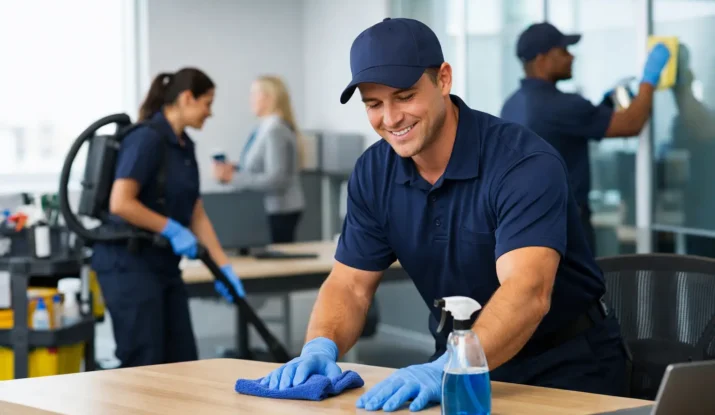
A missed trash pickup, an empty soap dispenser, and fingerprints on a glass entry door may seem like small issues. In a busy workplace, they quickly become signals that the facility is not being managed with care. Consistent office cleaning protects the daily experience of employees, visitors, tenants, and customers while helping facility teams avoid preventable complaints and disruptions.
For office managers and property leaders, the goal is not simply to make a building look clean after hours. It is to maintain a safe, presentable, fully functioning environment every day, including during high-traffic periods, seasonal weather changes, employee events, and unexpected facility needs.
What Reliable Office Cleaning Should Accomplish
A professional cleaning program should make the workplace easier to operate. That means restrooms stay sanitary and supplied, common areas are ready for use, waste is removed on schedule, and high-touch surfaces receive appropriate attention. It also means cleaning crews understand the building’s access rules, security procedures, occupancy patterns, and priorities.
Appearance matters, but it is only one part of the job. Clean carpets and well-maintained hard floors protect costly surfaces from premature wear. Regular dust removal can reduce buildup on workstations, ledges, vents, and fixtures. Proper restroom care supports employee comfort and helps maintain a professional impression for visitors.
Reliability is just as important as technique. A cleaning provider should arrive as scheduled, follow a clear scope of work, communicate when issues are found, and respond when priorities change. If an evening meeting runs late, a spill occurs in a lobby, or a restroom needs attention before a client visit, the service plan should support the way your facility actually operates.
Build an Office Cleaning Plan Around Real Facility Use
No two office environments have the same cleaning requirements. A small professional office with limited public traffic may need dependable nightly service and periodic floor care. A multi-tenant building, medical office, school administrative area, or customer-facing showroom may require daytime porter support, more frequent restroom service, and close attention to entrances and shared spaces.
Start by looking at how people move through the building. Entryways, elevator areas, break rooms, conference rooms, restrooms, and copy stations typically receive more use than private offices. Those areas should receive cleaning frequencies based on traffic, not assumptions.
Match frequency to the space
Daily service is often appropriate for restrooms, trash removal, break rooms, reception areas, and heavily used common spaces. Workstations may require routine dusting and waste removal, while detailed cleaning of low-traffic offices can be scheduled less often. Carpet extraction, hard-floor refinishing, interior glass cleaning, and pressure washing are specialty services that may be planned seasonally or as conditions require.
Chicago-area facilities also need to account for weather. Snow, salt, rain, and slush can quickly damage floor finishes and create slip hazards near entrances. Floor mats, timely vacuuming, spot treatment, and more frequent mopping during winter help keep dirt from traveling deeper into the building.
Define what “clean” means for your property
A useful scope of work is specific. Rather than asking for general cleaning, identify the rooms, surfaces, frequencies, access instructions, and consumables that need attention. This gives both the facility team and cleaning provider a practical standard to follow.
A well-defined plan should address at least these areas:
- Restroom cleaning, disinfection, odor control, and replenishment of soap, paper products, and toiletries
- Trash and recycling collection, including how overflow, bulky waste, or special disposal needs are handled
- Break room and kitchen care, including counters, appliance exteriors, sinks, tables, and floors
- Entry, lobby, and common-area maintenance, with added attention during wet or snowy conditions
- Carpet, hard-floor, upholstery, glass, and high-touch surface care based on each area’s use
The right plan can be adjusted without turning every request into a separate vendor search. That flexibility matters when a tenant moves out, a special event is scheduled, a construction project leaves dust behind, or a damaged floor needs prompt attention.
The Details Employees and Visitors Notice First
People may not comment when an office is clean, but they notice quickly when it is not. Restrooms are often the clearest example. Empty dispensers, overflowing waste bins, unpleasant odors, or poorly maintained fixtures can undermine confidence in the entire property.
Entrances create another high-impact moment. Glass doors, floor mats, corners, and reception surfaces set expectations before a visitor reaches the front desk. In customer-facing offices, retail spaces, and hospitality settings, these details can affect how people view the business itself.
Break rooms deserve equal attention. They are shared spaces where food debris, spills, and waste can accumulate quickly. Regular cleaning helps employees feel respected and can reduce odors and pest concerns. It is also a practical way to keep a busy workplace from looking neglected by midafternoon.
Cleaning Methods Matter for Health and Asset Protection
The products and equipment used in an office should fit the task and the environment. Color-coded cleaning systems help reduce the risk of cross-contamination by keeping tools assigned to appropriate areas. Microfiber cloths capture dust and soil effectively, while high-filtration vacuums help remove fine particles from carpets and hard surfaces.
For facilities with sustainability goals, cleaning products matter as well. Green Seal-certified products can support a more environmentally responsible program without sacrificing the performance needed for everyday commercial cleaning. The best choice depends on the surfaces being cleaned, the building’s policies, and the needs of occupants who may be sensitive to strong odors or harsh chemicals.
Floor care deserves particular attention because it affects both safety and long-term costs. Routine vacuuming and mopping are necessary, but they cannot replace periodic deep cleaning, extraction, stripping, waxing, or burnishing when the floor type calls for it. Delaying specialized care may save money in the short term, but it can shorten the life of carpet, vinyl, tile, and other high-value finishes.
One Accountable Partner Reduces Daily Friction
Cleaning is often connected to needs that extend beyond cleaning alone. Restrooms need paper products and soap. Entrances need floor mats. Teams may need gloves, reusable towels, mops, and janitorial supplies. A restaurant or food-service operation may also need linen and apron support.
Managing these needs through separate providers can create unnecessary administrative work. When supplies run out, it can be unclear whether the issue belongs to the cleaning crew, a supply vendor, or the on-site team. A single-provider approach creates clearer accountability and makes it easier to coordinate recurring service, supply replenishment, specialty work, and urgent requests.
ABF Facility Services helps Chicagoland businesses bring these moving parts together through cleaning, sanitation, maintenance support, consumables, and rentals. For a facility manager, that can mean fewer vendor calls and a more consistent standard across the property.
What to Look for in an Office Cleaning Provider
Price matters, but the lowest quote is not always the lowest operating cost. Inconsistent service can lead to tenant complaints, rushed corrective work, damaged floors, empty restroom dispensers, and more time spent managing vendors. A better evaluation considers how a provider will execute the work week after week.
Ask whether team members are trained, uniformed, insured, and OSHA-compliant. Confirm how quality is checked, how service issues are reported, and who responds when an urgent need arises. It is also reasonable to ask about equipment, cleaning products, security procedures, and whether the provider can support specialty services when your needs change.
The most effective office cleaning relationship is built on clear expectations and regular communication. A provider should learn your facility, document priorities, and make it easy to adjust service as occupancy, seasons, and business demands change.
A clean office should never become another daily task on your team’s list. With the right scope, dependable personnel, and a partner that treats details as operational priorities, your workplace can stay ready for the people who depend on it every day.