
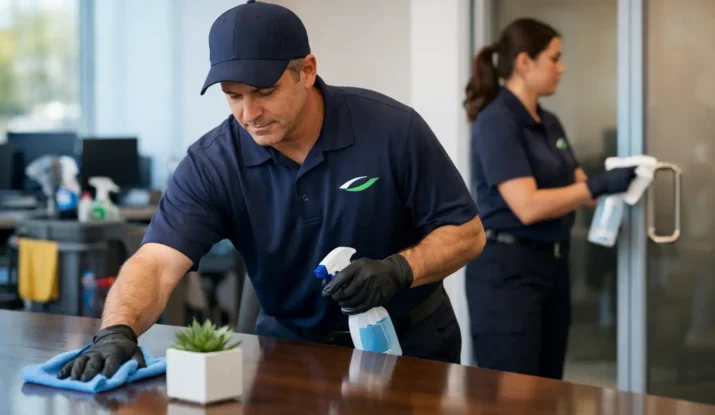
A missed trash pickup, an empty soap dispenser, or streaked lobby floors can create problems that extend well beyond appearance. For facility managers and business owners, dependable janitorial services are part of daily operations: they support employee health, protect property, reduce complaints, and help every visitor feel confident in the space.
The right cleaning program is not simply a crew arriving after hours with a mop and vacuum. It is a coordinated plan built around how a facility operates, where cleanliness matters most, what supplies are needed, and how quickly issues must be addressed. That distinction matters in offices, schools, health care settings, retail locations, restaurants, industrial properties, and multi-tenant buildings throughout Chicagoland.
What Professional Janitorial Services Should Cover
Recurring janitorial work should be tailored to the facility, its traffic patterns, and its risk areas. A small office may need dependable nightly cleaning and restroom replenishment. A busy retail store may need frequent attention to entryways, glass, fitting rooms, and spill response. An industrial site may require specialized methods for dust, debris, hard-floor maintenance, and safety-sensitive work areas.
At a minimum, a well-managed program addresses routine dusting, vacuuming, trash removal, restroom cleaning, breakroom sanitation, touchpoint disinfection, and floor care. The schedule may be daily, several times per week, weekly, or structured around operating hours. The right frequency depends on occupancy, customer traffic, weather, industry requirements, and the condition standards your organization needs to maintain.
A dependable provider also looks beyond the visible checklist. Are paper products and hand soap consistently available? Are high-touch areas receiving proper attention? Are floor finishes protected from salt, moisture, grit, and heavy foot traffic? These details affect both the experience people have in the building and the long-term cost of maintaining it.
Why Consistency Matters More Than a Basic Cleaning Checklist
Most facility problems do not begin with one major failure. They build through small inconsistencies: restrooms serviced unevenly, waste left behind, corners overlooked, or supplies running out before they are reordered. Over time, employees notice. Tenants notice. Customers notice. Facility teams then spend valuable time responding to preventable complaints.
Consistent janitorial service creates a baseline that managers can rely on. Uniformed, trained, insured teams should follow documented procedures, use appropriate tools for each area, and respect the site’s access, safety, and security requirements. OSHA-compliant practices are especially important in industrial, health care, food-service, and high-traffic environments where improper cleaning can introduce safety concerns rather than solve them.
Quality also depends on using the right cleaning systems. Color-coded tools help reduce cross-contamination between restrooms, break areas, and general workspaces. Microfiber materials capture fine dust more effectively than many traditional methods. High-filtration vacuums can help reduce airborne particulates, while Green Seal-certified products offer a practical option for facilities working to reduce the environmental impact of their cleaning program.
Build a Janitorial Plan Around the Way Your Facility Works
The best service plans begin with an honest assessment of the property. Rather than selecting a generic package, consider the building’s layout, business hours, surfaces, occupancy, and recurring challenges.
Start With High-Impact Areas
Entrances, lobbies, restrooms, breakrooms, elevators, reception areas, and customer-facing floors usually deserve the most frequent attention. These areas shape first impressions and often carry the highest volume of dirt, moisture, and touchpoint activity.
For Chicago-area properties, entrance and floor care become even more important during winter. Salt, slush, and grit can damage hard-floor finishes, stain carpet, and create slip hazards. Mat service, prompt spot cleaning, and scheduled floor maintenance can reduce damage while keeping the building more presentable during difficult weather.
Match Cleaning Frequency to Real Traffic
A facility with 20 people working standard business hours needs a different plan than a medical office with steady patient turnover or a warehouse operating multiple shifts. Cleaning too infrequently allows dirt, odors, and clutter to accumulate. Cleaning more often than necessary can add cost without improving results.
A knowledgeable provider should be able to recommend a practical schedule and adjust it as needs change. Seasonal traffic, special events, construction activity, staffing changes, or an increase in customer volume may call for a temporary or permanent service adjustment.
Plan for Specialty Needs Before They Become Problems
Routine cleaning keeps a building orderly, but specialty services protect the property and address issues that standard nightly cleaning may not cover. Carpet extraction, hard-floor stripping and waxing, pressure washing, deep sanitization, pest control, and junk removal all have their place in a complete facility plan.
For example, carpet care can extend the life of a costly flooring investment, while scheduled hard-floor maintenance helps preserve finish and traction. Pressure washing may be appropriate for loading areas, sidewalks, dumpster pads, and exterior entrances. Pest-control programs are most effective when paired with sanitation, waste management, and a responsive process for reporting concerns.
One Provider Can Reduce Facility Management Friction
Coordinating separate vendors for cleaning, restroom products, floor mats, towels, supplies, pest concerns, and removal work can create unnecessary administrative work. Each vendor has its own delivery schedule, service contact, invoice, and standard of accountability. When a problem occurs, it is not always clear who owns the solution.
A single-provider model can simplify that process. When janitorial services are coordinated with consumable replenishment, reusable towels and mops, floor mats, gloves, restroom products, and other facility supplies, managers have fewer gaps to monitor. It also makes it easier to align service with actual building use. If restroom traffic increases, for instance, the cleaning and supply needs can be reviewed together rather than handled as separate issues.
This approach is not only about convenience. It can improve accountability. A provider that understands your cleaning schedule, floor conditions, supply usage, and operational priorities is better positioned to recognize issues early and respond with the right service.
Questions to Ask Before Hiring a Janitorial Provider
Price matters, but the lowest quote does not always represent the best value. An under-scoped service plan can lead to missed tasks, frequent crew turnover, inadequate supplies, or costly add-on charges later. Before selecting a provider, ask how the scope will be documented, how quality will be checked, and how service concerns will be handled.
It is also reasonable to ask about employee training, insurance coverage, safety procedures, equipment, cleaning products, and supervision. For facilities with specific access controls or compliance requirements, confirm that the provider can work within your protocols. A reliable partner should explain what is included, identify any limitations, and make recommendations based on the actual facility rather than a one-size-fits-all proposal.
Responsiveness deserves particular attention. A facility may need an extra cleanup before an inspection, a quick response to a spill, a removal service after a move-out, or additional attention after severe weather. Knowing who to call and receiving a clear answer can make a major difference when the unexpected happens.
Clean Facilities Support Better Business Outcomes
A clean workplace can support productivity by giving employees an organized, healthier environment. It can improve tenant satisfaction in managed properties, help retail and hospitality businesses maintain customer confidence, and protect floors, carpets, and fixtures from premature wear. In sanitation-sensitive settings, it also supports the operational discipline required to keep spaces safe and ready for use.
ABF Facility Services approaches these needs through a tailored, one-provider model that combines recurring cleaning with maintenance, sanitation, specialty work, and essential supplies. The goal is straightforward: give facility leaders dependable service they do not have to chase.
The most effective cleaning program is one that works quietly in the background, keeps standards high, and gives your team one less operational concern to manage. When your facility is consistently clean, stocked, and prepared, everyone who walks through the door can focus on why they are there.