
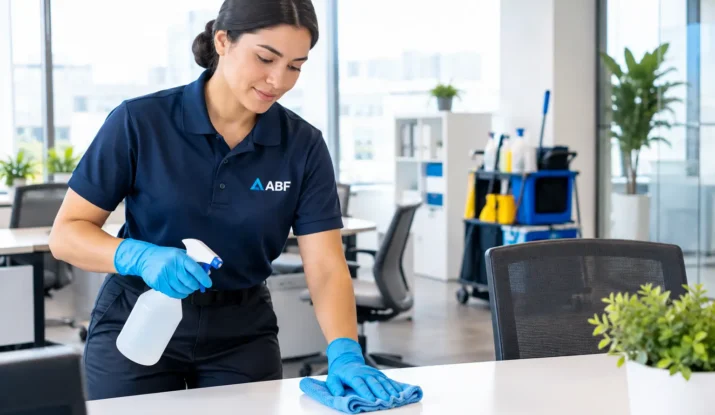
A disinfected conference-room table does little good if the elevator buttons, restroom fixtures, break-room refrigerator handle, and reception counter are overlooked. The right office disinfection frequency is not a single number for every surface. It is a practical schedule built around how people use your workplace, where contamination can move, and what level of risk your operations can reasonably manage.
For facility and office managers, the goal is not to apply disinfectant everywhere all day. That approach can waste labor, interrupt employees, and expose surfaces to unnecessary chemical use. The goal is consistent, targeted disinfection that supports a clean, healthy, welcoming workplace without creating avoidable disruption.
What Office Disinfection Frequency Should Be
Cleaning and disinfection serve different purposes. Cleaning removes visible soil, dust, food residue, and many germs from a surface. Disinfection uses an appropriate product to kill or inactivate specified germs on a pre-cleaned surface, following the product label for dilution, dwell time, and approved use.
That difference matters when setting a schedule. A desk may need routine cleaning every day but disinfection only when it is shared, used by visitors, or exposed to illness-related concerns. Conversely, a restroom faucet handle may require disinfection several times during the workday because many people touch it between cleanings.
A sound program prioritizes high-touch, shared, and public-facing areas. It also accounts for occupancy, visitor volume, seasonal illness, building layout, and the needs of tenants or employees. A small office with assigned workstations has different needs than a medical administrative suite, customer service center, school office, or multi-tenant building lobby.
Build the Schedule Around Risk, Not Guesswork
The most useful way to determine office disinfection frequency is to assess each area according to three questions: How many people touch it? How often is it touched? What happens if it is missed?
A private office used by one employee may have lower priority than a reception counter used by dozens of visitors. A rarely used storage room does not need the same attention as a break room where employees eat, prepare coffee, and share appliances throughout the day. The consequence of missing a surface also changes the decision. Restrooms, health care-adjacent spaces, and food-service areas deserve a more conservative schedule.
High-touch points usually need daily attention
In a typical office, high-touch points should be disinfected at least once each business day, with additional service when traffic is heavy. These include door handles, push plates, elevator buttons, light switches, shared copier controls, reception counters, restroom fixtures, break-room appliance handles, water-fountain controls, and common-area tables.
If your lobby hosts clients, delivery personnel, interview candidates, or tenants all day, these touchpoints may need attention multiple times per day. The same is true for shared training rooms, open-office collaboration zones, and call centers with rotating shifts.
Shared equipment needs a clear ownership plan
Printers, copier screens, conference-room controls, shared keyboards, phones, and tablet check-in stations are easy to miss because they are not always part of a traditional janitorial checklist. Yet they can receive constant hand contact.
Daily disinfection is appropriate for most shared equipment. For devices used continuously by multiple people, provide compatible disinfecting wipes or establish a between-user procedure. Electronics require care: spraying liquid directly onto screens, keyboards, or control panels can cause damage. Use products approved for the device and apply them to a cloth or wipe when the manufacturer directs it.
Individual workstations depend on how they are used
Assigned desks generally require regular cleaning and periodic disinfection, particularly during routine service or when an employee reports illness. If desks are shared through hot-desking, shift work, or hoteling, disinfecting between users is the better standard.
This is one area where communication matters as much as the service schedule. Employees should know whether they are expected to clear desks, wipe down shared stations, or report spills and illness concerns. A cleaning team can work more effectively when the workplace has clear responsibilities rather than assumptions.
When to Increase Disinfection Frequency
A baseline daily schedule is often enough for a standard office with stable occupancy and good hand hygiene. Certain conditions call for more frequent service, temporary adjustments, or focused response cleaning.
Increase disinfection when your facility experiences any of the following:
- Higher occupancy, large meetings, training sessions, or seasonal events
- A rise in employee illness or an identified exposure concern
- Heavy visitor traffic in lobbies, leasing offices, retail counters, or customer-service areas
- Shared workstations, rotating shifts, or 24-hour operations
- Restroom complaints, food spills, or visibly soiled high-touch surfaces
- Operations involving health care, child care, food handling, or vulnerable populations
More frequent disinfection should be targeted, not automatic. During cold and flu season, for example, increasing service in restrooms, break rooms, entrance areas, and shared meeting spaces can be more effective than treating every low-contact surface repeatedly. If a specific illness concern arises, follow current public-health guidance and your internal workplace policies rather than relying on a generic response.
The Product and Process Matter as Much as the Schedule
A surface is not properly disinfected simply because a worker sprayed it and immediately wiped it dry. Every disinfectant has label directions that specify where it can be used, how it should be diluted if applicable, and how long the surface must remain visibly wet. That required wet-contact period is often called dwell time.
Skipping dwell time can reduce the product’s effectiveness. So can applying disinfectant over dirt, grease, or food residue. In high-use break rooms and restrooms, cleaning first and then disinfecting is often necessary to achieve the intended result.
Trained teams should also use color-coded cleaning systems, fresh microfiber cloths, and proper sequence controls to reduce cross-contamination. For example, tools used in a restroom should not move to a break room or desk area. These operational details are less visible than a freshly polished lobby, but they are central to consistent sanitation.
Product selection deserves attention as well. Facilities may prefer Green Seal-certified cleaning products where appropriate, but environmental considerations should be balanced with the disinfectant’s approved use and the needs of the space. Fragrance sensitivity, ventilation, surface compatibility, and occupant schedules all affect the right choice.
Create a Schedule Employees Can Trust
A disinfection plan works best when it is written, repeatable, and easy to verify. Rather than telling a vendor to disinfect “as needed,” define the spaces, service windows, touchpoints, and escalation steps. A clear scope helps prevent both missed areas and unnecessary work.
For a typical office, a practical plan may include daily after-hours cleaning and disinfection of restrooms, break rooms, common touchpoints, and shared equipment. During business hours, a day porter or responsive cleaning team can address restroom checks, lobby touchpoints, spills, waste removal, and high-traffic areas as conditions change. This combination keeps the facility presentable while reserving deeper work for times that do not interfere with staff.
Documentation can add accountability, especially in multi-tenant properties, schools, medical offices, and regulated environments. Service logs, restroom inspection records, supply checks, and issue reporting show what was completed and where attention is needed. They also help managers spot patterns, such as an understaffed lunch period creating repeated break-room sanitation issues.
Do not overlook supplies. A disinfection program is harder to maintain when soap dispensers are empty, paper towels run out, gloves are unavailable, or employees have no approved wipes near shared equipment. Replenishment should be coordinated with the cleaning schedule so essential restroom and sanitation products are available when people need them.
Choose a Partner That Can Adjust With Your Facility
The best schedule will change as your occupancy, building use, and tenant expectations change. Review the plan after a move, renovation, return-to-office shift, new tenant arrival, or recurring complaint. Ask whether the current frequency is addressing actual touchpoints and traffic patterns, not merely following an old checklist.
For Chicagoland facilities that need recurring janitorial service, responsive disinfection, consumable replenishment, and specialty cleaning coordinated through one accountable provider, ABF Facility Services can help build a service plan around the way your property actually operates. A clean office should feel dependable to everyone who walks through the door, and the right frequency is one practical way to make that happen.