
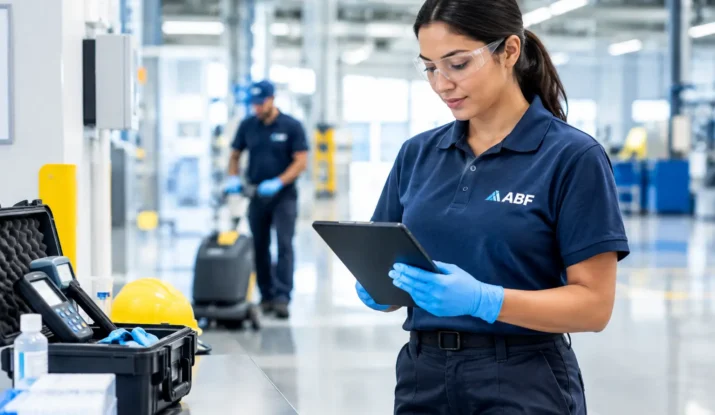
A dusty production line, an understocked restroom, or a recurring odor complaint can signal more than a cleaning issue. They may point to avoidable exposure risks, declining facility conditions, or gaps in daily procedures. The industrial hygiene trends gaining ground today reflect a practical shift: facility leaders are treating cleanliness, air quality, worker protection, and supply readiness as connected operational responsibilities.
For industrial, commercial, health care, education, hospitality, and food-service facilities, the goal is not to make every space look the same. The goal is to identify what can affect people, equipment, compliance, and business continuity – then build cleaning and maintenance routines that address those conditions consistently.
Industrial Hygiene Trends Moving Beyond Appearance
Industrial hygiene has traditionally focused on recognizing, evaluating, and controlling workplace exposures such as dust, chemical vapors, noise, biological contaminants, and poor ventilation. Cleaning supports that work, but it is not a substitute for engineering controls, safe work practices, ventilation improvements, or required personal protective equipment.
That distinction matters. A polished floor does not automatically mean a work area is safer, just as a disinfectant alone cannot correct moisture intrusion or inadequate airflow. The current trend is toward coordinated facility programs where cleaning providers, operations teams, safety leaders, and building management each have clear responsibilities.
This approach gives facility managers a better view of recurring conditions. If fine dust returns quickly after cleaning, the right next step may be to review containment, collection systems, traffic patterns, or maintenance practices. If restroom complaints increase, the issue may involve supply replenishment, fixture condition, cleaning frequency, or all three.
Risk-Based Cleaning Is Replacing One-Size-Fits-All Schedules
A fixed nightly cleaning checklist still has value, especially in offices and customer-facing areas. But facilities are increasingly adjusting service by risk, occupancy, task, and season. High-touch entry points, break rooms, restrooms, locker rooms, receiving areas, and shared equipment need different attention than low-traffic storage spaces.
In an industrial setting, a machining area may need focused control of metalworking residues, while a warehouse may require dust management around racks, loading docks, and forklift traffic lanes. Restaurants need dependable grease, floor, and waste routines. Schools and medical environments may prioritize touchpoint cleaning, restroom sanitation, and quick response to seasonal illness concerns.
Risk-based scheduling does not always mean cleaning more often everywhere. It means assigning the right labor, tools, and products to the areas where conditions can change fastest or create the greatest consequences. That can control costs while improving outcomes.
Cleaning plans are becoming more site-specific
Facility leaders are asking better questions before approving a scope of work: What contaminants are present? Which areas are exposed to the public? Where do spills or waste accumulate? What activities create dust, moisture, or odors? Which surfaces are most likely to spread soil between zones?
The answers should shape the plan. A reliable provider will walk the site, document priorities, account for operating hours, and adjust procedures as the facility changes. A warehouse expansion, tenant turnover, new production process, or higher visitor volume can all require a revised service plan.
Better Tools for Dust, Soil, and Cross-Contamination Control
Color-coded cleaning systems remain a simple but effective trend because they help crews avoid using the same tools in restrooms, break rooms, offices, and production-adjacent areas. When supported by training and proper laundering or replacement, color coding creates a visible standard that is easier to inspect and maintain.
Microfiber tools and high-filtration vacuums are also becoming standard expectations rather than specialty upgrades. Microfiber can capture fine soil effectively when used and maintained correctly. High-filtration vacuum equipment helps reduce the amount of collected dust that is released back into occupied spaces during routine cleaning.
Equipment selection depends on the environment. A large hard-floor area may benefit from an auto scrubber that improves consistency and reduces labor time. Tight spaces or sensitive production areas may require quieter equipment, controlled moisture use, or hand-detailing. The right method should protect surfaces and avoid disrupting operations.
Chemical management is receiving more attention as well. Facilities want products that perform reliably while supporting worker safety and environmental goals. Green Seal-certified products can be a good fit for many routine tasks, but product selection should always match the surface, soil type, ventilation conditions, and manufacturer guidance. Stronger chemistry is not automatically better, particularly where residues, fumes, or material compatibility are concerns.
Indoor Air Quality Is Becoming a Facility-Wide Conversation
Employees and visitors increasingly notice indoor air quality, even when they cannot identify the source of a concern. Dust buildup, musty odors, visible residue near vents, crowded workspaces, and inadequate waste handling can all affect how a building feels.
Cleaning teams play a supporting role by reducing settled dust, maintaining cleaner floors and upholstery, emptying waste promptly, and reporting visible concerns such as water damage or persistent odors. They should not diagnose ventilation systems or mold conditions outside their scope. However, a responsive team can document what it sees and alert the facility contact before a small issue becomes a larger disruption.
For Chicagoland properties, seasonal changes make this especially relevant. Winter slush and salt can damage floors and create slip hazards, while humid periods can intensify odors or moisture concerns. Entry mat programs, scheduled floor care, and prompt cleanup of tracked-in debris protect both appearance and safety.
Data and Documentation Are Raising Expectations
Facility service is becoming more accountable. Managers want confirmation that scheduled work was completed, specialty tasks were performed, supplies were replenished, and concerns were escalated. The best documentation is useful, not burdensome: inspection records, service logs, supply tracking, issue photos when appropriate, and clear communication about follow-up actions.
This visibility is particularly helpful for multi-tenant properties, schools, health care locations, and industrial sites with several shifts. It reduces the uncertainty that often leads to tenant complaints, repeated service requests, or last-minute supply shortages.
Data also helps identify patterns. If paper products are consistently depleted before the next delivery, the problem may be par levels rather than crew performance. If a floor finish is wearing quickly near entrances, a stronger matting strategy or more frequent maintenance may be needed. Operational decisions improve when they are based on recurring evidence instead of isolated complaints.
Supply Continuity Is Part of Hygiene Management
Industrial hygiene trends are not limited to cleaning tasks. Restroom consumables, gloves, hand soap, towels, liners, mats, and other recurring supplies have a direct effect on daily hygiene practices. A clean restroom without soap or paper towels is not fully functional. A work area without the appropriate gloves can create safety and productivity problems.
Many facility managers are reducing vendor complexity by coordinating cleaning, consumables, rentals, and periodic specialty services through one accountable relationship. This model can simplify ordering and create clearer responsibility when stock levels or service quality fall short. It works best when replenishment levels are reviewed regularly rather than set once and forgotten.
Worker Training Remains the Foundation
Technology and better products only help when teams know how to use them. Training should cover chemical labels and dilution, safe equipment operation, slip-and-fall prevention, proper disposal, personal protective equipment, and escalation procedures. In occupied facilities, crews also need to understand access rules, customer-service expectations, and how to work around employees, patients, students, or guests.
Uniformed, insured, OSHA-compliant teams bring an added level of confidence because they operate within defined procedures. Still, training must be ongoing. New equipment, changing site conditions, and updated client requirements all create reasons to revisit expectations.
ABF Facility Services approaches facility cleaning as part of a larger operational system. Consistent crews, specialized floor-care equipment, sustainable product options, detailed inspections, and managed supplies can help decision-makers maintain cleaner, safer, better-prepared properties without coordinating multiple disconnected vendors.
The most useful next step is to walk your facility with fresh eyes. Look beyond what is visible at first glance: where dust returns, where supplies run out, where floors show wear, where odors begin, and where daily routines break down. Those details are where a stronger hygiene program starts.