
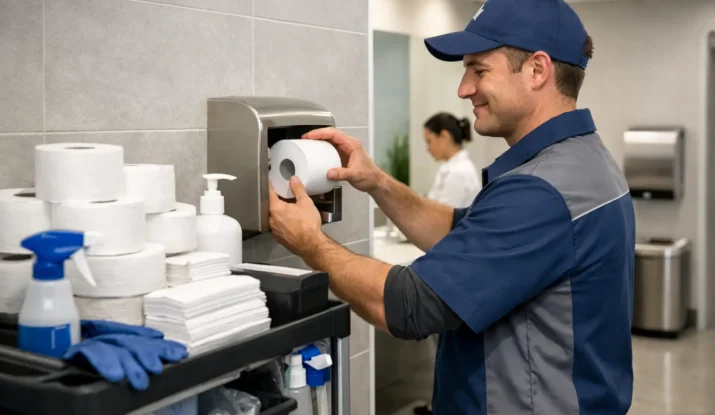
A restroom can look clean at 8 a.m. and still create complaints by 10 a.m. if the soap dispenser is empty, paper towels run out, or a trash receptacle overflows. For facility and office managers, a dependable restroom supply service for offices is not a minor purchasing task. It is a practical way to protect hygiene, avoid disruptions, and make sure employees, tenants, and visitors have what they need throughout the workday.
The right service does more than drop off boxes of products. It matches supply levels to the building, monitors usage patterns, delivers on a reliable schedule, and responds when needs change. That reduces emergency store runs, excess inventory in closets, and the frustration of finding out a restroom is understocked after someone has already complained.
Why Office Restroom Supplies Need Active Management
Restroom supplies affect how people experience a workplace. An empty soap dispenser sends a different message than a clean, well-stocked washroom with working dispensers and fresh paper products. Employees notice it. Clients notice it. Prospective tenants and job candidates notice it too.
There is also a health and safety concern. Hand soap, paper towels, tissue, sanitary disposal products, and cleaning consumables support everyday hygiene practices. When supplies are inconsistent, staff may use substitutes that are not appropriate for the space, or go without key items altogether. In high-traffic offices, medical settings, schools, retail properties, and shared commercial buildings, those gaps can appear quickly.
Managing supplies internally can seem simple until usage changes. A busy week, a large meeting, seasonal illness, construction nearby, or a tenant move-in can all increase restroom traffic. Ordering too little creates shortages. Ordering too much ties up budget and storage space. A managed supply program gives facility teams a more predictable way to handle both situations.
What a Restroom Supply Service for Offices Should Include
A useful service begins with an assessment of the facility rather than a one-size-fits-all product list. A 15-person office has very different needs from a multi-tenant building, manufacturing site, restaurant, or medical office. The number of restrooms, fixture count, operating hours, visitor volume, and cleaning schedule all affect what should be delivered and how often.
Core restroom supplies commonly include toilet tissue, jumbo rolls, folded towels, roll towels, hand soap, sanitizer, feminine hygiene products, liners, air freshening products, and cleaning chemicals. Many offices also need dispensers, replacement parts, and maintenance support to keep those products accessible and presentable.
The best choice depends on the building. Paper towels may be the right fit where quick hand drying and easy cleanup matter. High-capacity tissue systems can reduce changeouts in busy restrooms. Touch-free soap and towel dispensers can support a cleaner user experience in high-traffic environments. There is no single correct setup, but there should be a clear reason behind each product recommendation.
Delivery Is Only Part of the Service
A supplier that simply delivers cases on request leaves the office manager to estimate demand, maintain stock counts, and chase down urgent replacements. That may work for a very small office with steady occupancy. For most commercial properties, it creates avoidable administrative work.
A managed approach should establish delivery intervals, minimum stock levels, and a clear process for special requests. It should also account for the supplies used by the cleaning team. If restroom cleaning is handled separately from supply delivery, responsibility can become unclear when products run out. One provider that manages both functions creates a clearer line of accountability.
The Cost of Stockouts Is Higher Than the Product Cost
A missing roll of tissue or an empty dispenser may seem insignificant, but it can trigger a chain of operational problems. Staff members spend time locating replacement products. A building engineer may be pulled from a more urgent task. Front-desk staff may have to respond to visitors. Meanwhile, the person using the restroom is left with a poor impression of the facility.
For property managers, repeated restroom complaints can affect tenant satisfaction. For office managers, they can become a recurring distraction that takes attention away from people, operations, and vendor coordination. In customer-facing businesses, restroom conditions can influence whether guests return.
A supply program should help prevent these moments rather than merely react to them. That means looking at actual consumption, not just placing the same order every month. A location with fluctuating occupancy may need seasonal adjustments. A facility that hosts events may need a backup plan before large gatherings. An office with limited storage may benefit from more frequent, smaller deliveries.
How to Evaluate Your Current Restroom Supply Process
Start with the questions your team already hears: Are restrooms consistently stocked at all hours? Are cleaning personnel able to replenish products without searching through multiple storage areas? Do dispensers work properly? Is there a clear person to contact when an item is missing or a delivery is late?
Then look at usage and waste. Excessive paper towel use may point to dispenser settings, product selection, or a poorly located unit. Frequent emergency orders can indicate that par levels are too low. Products sitting unused for months may mean the facility is buying the wrong quantities or too many product variations.
It is also worth reviewing the number of vendors involved. If one vendor cleans restrooms, another supplies paper goods, another rents floor mats, and an internal employee coordinates each relationship, the process can become difficult to manage. Consolidating appropriate services can reduce invoices, simplify communication, and make performance easier to track.
Pair Supplies With Professional Restroom Cleaning
Supplies and cleaning are closely connected, but they are not interchangeable. A stocked restroom still needs proper cleaning and disinfection of high-touch areas, fixtures, partitions, floors, mirrors, dispensers, and waste containers. Likewise, a well-cleaned restroom will not stay functional if key products are missing.
When cleaning and supply service are coordinated, restroom attendants or janitorial teams can identify issues before they become complaints. They can report a damaged dispenser, unusually high product use, a leaking fixture, or a recurring odor concern. This gives facility managers useful information instead of forcing them to discover problems after the fact.
ABF Facility Services supports Chicagoland workplaces with integrated cleaning, restroom consumables, and related facility supply solutions. Trained, uniformed, insured teams can help build a program around the way a property actually operates, with attention to dependable replenishment, sanitation standards, and responsive service.
Sustainability and Product Choices
Many organizations want restroom products that support environmental goals, but the practical details matter. Recycled-content paper products, concentrated soap refills, efficient dispensers, and products with recognized environmental certifications can be worthwhile options. However, the right choice must still perform reliably for the facility’s traffic level and user expectations.
For example, a lower-cost towel may not save money if users need several sheets to dry their hands. A dispenser that reduces consumption may offer better long-term value, even if its initial cost is higher. The goal is not to select products based on a label alone. It is to balance hygiene, durability, waste reduction, appearance, and total operating cost.
Build a Service Plan That Can Adjust
Office needs rarely stay fixed. Hybrid work schedules can change traffic patterns. New tenants can increase restroom use. Flu season may increase demand for soap, towels, and sanitizing products. A flexible service plan should allow adjustments without turning every change into a lengthy purchasing process.
Ask prospective providers how they handle urgent requests, out-of-stock items, dispenser maintenance, and changes in delivery frequency. Confirm who is responsible for checking inventory and how service concerns are documented. Reliable communication matters as much as the products themselves.
A well-supplied restroom is one of the clearest signs that a workplace is being cared for. When the supplies, cleaning, and service schedule work together, employees can focus on their jobs and visitors can feel confident that the facility is managed with care. That is the standard worth building into every office restroom.