
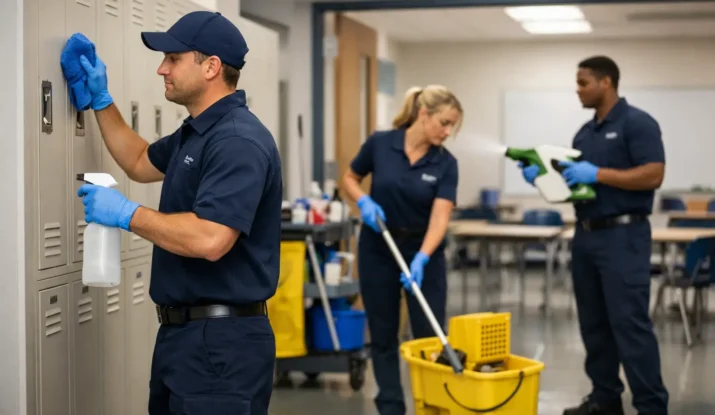
A school can look clean at 7:30 a.m. and still fall short where it matters most. Restroom dispensers may be empty by lunch, high-touch surfaces may receive inconsistent attention, and hallway floors can quickly become both an appearance issue and a slip risk. Effective school cleaning services are not simply about emptying trash after dismissal. They are a coordinated facility program that supports student health, staff confidence, asset protection, and a learning environment that feels cared for.
For school administrators, facility managers, and operations teams, the challenge is balancing a demanding daily schedule with limited disruption. Classrooms, cafeterias, gyms, offices, nurse areas, restrooms, entrances, and shared equipment all have different cleaning needs. A dependable cleaning partner builds a plan around how the campus actually operates, not a generic checklist.
What School Cleaning Services Should Cover
A strong school cleaning program starts with the daily basics, then adds the specialized work that keeps the property safe, presentable, and ready for long-term use. The right scope depends on the size of the campus, building age, grade levels served, after-school activity schedule, and whether the facility has food service, athletic spaces, or high-traffic community use.
Daily janitorial work typically includes classroom and office cleaning, restroom sanitation, trash and recycling removal, vacuuming, mopping, dusting, and cleaning of entryways and common areas. However, a complete program should also account for the areas that receive the heaviest wear and create the strongest impression on families, employees, and visitors.
That often includes:
- High-touch disinfection of door hardware, handrails, switches, drinking fountains, desks, counters, and shared equipment
- Restroom supply management for soap, paper products, toilet tissue, feminine hygiene products, and sanitary disposal needs
- Hard-floor care such as auto-scrubbing, burnishing, stripping, waxing, and refinishing
- Carpet care that removes tracked-in soil, allergens, stains, and odors before they become permanent
- Seasonal pressure washing, interior glass cleaning, deep cleaning, and post-event cleanup
The details matter. A cafeteria needs careful attention to food debris, tables, floors, and waste areas. A gym floor needs the right product and process to preserve its finish. A nurse’s office may require a more frequent, carefully controlled disinfection routine. Treating every room the same can leave critical gaps.
Why Consistency Matters More Than Occasional Deep Cleaning
A deep clean can improve a campus quickly, but it cannot replace consistent daily execution. Schools experience constant movement: students arrive, classes change, meals are served, activities begin, and staff work long hours after the final bell. Soil, moisture, fingerprints, and waste accumulate throughout the day.
When cleaning is inconsistent, the consequences are visible. Restrooms become a source of complaints. Floors lose their finish sooner. Odors linger in locker rooms and trash areas. Teachers may spend time addressing basic cleanliness concerns instead of preparing for students. These issues can also affect public perception, particularly when parents or community groups visit the building.
A recurring schedule helps prevent that drift. It creates accountability for daily tasks while making room for planned periodic services, such as carpet extraction, floor refinishing, high dusting, and detailed restroom cleaning. Rather than waiting until conditions become unacceptable, a facility team can address wear before it turns into a costly restoration project.
Cleaning for Health Without Disrupting Learning
Sanitizing and disinfecting are necessary components of a school program, but they should be targeted and handled correctly. High-touch surfaces need attention, especially during periods of increased illness or when a specific area has been identified for additional cleaning. At the same time, schools need processes that are practical for occupied buildings.
The best approach is to match products, dwell times, and cleaning methods to the surface and situation. Cleaning first removes visible soil and allows disinfectants to work as intended. Using the wrong chemical, applying too much product, or failing to follow label directions can create problems rather than solve them.
Professional teams should use clear procedures, color-coded cleaning systems to reduce cross-contamination, microfiber tools that capture dust and debris effectively, and high-filtration vacuums that support better indoor air quality. Green Seal-certified and other environmentally responsible products can be a sensible choice when a school wants to reduce harsh chemical exposure without lowering its cleaning standard.
Timing also matters. Many detailed tasks are best completed after hours, while day porter support may be valuable for busy campuses that need ongoing restroom checks, spill response, lobby upkeep, and trash removal during the school day. The right mix depends on enrollment, building layout, staffing, and the level of activity on campus.
Floors Are a Major Part of School Facility Care
School floors absorb more punishment than most facility surfaces. Hallways, cafeterias, gym entrances, stairwells, and main lobbies collect water, salt, grit, food particles, and heavy foot traffic. In Chicago and surrounding suburbs, winter weather makes entrance maintenance especially important. Melted snow and road salt can quickly damage finishes and create slippery conditions.
Routine mopping alone is not enough to protect hard floors. A floor-care plan should include walk-off mats at entrances, frequent removal of grit, appropriate neutral cleaning products, and scheduled machine scrubbing. Depending on the flooring material, periodic burnishing or refinishing may be needed to restore appearance and extend the life of the surface.
There is a trade-off to consider. Deferring floor care may appear to save money in the short term, but allowing finish damage and embedded soil to build up often leads to more expensive restoration or replacement later. A planned program is easier to budget and usually causes less disruption than emergency work during the school year.
Carpet requires the same preventive mindset. Vacuuming removes dry soil, but it does not address stains, residue, or deeply embedded debris. Scheduled extraction during breaks, weekends, or low-occupancy periods helps preserve carpet appearance and reduces the chance that odors or stains become a permanent part of the building.
Supplies Should Not Be a Separate Facility Problem
A clean restroom is only functional when it is stocked. The same applies to classrooms, staff areas, cafeterias, and custodial closets. When soap, paper towels, toilet tissue, gloves, liners, or cleaning chemicals run out, the issue becomes an operational distraction for school staff.
Managing products through the same provider that handles cleaning can simplify accountability. Instead of calling one company about janitorial work and another about restroom supplies or floor mats, the facility team has a clearer point of contact. Inventory can be monitored around actual usage, and product replenishment can be built into the regular service schedule.
This does not mean every school needs the same supply program. A small private school may require straightforward recurring deliveries, while a large district campus may need a more formal inventory process, multiple storage locations, and different products for kitchen, athletic, and administrative areas. The goal is dependable availability without unnecessary overstock.
What to Look for in a School Cleaning Partner
Schools should evaluate more than a price quote. Low pricing can become expensive when crews miss visits, staffing changes constantly, communication is slow, or the scope excludes the work the campus truly needs. A capable provider should be able to explain exactly how service will be staffed, supervised, documented, and adjusted when needs change.
Look for trained, uniformed, insured professionals who follow OSHA-aware safety practices and understand how to work respectfully in an educational environment. Background screening, clear arrival procedures, secure handling of keys or access credentials, and responsive communication are also essential. A cleaning crew is regularly present in your building, often after hours, so reliability and professionalism are not optional.
Ask how quality is verified. Useful answers include routine inspections, communication logs, service checklists, prompt issue resolution, and a defined escalation process. It is also reasonable to ask about equipment, products, floor-care experience, and the ability to support additional needs such as pest control, pressure washing, trash and junk removal, or emergency cleanup.
ABF Facility Services helps Chicagoland schools consolidate recurring cleaning, specialty maintenance, sanitization, and essential facility supplies through one accountable relationship. That approach can reduce vendor coordination while keeping the campus cleaner, better stocked, and prepared for daily use.
A school facility does not need to be perfect to feel welcoming, but it must be consistently cared for. When cleaning plans reflect the real flow of students, staff, visitors, and events, the result is more than a better-looking building. It is a campus where people can focus on teaching, learning, and serving the community.