
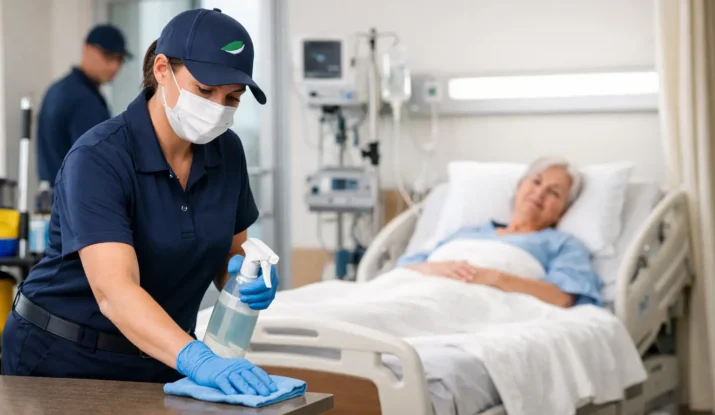
A smudged check-in counter, an empty soap dispenser, or a poorly maintained restroom can change a patient’s confidence in a facility before they ever meet a provider. Healthcare facility cleaning is not simply about appearance. It is a daily operational responsibility that supports patient trust, staff readiness, infection-control efforts, and the condition of the building itself.
For medical offices, urgent care centers, outpatient clinics, dental practices, rehabilitation facilities, and other healthcare settings, the right cleaning plan has to account for how people actually move through the space. It must address high-touch surfaces, waiting-room turnover, restroom use, waste handling, supply availability, and cleaning schedules that do not interrupt patient care.
Why Healthcare Facility Cleaning Requires a Different Standard
A healthcare setting has different risks than a typical office. Patients may arrive with contagious illnesses, staff may move frequently between treatment areas, and high-touch surfaces receive constant use throughout the day. Reception counters, door handles, elevator buttons, exam-room furniture, restroom fixtures, payment terminals, and shared equipment all need clear attention.
The goal is not to promise a germ-free facility. That is neither realistic nor responsible. The goal is to establish a consistent cleaning and disinfection process that reduces environmental contamination, follows the facility’s protocols, and creates a visibly clean environment for everyone who enters.
Consistency matters as much as technique. A cleaning crew that performs well one night but misses key areas the next can create gaps that facility leaders may not see until a patient, employee, or inspector points them out. Detailed scopes of work, trained personnel, documented routines, and responsive supervision help prevent that inconsistency.
Start With the Flow of Patients, Staff, and Visitors
An effective healthcare cleaning program begins with a walkthrough, not a generic checklist. A facility manager should identify where people enter, wait, receive care, use restrooms, eat, dispose of waste, and exit. Those patterns reveal where cleaning frequency needs to be highest.
For example, a small specialty practice may need focused attention on its reception area, waiting room, exam rooms, restrooms, and staff break room. A larger outpatient center may also need regular attention for corridors, elevators, shared clinical workspaces, imaging areas, administrative offices, and multiple entrances.
Timing is equally important. Nightly cleaning is often appropriate for thorough restroom sanitation, trash removal, floor care, and general cleaning. But facilities with heavy daily traffic may also benefit from daytime porter service. A porter can replenish restroom supplies, clean spills promptly, remove waste, wipe high-touch public surfaces, and keep entryways presentable between scheduled cleanings.
The right schedule depends on patient volume, operating hours, service lines, and the condition of the building. A busy urgent care center has different needs than a private office that sees appointments three days per week. Cleaning should be tailored to the facility rather than sold as a one-size-fits-all package.
Focus on High-Touch Surfaces Without Missing the Basics
Disinfection gets much of the attention in healthcare environments, but a successful program begins with proper cleaning. Soil, dust, body oils, and residue can reduce the effectiveness of disinfectants when surfaces are not cleaned first. Teams should use products according to their label directions, including required contact time, rather than applying a product and immediately wiping it away.
High-touch surfaces deserve routine attention throughout public and patient-care areas. These include check-in counters, pens, clipboards, chair arms, handles, light switches, faucets, flush levers, railings, and shared touchscreens. In exam rooms, the facility should define responsibilities clearly so staff and cleaning personnel know which surfaces are handled between patients and which are addressed during scheduled service.
At the same time, the basics cannot be overlooked. Clean glass, dust-free ledges, odor-free restrooms, empty trash receptacles, and well-maintained floors influence how safe and professional a facility feels. Patients notice the details, especially when they are waiting.
Color-coded cleaning systems can help reduce the risk of cross-contamination by assigning tools to specific zones, such as restrooms, public areas, and other designated spaces. Microfiber cloths and mops capture more soil than many traditional materials when used correctly, while high-filtration vacuums help manage dust and allergens in carpets and upholstery.
Restrooms and Waiting Areas Carry Outsized Importance
Restrooms are one of the clearest indicators patients use to judge facility management. A restroom should be cleaned and disinfected on a reliable schedule, with fixtures, partitions, floors, dispensers, mirrors, and touchpoints addressed. It also needs to remain stocked with soap, paper products, toilet tissue, hand sanitizer where appropriate, and waste liners.
Supply management is not a minor detail. A clean restroom with an empty soap dispenser still fails the patient experience. Working with one accountable provider for recurring cleaning and essential consumables can reduce the burden of monitoring multiple vendors and placing last-minute orders.
Waiting rooms require a similar level of discipline. Chairs, tables, children’s areas, check-in surfaces, floors, and waste bins should be maintained throughout the day according to use. Entry mats deserve attention as well. They help control moisture and outside debris, which supports safer walking conditions and reduces wear on hard floors and carpet.
Protect Floors, Equipment, and Facility Assets
Healthcare facilities experience constant foot traffic, often from patients using walkers, wheelchairs, strollers, or mobility devices. Floors need to be clean, dry, and properly maintained to support both appearance and safety. Neglected floors can become stained, dull, slippery, or difficult to restore.
Routine vacuuming, damp mopping, spot removal, and entry-mat service form the foundation of floor care. Periodic machine scrubbing, burnishing, stripping and waxing, carpet extraction, or tile and grout cleaning may be needed depending on the flooring material and traffic level. These specialty services should be scheduled around patient hours whenever possible to minimize noise, odors, and disruption.
Facilities should also think beyond clinical and public spaces. Break rooms, administrative offices, storage areas, loading areas, and exterior entrances affect staff morale, pest prevention, and overall building presentation. Waste accumulation and food debris can create avoidable problems if they are not removed promptly.
Build Accountability Into the Cleaning Plan
A dependable cleaning partner should be able to explain what will be cleaned, how often it will be cleaned, which products and equipment will be used, and who to contact when needs change. Vague promises of “complete cleaning” are not enough for a healthcare operation.
Look for trained, uniformed, insured teams that understand OSHA requirements and work carefully in occupied facilities. Clear communication matters when there is a spill, a supply shortage, a schedule adjustment, or a patient-area concern that requires fast attention.
It is also reasonable to ask how quality is monitored. Site inspections, supervisor check-ins, service logs, and an accessible point of contact give facility leaders a way to address issues before they become recurring complaints. The best vendor relationship feels less like outsourcing a chore and more like adding an accountable extension of the operations team.
For Chicagoland healthcare facilities, ABF Facility Services can combine recurring janitorial work, restroom consumables, floor care, sanitization support, trash removal, and other facility needs through one coordinated relationship. That approach can simplify vendor management while keeping responsibility clear.
Choose Products With Safety and Sustainability in Mind
Healthcare cleaning products must be selected for the task, surface, and facility protocol. Disinfectants should be appropriate for the intended use and applied according to manufacturer instructions. In non-disinfection applications, environmentally preferable options, including Green Seal-certified products where suitable, can help support a healthier indoor environment without sacrificing cleaning performance.
Product selection involves trade-offs. Stronger chemistry is not always better, particularly in small or occupied spaces where odors or residue can affect patients and staff. A knowledgeable cleaning team balances effective cleaning with ventilation, dwell time, surface compatibility, and the needs of the people using the building.
A clean healthcare facility tells patients that the organization is attentive before an appointment even begins. Set a cleaning scope that reflects your actual traffic, care areas, and operating hours, then review it regularly as the facility changes. When cleaning, supplies, and specialty maintenance are coordinated with care, your team can stay focused on what patients came to you for.