
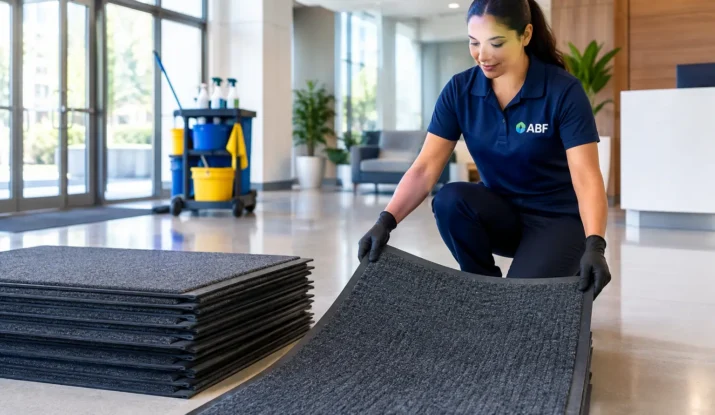
A worn entrance mat can create a poor first impression long before a visitor reaches the reception desk. It can also hold moisture, allow tracked-in grit to damage hard floors, and create a slip concern during Chicago’s wet and snowy months. When evaluating rental mats versus purchase, facility managers need to look beyond the price of a single mat. The right choice depends on traffic, weather exposure, cleaning capacity, replacement expectations, and the level of accountability your operation needs.
For many commercial properties, mats are working safety and floor-protection equipment, not just an entryway accessory. A strong program helps keep lobbies, corridors, kitchens, production areas, and restrooms cleaner while reducing the amount of dirt that reaches carpet and hard flooring.
Rental Mats Versus Purchase: The Core Difference
Purchasing mats means your facility owns the inventory. You select the style, size, and quantity, pay the upfront cost, and take responsibility for routine cleaning, storage, repairs, and eventual replacement. This can be a practical approach for low-traffic spaces with a stable layout and an in-house team that can properly maintain the mats.
A rental mat program provides the mats as part of a scheduled service. Soiled mats are picked up and replaced with clean ones at an agreed frequency. The provider manages laundering, quality checks, and replacement of mats that reach the end of their useful life under the terms of the program. Instead of managing an asset internally, the facility receives a recurring service designed to keep floor protection in working condition.
The question is not simply whether renting or buying costs less on day one. The more useful question is which option gives your facility the most dependable protection with the least operational burden.
Compare the Full Cost, Not Just the Invoice
Purchased mats appear less expensive when comparing an upfront purchase price to a recurring rental fee. That comparison leaves out several costs that can become significant over time. Mats need to be vacuumed, washed, dried, inspected, moved, and replaced. If a mat is saturated after rain or snow, it may need immediate attention rather than waiting for the next regular cleaning shift.
Cleaning a commercial mat correctly also takes more than a quick shake or vacuum. Embedded grit can wear down carpet fibers and diminish the mat’s ability to trap soil. Mats that are not fully dried before being returned to service can contribute to odors or create a less professional appearance. In foodservice, health care, schools, and other sensitive environments, consistent cleaning practices matter even more.
Rental programs convert much of this maintenance work into a predictable operating expense. The price generally reflects scheduled exchanges, professional laundering, delivery, pickup, and ongoing use of the mat inventory. For a property manager or office manager balancing multiple vendors, that predictability can be valuable. It makes budgeting easier and reduces the chance that dirty, curled, or worn mats stay in service because replacement was not scheduled.
That said, purchasing can make sense when mat use is limited and cleaning is already handled effectively onsite. A small office with one protected entry, minimal visitor traffic, and reliable housekeeping may not need a high-frequency exchange schedule. The decision should follow the facility’s actual conditions, not a one-size-fits-all rule.
Consider labor and floor-care savings
The mat itself is only part of the financial picture. Effective matting reduces the soil, salt, water, and debris that cleaning teams must remove from surrounding floors. Less tracked-in debris can mean fewer emergency mopping needs, less aggressive carpet extraction, and less wear on finishes in high-traffic areas.
This is particularly relevant in Chicagoland, where winter conditions can change quickly. A clean, absorbent entry mat positioned correctly can help control moisture before it travels farther into the building. Whether mats are rented or owned, undersized or poorly maintained mats rarely deliver the protection a facility expects.
Service Reliability and Replacement Matter
The best mat program is one employees and visitors barely notice because it is consistently clean, flat, and in the right place. Purchased mats require someone on your team to watch for problems. Common issues include edges that curl, backing that deteriorates, logos that fade, stains that do not come out, and mats that become too thin to perform well.
With rental service, scheduled exchange creates a routine inspection point. The provider sees the mat at every pickup and can identify when it is no longer suitable for service. This is especially helpful for high-traffic entrances, retail locations, medical facilities, restaurants, manufacturing sites, and multi-tenant buildings where appearance and safety are daily concerns.
Frequency should match conditions. A lightly used interior lobby may need less frequent service than a busy entrance exposed to rain, snow, road salt, or construction dust. Restaurant kitchen mats and grease-resistant mats may require a more frequent schedule than office entry mats. A provider should be able to adjust service based on your traffic patterns rather than locking every area into the same approach.
Safety Is a Daily Performance Issue
Mats support safer walking surfaces when they are clean, dry, stable, and sized for the traffic path. They cannot eliminate every slip-and-fall risk, but they are an important first line of defense against moisture and debris entering a facility.
A neglected mat can create the problem it was intended to solve. Waterlogged mats may transfer moisture back onto the floor. Worn backing can allow shifting. Raised or curled corners can become trip hazards. A facility that buys mats should establish clear inspection and cleaning responsibilities, particularly at entrances and areas exposed to water, oil, or grease.
Rental mats are often attractive to operations leaders because professional laundering and regular replacement support more consistent performance. However, service alone is not enough. Mats must be placed securely, checked between visits, and paired with prompt spill response and routine floor cleaning. Good safety results come from a complete process.
Appearance and Branding Have Operational Value
Entry mats contribute to the condition guests, tenants, patients, customers, and employees see immediately. A clean logo mat can reinforce a professional arrival experience, while a stained or frayed mat suggests that routine details are being missed. For hospitality, retail, office, and healthcare environments, that impression carries real value.
Rental programs can be useful when a facility wants clean logo mats without taking on the long-term care of branded inventory. They also allow flexibility when an office moves, a retail layout changes, or a property manager needs different mat sizes for seasonal conditions. Purchased logo mats can still be appropriate where branding is permanent and the facility has reliable maintenance processes, but replacement lead times and spare inventory should be considered.
Choose Based on Your Facility’s Real Conditions
Before deciding, assess where mats are used, how quickly they soil, who maintains them, and what happens when one fails. A useful review includes entryways, employee entrances, loading areas, elevators, kitchens, restrooms, break rooms, production zones, and transition points between carpet and hard flooring.
Rental is often the stronger fit when traffic is heavy, weather exposure is frequent, appearance standards are high, or internal staff should not be pulled away to launder and replace mats. It is also well suited to organizations that value a single accountable partner for cleaning, supplies, and recurring facility needs.
Purchase may be the better fit for limited-use areas, specialized custom applications, or facilities with proven onsite laundry and maintenance capacity. The key is to include labor, cleaning quality, storage, replacement, and floor-care impact in the calculation. A low purchase price is not a savings if the mat performs poorly or creates more work for the cleaning team.
ABF Facility Services helps commercial facilities evaluate mat service as part of a broader approach to cleaner floors, safer entrances, and dependable supply support. The most effective plan is tailored to the building, the people using it, and the conditions it faces each day.
A mat program should make your operation easier to manage, not give your team another item to chase. When mats stay clean, functional, and properly placed, they quietly protect floors, support a welcoming environment, and help your facility stay ready for the next person through the door.