
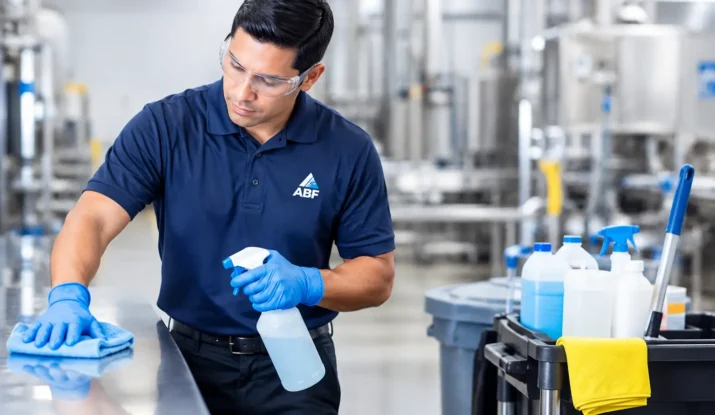
A grease-stained loading dock, kitchen exhaust area, machine shop floor, or maintenance bay does not need the strongest chemical on the shelf. It needs the right chemical for the soil, surface, equipment, and work conditions involved. That is why industrial degreaser reviews should go beyond claims such as “heavy duty” or “fast acting.” For facility managers, the best review is one that shows whether a product removes the actual buildup without creating safety issues, damaging finishes, or driving up labor time.
A practical evaluation also protects more than appearances. Grease can create slip hazards, collect dust, interfere with equipment maintenance, and leave a poor impression on tenants, employees, inspectors, and visitors. Selecting a degreaser carefully helps maintain a cleaner, safer facility while controlling supply and labor costs.
What Industrial Degreaser Reviews Should Measure
An industrial degreaser is not one product category with one standard performance level. Formulas range from mild, ready-to-use cleaners for daily wipe-downs to concentrated products designed for petroleum soils, carbonized grease, and production-area residue. A review that treats them as interchangeable will not help a purchasing decision.
Start with the type of soil. Animal fats and cooking oils in a commercial kitchen respond differently than hydraulic fluid in a maintenance area. Tire marks, lubricants, machining oils, adhesives, soot, and baked-on carbon may each require a different approach. A product can perform well on one contaminant and disappoint on another, so cleaning teams should test against their most common and most difficult soils.
Surface compatibility matters just as much. Concrete, sealed concrete, quarry tile, stainless steel, vinyl flooring, painted walls, epoxy coatings, aluminum, and machinery components do not all tolerate the same chemistry. A highly alkaline formula may cut through grease quickly but dull aluminum, weaken certain floor finishes, or affect painted surfaces if it is used incorrectly. Read label directions, safety data information, and dilution requirements before applying any new product across a large area.
The cleaning method changes the result as well. A degreaser that works effectively in a mop bucket may not perform the same way in an automatic scrubber, pressure washer, spray-and-wipe program, parts washer, or foam application. Dwell time, water temperature, agitation, and rinse access all affect results. Reviews should explain the conditions used, not simply state that a product “worked.”
How to Compare Industrial Degreasers in Your Facility
The most dependable comparison is a controlled site test. Choose a small, representative area with a typical level of soil, then compare products under similar conditions. Use the same tools, application method, dwell time, and level of agitation. A side-by-side test makes it easier to see whether a chemical actually reduces labor or just shifts effort to rinsing and repeat cleaning.
Evaluate cleaning power and labor time
The strongest visible result is not always the best operational result. A chemical may remove grease quickly but require extensive rinsing, leave residue that attracts soil, or produce fumes that make the area difficult to work in. Track the full process: application, dwell time, scrubbing, pickup, rinsing, drying, and any rework required.
For floor cleaning, observe whether the treated area remains clean after normal foot traffic or equipment movement. If a degreaser leaves a film, the floor may look acceptable immediately after service but become dull or slippery later. For equipment and work surfaces, inspect for streaking, residue, corrosion, discoloration, or tackiness after the area dries.
Check dilution and true cost per use
Purchase price alone can be misleading. A concentrated degreaser with an accurate dilution system may provide more usable solution per container than a lower-priced ready-to-use product. On the other hand, a concentrate that is mixed too strongly can increase cost, leave residue, and expose workers to unnecessary chemical strength.
Calculate cost per finished gallon and estimate the amount needed for a shift, weekly program, or scheduled deep clean. Include dispensing equipment, sprayers, mop buckets, pads, recovery equipment, and water use where applicable. If a product removes soil in one pass rather than two, its higher per-gallon cost may still be the more economical choice.
Consider worker safety and indoor conditions
Industrial cleaning should support a safe work environment, not introduce avoidable risks. Review required personal protective equipment, ventilation needs, hazard classifications, and first-aid guidance. Teams should be trained on correct dilution, labeling, storage, spill response, and never mixing chemicals.
Fragrance and fumes deserve attention, especially in occupied facilities. A strong odor can disrupt employees, customers, students, patients, or tenants even when the product cleans effectively. In enclosed rooms, healthcare-adjacent spaces, food-service areas, and facilities with sensitive occupants, lower-odor options may be a better operational fit.
Sustainability claims should also be reviewed with care. A product described as environmentally preferable may support a facility’s purchasing goals, but it must still perform on the required soil load. Look for credible product documentation and confirm that the formula is appropriate for the intended surface and wastewater practices.
Common Review Mistakes That Lead to Poor Results
One common mistake is expecting a single degreaser to solve every cleaning challenge. Daily maintenance, periodic deep cleaning, kitchen grease removal, shop-floor cleaning, and exterior pressure washing often call for different products or dilution ratios. Standardizing supplies is helpful, but over-standardizing can leave crews with an ineffective chemical for specialized work.
Another mistake is skipping the test patch. Even when a product is approved for a general surface category, coatings, sealers, floor finishes, and older materials can react differently. Test in an inconspicuous location and allow the surface to dry fully before approving wider use. This small step can prevent costly damage to floors, equipment, and finishes.
Facilities also sometimes judge a product before giving it enough dwell time. Degreasers need time to emulsify and loosen soil. Applying the solution and immediately wiping it away can make an effective formula appear weak. At the same time, leaving chemicals on a surface longer than directed can increase the chance of damage. The label instructions and a documented cleaning procedure should guide the team.
Finally, do not ignore the dispensing process. Incorrect mixing is one of the most frequent reasons for inconsistent cleaning results. Closed-loop dispensing, clearly marked bottles, and trained staff help ensure that every shift uses the intended concentration. They also reduce waste and make supply usage easier to manage.
Choosing the Right Type of Degreaser
Water-based degreasers are often a practical choice for routine facility cleaning because they are versatile, easier to rinse, and available in a range of strengths. They can work well for floors, walls, counters, equipment exteriors, and general maintenance tasks when matched to the soil and surface.
Solvent-based formulas may be necessary for certain petroleum-based soils, adhesives, and heavy industrial residues. Their advantages can come with trade-offs, including stronger odors, flammability concerns, ventilation requirements, and more restrictive use around occupied spaces. These products should be selected and managed with particular attention to safety procedures.
Enzyme-based or bio-based options can be useful for ongoing grease management in appropriate applications. They may be better suited to recurring maintenance than immediate removal of thick, baked-on buildup. As with any product, performance depends on the actual task, temperature, dwell time, and cleaning method.
For many properties, the right answer is a written product matrix rather than one preferred product. The matrix can identify approved degreasers for each area, the proper dilution, required PPE, tools to use, dwell time, rinse instructions, and the team member responsible for restocking. This gives in-house staff and service partners a consistent standard to follow.
Build a Review Process That Works Beyond the First Use
A good product evaluation does not end after one successful cleaning. Monitor results over several service cycles. Ask whether floors stay cleaner between visits, whether equipment is easier to maintain, whether staff report fewer odors or slip concerns, and whether the product affects productivity. Record chemical usage and labor hours so the decision is based on operating performance rather than a first impression.
For Chicago-area facilities with varied needs across offices, restaurants, warehouses, schools, and industrial sites, a customized cleaning program can simplify this process. ABF Facility Services evaluates cleaning conditions, uses trained and OSHA-compliant teams, and helps clients align products, equipment, and procedures with the realities of their facility.
The best degreaser is the one that delivers dependable results at the right dilution, protects the surfaces under its care, and gives your team a clear, repeatable way to keep grease from becoming a larger facility problem.