
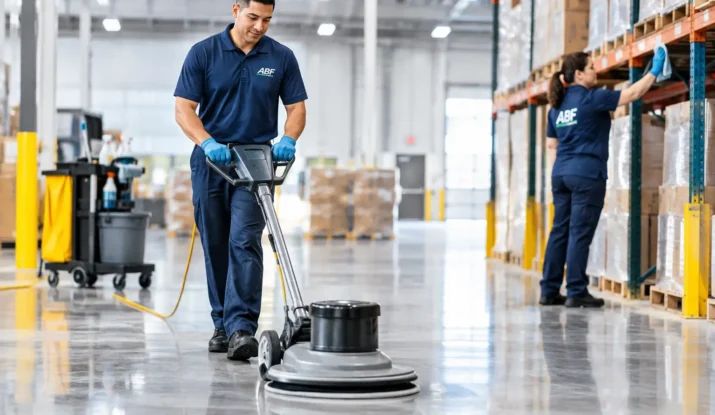
A warehouse floor can look acceptable from the dock door and still create daily operational problems. Fine dust settles on racking and product packaging, shrink wrap collects near travel lanes, spills leave slick areas around staging zones, and restrooms run short on supplies before the next shift arrives. Strong warehouse cleaning outcomes address these details before they turn into injuries, damaged inventory, equipment issues, or complaints from employees and visitors.
For warehouse managers, the goal is not simply to make the building look clean. It is to maintain a safer, more organized facility that supports receiving, storage, picking, shipping, and employee comfort without slowing the operation down. That requires a cleaning plan built around how the warehouse actually runs.
What Good Warehouse Cleaning Outcomes Look Like
The most meaningful results are visible in both the condition of the facility and the consistency of the workday. A clean warehouse has clear walkways, maintained restrooms, dust-controlled work areas, and floors that are cleaned according to their condition and traffic level. It also has fewer surprises: no overflowing waste containers, no neglected break rooms, and no recurring buildup around loading docks or entrances.
Safety is often the first outcome facility leaders notice. Loose debris, spills, and residue can contribute to slips, trips, and falls, particularly where employees move quickly between racking, packing stations, forklifts, and dock doors. Regular sweeping, scrubber work, spill response, and waste removal help keep travel paths usable and reduce avoidable hazards.
Cleaning also protects assets. Dirt, salt, moisture, and wheel traffic can wear down concrete coatings and hard-floor finishes. Dust can accumulate on shelving, equipment housings, vents, and ledges. When cleaning is planned around those conditions, facilities can preserve surfaces longer and avoid allowing manageable maintenance needs to become costly repair projects.
A third outcome is a more dependable employee experience. Workers notice when restrooms are stocked, break areas are sanitary, and common touchpoints are maintained. These details communicate that the facility is managed with care. For employers trying to retain staff and maintain productive shifts, that matters.
Why a Basic Cleaning Checklist Is Not Enough
A generic checklist may cover trash removal, restroom service, and floor cleaning, but warehouses are rarely generic environments. A distribution center with multiple shifts has different needs than a light-manufacturing warehouse. A food-related operation may require more frequent sanitation in designated areas, while a warehouse handling dusty materials may need focused high-dusting and filtration practices.
Cleaning frequency depends on traffic, product type, season, floor condition, and the layout of the space. Chicago-area winters, for example, can bring salt, slush, and moisture into entrances and dock areas. Those conditions may require more frequent attention to matting, hard floors, and slip-prone zones than a summer schedule.
The timing of service matters just as much as the task itself. Cleaning a high-traffic aisle during active picking may interrupt operations or create unnecessary risk. In many facilities, the right answer is a combination of scheduled after-hours cleaning, targeted daytime porter service, and a clear process for urgent spill or waste needs. The best approach depends on the facility’s schedule and operational pressure points.
The Areas That Have the Greatest Operational Impact
Warehouse floors deserve attention, but they should not consume the entire cleaning plan. The areas around dock doors, receiving stations, packing tables, employee entrances, offices, restrooms, break rooms, and waste collection points all affect how safely and professionally the facility functions.
Floors and travel lanes
Floor care should be based on the material, soil load, and type of traffic. A concrete floor may need routine sweeping and periodic machine scrubbing, while coated floors may require products and pads selected to protect the finish. Cleaning teams should also account for forklift routes, pedestrian lanes, and staging areas rather than treating the entire floor as one uniform surface.
Color-coded cleaning systems can help reduce cross-contamination between restrooms, break rooms, offices, and operational spaces. Microfiber tools and high-filtration vacuums are also useful for capturing fine debris instead of moving it from one surface to another.
High-touch and employee spaces
Restrooms and break rooms influence employee comfort immediately. They need reliable cleaning, replenished soap and paper products, sanitary waste handling, and attention to fixtures, counters, tables, and floors. When consumables are managed alongside cleaning service, facility managers spend less time placing emergency orders or tracking down missing supplies.
Offices, dispatch areas, and visitor spaces matter too. A warehouse may be operational at its core, but customers, drivers, vendors, and prospective employees still form opinions based on what they see at the front desk, in the conference room, and near the shipping office.
Docks, exterior approaches, and waste areas
Dock areas collect dirt, packaging debris, and moisture quickly. Exterior pressure washing, trash and junk removal, and scheduled cleanup around dumpsters or compactors can improve safety and reduce odors or pest activity. These services are especially valuable when waste volume changes seasonally or after inventory resets, moves, or construction work.
How to Measure Warehouse Cleaning Results
“Clean” should be defined in a way that managers and cleaning teams can verify. Rather than relying only on a general impression, establish expectations for each zone: floors free of visible debris, restrooms stocked and odor-controlled, waste removed on schedule, and frequently touched surfaces maintained according to the facility’s requirements.
Inspections work best when they are routine and specific. A facility manager may walk critical areas at the start of each shift, while the cleaning provider completes documented quality checks. If an issue appears repeatedly, such as dust on racking near a production line or residue at an employee entrance, it should lead to a change in the cleaning plan rather than a series of one-time corrections.
Useful indicators may include the number of cleaning-related safety observations, restroom supply shortages, recurring tenant or employee complaints, visible floor buildup, and response times for urgent requests. Not every facility needs a complicated scorecard. It does need a clear way to recognize whether service is meeting the standard promised.
Accountability also depends on communication. Managers should know who to contact when a problem needs immediate attention, and cleaning teams should understand which conditions require escalation. A uniformed, insured, OSHA-compliant team with the right equipment can perform the work well, but consistent communication is what keeps service aligned with changing operational needs.
Building a Cleaning Program That Holds Up Under Pressure
A durable warehouse cleaning program starts with a walkthrough. The provider should identify traffic patterns, floor types, dock conditions, waste volume, restroom usage, employee areas, sensitive equipment, and any sanitation requirements. From there, services can be scheduled by frequency and priority instead of relying on a one-size-fits-all scope.
It is wise to separate daily needs from periodic specialty work. Daily or recurring service may include trash removal, restroom cleaning, break room care, office cleaning, and focused floor maintenance. Periodic services can include deep floor scrubbing, high dusting, pressure washing, carpet care in office areas, pest-control programs, and junk removal. Separating these needs makes costs more predictable while ensuring bigger cleaning tasks are not forgotten.
There are trade-offs. More frequent service can improve appearance and reduce risk, but it may not be necessary in every low-traffic zone. A leaner schedule may work for a smaller warehouse, provided there is an established process for spills, seasonal conditions, and high-volume periods. The right plan targets resources where they protect operations most.
ABF Facility Services helps Chicagoland warehouse and industrial clients combine recurring cleaning, specialty service, sanitation support, and essential consumables through one accountable provider relationship. That model can simplify vendor coordination while keeping the cleaning program tied to real facility conditions.
A warehouse that stays clean through busy shifts is not the result of an occasional deep clean. It comes from clear standards, reliable execution, and a service plan that changes when the operation changes. Start with the areas that create the most risk or disruption, then build consistency from there.