
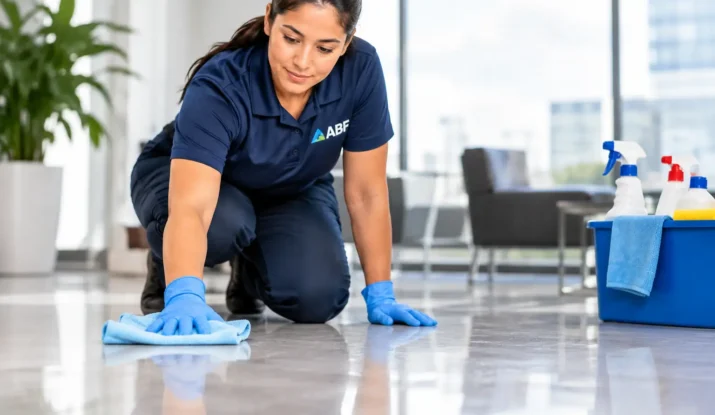
A lobby floor can look clean at closing time and still lose its shine week after week. The usual cause is not necessarily poor workmanship. It can be the daily product choice, the dilution method, or a disinfectant left on too long. Can disinfectants damage floor finish? Yes. Used incorrectly or too frequently, certain disinfectants can dull, soften, discolor, or prematurely wear a commercial floor finish.
For facility managers, this matters because floors are a visible part of the property. A hazy VCT corridor, sticky entryway, or unevenly glossy restroom floor can affect tenant perception, customer confidence, and the cost of long-term floor care. The goal is not to avoid disinfection when it is needed. It is to use the right product, at the right concentration, on the right surface.
How Disinfectants Can Damage Floor Finish
Most resilient commercial floors are protected by a finish, sealer, or factory-applied coating. That protective layer helps the floor resist soil, scuffs, moisture, and foot traffic. It is not invulnerable. Chemical exposure can gradually change the finish even when the underlying flooring material appears intact.
Damage often begins as a loss of gloss. A floor that once reflected light evenly may begin to look cloudy, streaky, or worn along traffic paths. In more serious cases, the coating can become tacky, develop white spots, peel, or discolor. These conditions make routine maintenance harder because soil adheres more easily to a compromised surface.
The risk depends on several factors: the floor material, the finish chemistry, the disinfectant’s active ingredients, its pH, the dilution ratio, dwell time, rinse requirements, and how often it is applied. A product that performs well on sealed concrete may not be appropriate for a finished VCT floor or luxury vinyl tile.
High pH and strong oxidizing products
Highly alkaline chemicals can attack traditional floor finishes, particularly when used repeatedly or at a concentration above the label recommendation. Strong cleaners and disinfectants may strip gloss from acrylic-based finishes and leave a rougher surface that holds soil.
Oxidizing ingredients, including certain bleach-based and hydrogen peroxide formulations, can also create problems. They may fade color, alter the appearance of decorative flooring, or weaken finish films when left on the floor longer than directed. These products can have a legitimate place in a facility’s infection-control plan, but they should not become the default product for every floor and every cleaning task.
Overconcentrated disinfectant solutions
More chemical does not mean more protection. Overmixing can leave a residue that causes dullness, streaking, or tackiness. It can also make the floor difficult to rinse and create a slip hazard for employees, visitors, patients, or customers.
This is especially common when staff mix disinfectants manually without measured dispensing equipment. A consistent dilution-control system helps teams follow product instructions and prevents one shift from using a significantly stronger solution than another.
Excessive dwell time and poor rinsing
Disinfectants need a specific wet contact time to perform as labeled. Leaving the product on longer than required does not improve the result. Instead, it gives the chemical more time to interact with the finish.
Some disinfectants also require a clean-water rinse on food-service floors, high-touch areas, or surfaces where residue may remain. If a rinse is required and skipped, residue can build up over time. A floor may feel sticky, attract dirt faster, and appear dirty shortly after mopping.
Which Commercial Floors Need Extra Care?
Not all floor surfaces respond the same way. Facility teams should identify the material and coating before selecting a disinfectant or maintenance method.
VCT and other finished resilient floors are among the most vulnerable because their appearance often depends on multiple layers of applied finish. Aggressive chemicals, abrasive pads, and repeated heavy wetting can shorten the finish life and lead to more frequent stripping and refinishing.
Luxury vinyl tile and luxury vinyl plank may have a factory coating rather than a traditional finish. These surfaces can be sensitive to high-pH chemicals, solvents, and abrasive tools. A product that leaves no visible issue on VCT may leave LVT hazy or discolored.
Rubber flooring requires careful product selection. Some disinfectants can cause fading, staining, or surface changes, especially on lighter colors. Always follow the flooring manufacturer’s maintenance guidance.
Polished concrete, terrazzo, and natural stone can also be affected by the wrong chemistry. Acidic or highly alkaline products may etch, dull, or weaken protective treatments. Even durable hard surfaces benefit from a product matched to their coating and intended use.
Can Disinfectants Damage Floor Finish During Routine Cleaning?
They can, particularly when disinfection is treated as a substitute for routine floor cleaning. Soil should be removed before a disinfectant is applied. Organic matter, grease, and tracked-in debris can reduce a disinfectant’s effectiveness while forcing staff to use more product and more aggressive agitation than necessary.
Routine maintenance usually calls for a neutral cleaner that is compatible with the floor finish. Disinfection should be targeted to areas where there is a documented sanitation need, such as restrooms, healthcare environments, food-service settings, spill locations, or areas affected by illness. This approach protects the floor while supporting a cleaner, healthier facility.
A practical floor-care program separates the two jobs. Cleaning removes soil. Disinfecting addresses eligible microorganisms when conditions and product labels call for it. Combining them carelessly can create residue, damage finishes, and increase labor without delivering a better-looking floor.
A Safer Process for Disinfecting Commercial Floors
A reliable process starts with the product label and the flooring manufacturer’s recommendations. The disinfectant must be approved for the intended surface and used exactly at the specified dilution, contact time, and rinse procedure.
Before broad application, test the product in a small, inconspicuous area. Check for changes in gloss, color, texture, tackiness, or residue after the area dries. This is particularly useful when a facility has older flooring, a newly installed finish, or surfaces with unknown maintenance history.
For daily work, trained teams should use clean, color-coded microfiber mops and properly maintained equipment. Dirty mop water can redeposit soil and chemical residue, making a floor look worse even when the correct product was selected. Microfiber tools also help reduce excess water, which matters for seams, edges, and moisture-sensitive flooring.
Use a consistent process:
- Remove loose soil through vacuuming, dust mopping, or sweeping before wet work begins.
- Clean the floor with a finish-compatible neutral cleaner when disinfection is not required.
- Apply an appropriate disinfectant only where needed and allow the labeled contact time.
- Rinse when the label or facility protocol requires it, then allow the floor to dry completely.
- Inspect the floor regularly for loss of gloss, sticky residue, discoloration, or traffic-lane wear.
This process supports sanitation without unnecessarily exposing the entire floor to stronger chemistry every day.
Signs Your Floor Finish May Already Be Affected
A damaged finish is not always obvious at first. Facility managers may notice that burnishing no longer restores shine, mopping leaves drag marks, or floors seem to soil more quickly than before. White haze, patchy gloss, black heel marks that no longer release easily, and a tacky feel are also warning signs.
At that point, adding more cleaner or disinfectant usually makes the issue worse. The floor may need a professional assessment to determine whether deep cleaning, top scrubbing and recoating, or a complete strip and refinish is appropriate. The right corrective service depends on the type of floor, the condition of the finish, and the chemical history behind the damage.
Protect the Floor and the Facility
Floor finish is an asset-protection system, not just a cosmetic layer. Preserving it can extend the life of flooring, reduce restoration costs, improve traction, and keep public-facing spaces looking consistently cared for. It also helps maintenance teams spend less time fighting residue and more time maintaining a clean facility.
At ABF Facility Services, trained teams use surface-appropriate products, controlled dilution practices, and specialized floor-care equipment to support both cleanliness and finish protection. For Chicagoland facilities, a well-managed cleaning plan can meet sanitation needs without turning routine disinfection into an expensive floor-restoration project.
When a floor starts losing its appearance, the best next step is not a stronger chemical. It is a closer look at the surface, the product, and the process being used every day.