
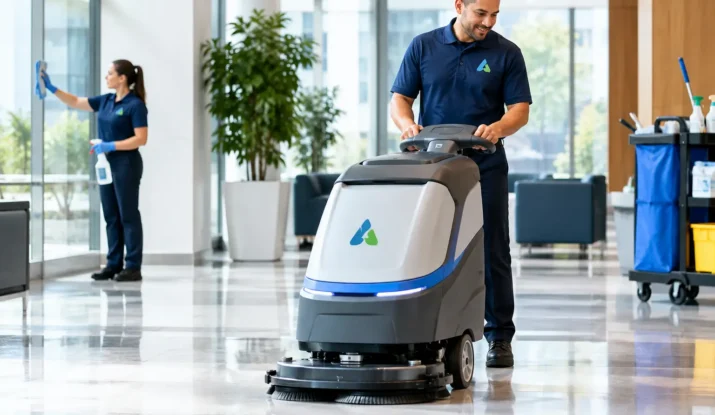
A lobby can look clean at 8:00 a.m. and still create problems by lunchtime if restroom supplies run low, entry floors collect tracked-in moisture, or high-touch areas are missed between scheduled rounds. Cleaning automation helps facility leaders close those gaps with better visibility, repeatable processes, and equipment designed to handle routine work consistently. The goal is not to remove people from the cleaning program. It is to direct trained teams toward the work that requires judgment, detail, and a human response.
For offices, schools, health care settings, industrial facilities, restaurants, and multi-tenant properties, automation can improve daily presentation while giving managers a clearer picture of what is happening across the building. The right approach depends on the facility’s traffic patterns, floor surfaces, sanitation needs, and operating hours.
What Cleaning Automation Means in a Commercial Facility
Cleaning automation is broader than a robotic floor scrubber moving through a hallway. It includes connected tools and systems that reduce manual repetition, signal when service is needed, document completed work, or help maintain supply levels. In a commercial setting, that can include autonomous floor-care equipment, touch-free restroom dispensers, occupancy or traffic sensors, scheduled cleaning workflows, and inventory monitoring.
Used well, these tools create more consistency around predictable tasks. A machine may complete routine floor scrubbing on a defined route, while a technician handles edges, corners, spills, detail work, and changes in floor conditions. A dispenser system may flag low paper products or soap before a complaint reaches the office manager. Digital inspection records can show when a space was serviced and identify recurring issues that need attention.
Automation does not make a building self-cleaning. It makes the cleaning operation more informed and more repeatable. The people responsible for quality still need proper training, clear accountability, safe procedures, and enough time to address the areas equipment cannot assess on its own.
Where Cleaning Automation Delivers the Most Value
Floor care is often the strongest starting point, particularly in large spaces with consistent layouts. Autonomous scrubbers can be useful in wide corridors, warehouses, retail aisles, lobbies, and other open floor areas. They can follow programmed routes and provide regular coverage without asking a team member to spend an entire shift walking the same path behind a machine.
That efficiency matters most when it is reinvested in quality. Instead of replacing the cleaning professional, it allows the team to focus on baseboards, entrance glass, restroom sanitation, touchpoints, spills, and other work that protects the facility’s appearance and hygiene. In industrial environments, the program should also account for dust, debris, forklift traffic, oil, or other site-specific hazards that may require specialized cleaning methods.
Restrooms are another practical use case. Touch-free soap, towel, and tissue dispensers can improve user experience while helping reduce unnecessary contact. Smart dispensers or regular usage tracking can support better replenishment schedules, especially in facilities where traffic changes significantly by shift, event, or day of the week.
Work-order and inspection systems offer a different kind of value. A property manager who receives repeated tenant concerns about one elevator bank or break room needs more than a general assurance that the area was cleaned. Time-stamped task records, supervisor inspections, and clear escalation procedures make it easier to identify whether the issue is missed service, unusual traffic, a maintenance concern, or a supply problem.
The Business Case Is Consistency, Not Novelty
New equipment can be impressive, but technology alone is not a facility strategy. The most valuable result of cleaning automation is a cleaner, safer, more dependable environment for employees, tenants, customers, patients, students, and visitors.
Consistent floor care helps protect flooring assets and reduces the appearance of neglect in high-visibility areas. Better supply monitoring can reduce empty dispensers, which are among the fastest ways for occupants to question overall restroom cleanliness. Digital scheduling and reporting can help managers verify that recurring tasks are completed without chasing updates across multiple vendors or departments.
There can also be labor advantages. Routine, repetitive tasks can be scheduled for off-hours or lower-traffic periods, helping cleaning teams work more productively without disrupting office operations, patient care, customer service, or production activity. In facilities facing staffing pressure, that added capacity can help protect service standards.
Still, the financial case should be realistic. Equipment requires an upfront investment, maintenance, charging or storage space, software support, and staff training. A small office with carpeted rooms and tight furniture layouts may see little benefit from an autonomous scrubber. A large distribution center with expansive hard floors may see meaningful gains. The right decision comes from the facility’s actual conditions, not from a one-size-fits-all technology purchase.
Build an Automated Cleaning Program Around the Building
Before adding technology, facility leaders should identify the problems they need to solve. Are entrance floors becoming unsafe in wet weather? Are restroom complaints tied to depleted products? Is the overnight crew spending too much time on large open floors? Are managers unable to confirm that required sanitation tasks were completed?
A site review should consider floor types, square footage, traffic flow, furniture density, shift schedules, access restrictions, security procedures, and the condition of existing equipment. It should also examine where human expertise is essential. Carpet spotting, high-detail disinfecting, waste removal, pressure washing, pest concerns, and post-construction cleanup are not interchangeable with automated routine work.
The best programs begin with a manageable pilot area. For example, a facility may automate daily scrubbing in a large lobby or warehouse aisle while keeping manual service in restrooms and complex work areas. During the pilot, track coverage, labor hours, machine downtime, floor appearance, complaints, safety observations, and required rework. Those measurements reveal whether the process is actually improving results.
Safety and Oversight Cannot Be Automated Away
Commercial cleaning equipment must operate within a disciplined safety program. Teams need training on machine operation, chemical handling, wet-floor controls, battery charging, obstacle awareness, and emergency procedures. Automated equipment should be monitored and used only in suitable areas, particularly where customers, patients, students, or moving equipment are present.
Cleaning standards also remain essential. Color-coded cleaning systems help prevent cross-contamination between areas. Microfiber tools can capture soil effectively when maintained correctly. High-filtration vacuums support improved indoor environmental quality, while appropriate Green Seal-certified products can help facilities pursue effective cleaning with environmental considerations in mind.
Technology should support those standards, not bypass them. A sensor can report traffic. It cannot determine whether a spill presents an immediate slip risk. A floor machine can cover open space. It cannot replace a trained professional’s inspection of corners, edges, entry mats, or damaged floor finishes.
One Provider Creates Better Coordination
Automation is most effective when it fits within a coordinated facility plan. If cleaning, restroom consumables, floor maintenance, waste removal, and specialty services are handled separately, a manager may spend more time tracking vendors than solving the underlying issue. Consolidating those needs through one accountable provider can make scheduling, replenishment, reporting, and service recovery easier to manage.
For Chicagoland facilities, seasonal conditions add another layer of planning. Snow, salt, rain, and heavy entry traffic can change floor-care needs quickly. Automated routes and routine schedules should be flexible enough to accommodate weather response, additional mat service, spot cleaning, and more frequent attention to entrances.
ABF Facility Services approaches cleaning programs with that practical coordination in mind: trained, uniformed, insured teams; OSHA-conscious procedures; dependable recurring service; and the supplies and specialty work that keep a property operating smoothly. Automation can be part of that plan when it serves the facility’s goals rather than becoming technology for its own sake.
The strongest cleaning program is not the one with the most devices. It is the one that gives people a clean restroom when they need it, safe floors when weather turns, reliable service when occupancy changes, and a facility team that knows exactly who is accountable for the result.