
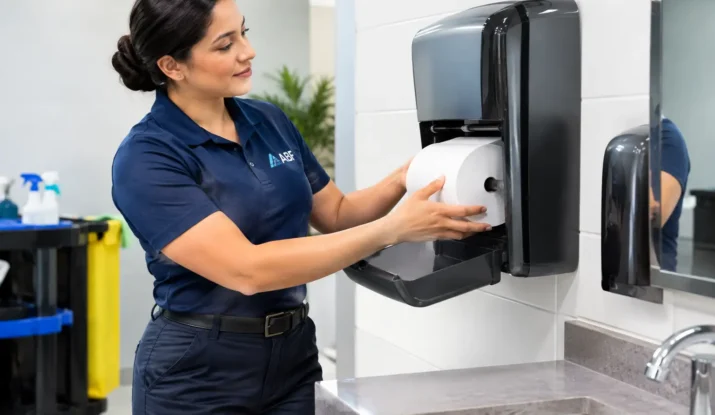
A restroom can look clean at 8:00 a.m. and still create complaints by noon if the soap, paper towels, or tissue run out. Knowing how to stock restroom dispensers is not simply a custodial task. It is a daily facility-management practice that affects hygiene, employee confidence, visitor impressions, and the number of avoidable service calls your team receives.
For offices, schools, healthcare settings, restaurants, industrial facilities, and multi-tenant properties, the goal is consistency. Every dispenser should work, contain the correct product, and be refilled before users notice a shortage. That requires a clear standard, a realistic inventory plan, and accountability at every service visit.
How to Stock Restroom Dispensers Without Running Out
Start by identifying every dispenser in every restroom, including those in low-traffic areas. A complete dispenser map should note the room location, dispenser type, product type, refill format, capacity, and approximate daily traffic. This prevents a common problem in large facilities: crews replenish the most visible restrooms while a staff restroom, loading-dock restroom, or lower-level restroom is overlooked.
Your map should also distinguish between soap, hand sanitizer, paper towel, toilet tissue, feminine hygiene, seat-cover, and air-care dispensers where applicable. Not every facility needs every category, but each unit that is installed needs a defined refill process.
Set a minimum acceptable fill level for each product. For example, a high-traffic public restroom may need paper towels and tissue topped off at every scheduled inspection, even if the refill is not empty. A low-traffic private office restroom may only need replenishment when its product level reaches a set threshold. The right schedule depends on usage, operating hours, restroom size, and how quickly replacement supplies can be accessed.
Match Refills to the Dispenser
The fastest way to create waste and frustration is to keep incompatible refills in the supply closet. Before ordering products, confirm the manufacturer, dispenser model, refill dimensions, core size, dispensing mechanism, and product format. Paper towel rolls, folded towels, jumbo tissue, foam soap cartridges, liquid soap bags, and manual versus touch-free systems are not interchangeable.
Standardizing dispensers across a property can simplify purchasing and training, particularly for buildings with several floors or locations. However, replacement may not always be practical for a leased space, a specialty healthcare restroom, or an older facility with working equipment. In those cases, label storage shelves clearly by dispenser type and keep compatible refills separated.
Do not force a refill into a dispenser or modify a cartridge to make it fit. A damaged dispenser can jam, leak, dispense too much product, or become unusable during a busy period. The cost of the correct refill is usually far lower than the cost of frequent repairs, wasted materials, and poor restroom conditions.
Build a Stocking Routine Around Actual Traffic
Restroom demand is rarely even throughout the day. Office restrooms may peak before work, at lunch, and immediately after meetings. Restaurants see spikes around meal service. Schools have concentrated traffic between classes, while industrial sites may have heavier use before shifts, breaks, and clock-out periods.
Review traffic patterns before setting inspection frequency. A restroom near a lobby, cafeteria, waiting room, or production floor may require multiple checks each day. A lightly used executive restroom may not. Facilities that apply the same schedule to every restroom often either overstock low-use areas or miss shortages in busy ones.
A practical inspection routine includes checking product level, dispenser function, cleanliness around the dispensing point, and signs of misuse or damage. A full soap cartridge does not help if the pump is clogged. A paper towel dispenser is not properly stocked if towels are bunched inside and cannot be pulled through the opening.
For high-use restrooms, it helps to use a service log. The log can be digital or paper-based, but it should record the date, time, staff member, supplies replenished, and any equipment issue found. This creates a reliable handoff between shifts and gives facility managers useful information when usage changes unexpectedly.
Refill Before the Dispenser Is Empty
Waiting until a dispenser is completely empty may appear efficient, but it can create preventable downtime. A person who reaches an empty soap dispenser may leave without washing properly. A customer who finds no toilet tissue or paper towels is likely to remember the experience, even if the rest of the facility is well maintained.
Refill thresholds should be based on the product and location. Tissue and paper towels in public restrooms typically need a higher reserve level than soap in a low-use restroom. For dispensers that use two rolls or multiple refill compartments, train staff to load the backup properly so the unit transitions when the active roll is depleted.
There is a trade-off. Overfilling can lead to product waste, jammed dispensers, and unnecessary labor. The answer is not to refill every unit to maximum capacity during every visit. It is to establish a threshold that maintains an adequate reserve until the next planned inspection.
Keep Backstock Organized and Protected
A well-stocked restroom depends on a well-managed supply area. Store refills in a clean, dry, secure location away from leaks, extreme temperatures, and floor-level moisture. Cardboard cases placed directly on a damp utility-room floor can be damaged long before supplies reach the restroom.
Organize products by category and dispenser compatibility. Use a first-in, first-out approach, especially for soap, sanitizer, and air-care products with expiration dates or fragrance changes over time. Open partial cases should be marked and used before new cases are started whenever possible.
Maintain par levels for each major product. A par level is the minimum quantity that should be available on site to cover expected use between deliveries. It should account for normal demand, seasonal increases, special events, staffing coverage, and a reasonable buffer for delayed deliveries.
For example, a building that hosts large meetings or has increased winter traffic may need more paper towels, tissue, and soap during certain periods. A facility manager should not have to make an emergency supply run because one week of heavier use was not anticipated.
Clean and Inspect the Dispenser During Every Refill
Stocking and cleaning should happen together. Wipe the exterior of the dispenser, remove residue from the nozzle or dispensing opening, and check for cracks, loose mounting hardware, leaks, and stuck mechanisms. Use the appropriate product for the surface so cleaning does not damage plastic, metal finishes, sensors, or labels.
For soap and sanitizer dispensers, pay close attention to drips beneath the unit. Product buildup can make counters slippery, stain surfaces, and create an unclean appearance. For paper dispensers, remove torn fragments that can interfere with the feed. For tissue dispensers, verify that the cover closes securely and the roll turns freely.
If a dispenser is damaged, label it for repair or replacement rather than leaving it in service with a temporary workaround. A dispenser held together with tape or left open sends the wrong message in a customer-facing restroom and often leads to faster product loss.
Use the Right Products for the Facility
Product selection should support the people using the restroom. A healthcare environment may require carefully selected hand-hygiene products and closely monitored refill schedules. A food-service operation may need frequent checks near kitchen-adjacent restrooms. An office may prioritize low-fragrance soap, touch-free options, and paper products that balance comfort with controlled dispensing.
Sustainable purchasing can also be part of the plan. Recycled-content paper products, concentrated refills, and controlled-dispensing systems can reduce waste when they fit the facility’s needs. Sustainability should not mean choosing products that jam easily, are difficult to source, or fail to meet required hygiene standards. Reliability comes first.
Assign Ownership and Review the Results
A restroom stocking plan works when ownership is clear. Staff should know who checks each area, when inspections occur, where refills are stored, and who reports equipment issues. Managers should periodically review supply use, customer complaints, and service logs to identify recurring trouble spots.
Repeated shortages may indicate more than poor stocking. They can point to a dispenser that releases too much material, a restroom with rising traffic, theft or misuse, an inaccurate par level, or a gap between cleaning shifts. Addressing the cause is more effective than asking staff to refill more often without changing the system.
For Chicagoland facilities managing multiple service needs, a single accountable provider can simplify this work by coordinating restroom consumables with recurring janitorial service. ABF Facility Services helps clients align cleaning schedules, supply replenishment, and dispenser checks so restroom standards are maintained without adding unnecessary vendor coordination.
A stocked restroom is one of the simplest ways to show employees, tenants, customers, and visitors that the property is cared for. Put a dependable process behind it, and the small details will keep working long after the cleaning crew has moved on.