
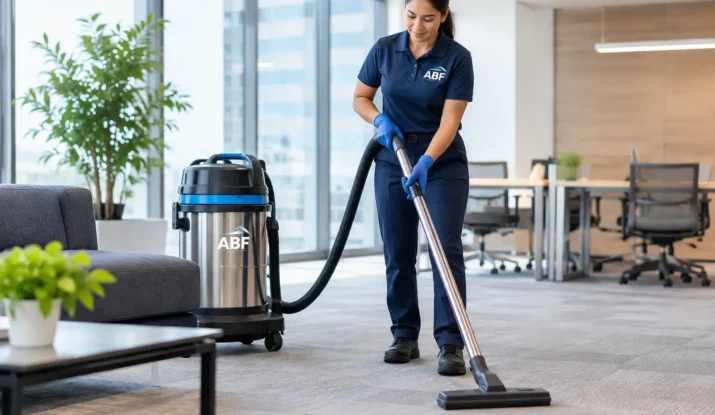
Fine dust does not stay neatly on a carpet or floor. It settles on workstations, collects along baseboards, moves through high-traffic corridors, and can be stirred back into the air during routine cleaning. What is HEPA vacuuming? It is a high-filtration vacuuming process designed to capture very small particles and keep them contained rather than allowing them to pass through the machine’s exhaust.
For a commercial facility, that difference can matter. A vacuum may leave a floor looking clean while releasing fine dust, allergens, and debris back into the room. HEPA vacuuming helps support a cleaner result for offices, schools, health care settings, retail spaces, hospitality properties, and industrial environments where dust control is part of a larger cleaning standard.
What Is HEPA Vacuuming?
HEPA stands for High-Efficiency Particulate Air. A true HEPA filter is commonly rated to capture at least 99.97% of particles measuring 0.3 microns under standardized testing conditions. That particle size is used as a demanding benchmark because it is difficult for filters to capture. In practice, a properly designed HEPA system can collect many particles both larger and smaller than that size.
HEPA vacuuming means using a vacuum equipped with a true HEPA filter and, ideally, a sealed filtration system. As the vacuum picks up dust and debris, air moves through its filters before being exhausted back into the space. The goal is to keep fine particles inside the vacuum rather than recirculating them into the room.
The word “sealed” is significant. A high-quality filter alone cannot deliver its intended benefit if air leaks around the filter housing, collection bag, hose connections, or machine body. For facility managers evaluating cleaning methods, the vacuum’s complete filtration design matters as much as the label on its filter.
Why High-Filtration Vacuuming Matters in Commercial Facilities
Vacuuming is often viewed as a basic floor-care task, but it also affects the amount of settled dust that cleaning teams remove from the environment. Fine particles can build up in carpet fibers, entry mats, upholstered furniture, and hard-floor edges. Foot traffic then redistributes that material across the facility.
A HEPA vacuum supports better particle control in spaces where people spend long hours indoors or where presentation directly affects visitors. In an office, that may mean reducing visible dust around work areas and improving the cleanliness of carpeted meeting rooms. In a medical or school environment, it can support more careful cleaning protocols. In retail and hospitality settings, it helps crews maintain a polished appearance without creating a noticeable dust smell or haze after service.
It is also useful after construction, maintenance work, ceiling repairs, or other projects that create fine dust. These situations may require more than routine vacuuming, however. The appropriate approach depends on the material involved, the amount of dust, the affected area, and any applicable safety requirements. HEPA equipment is a valuable tool, not a substitute for a site-specific cleaning plan.
HEPA Vacuuming Is Not the Same as Sanitizing
HEPA vacuuming removes particulate matter. It does not disinfect a surface, eliminate every odor source, or replace cleaning and sanitizing where those steps are required. A complete commercial cleaning program may include vacuuming, damp wiping, restroom sanitation, hard-floor care, trash removal, and targeted disinfection based on the facility’s needs.
This distinction prevents a common mistake: treating one piece of equipment as a complete indoor-environment solution. High-filtration vacuuming is most effective when it is performed consistently alongside appropriate cleaning practices, trained staff, and well-maintained equipment.
Where HEPA Vacuuming Delivers the Most Value
Nearly any commercial property can benefit from effective vacuuming, but the priority is higher in facilities with carpets, heavy daily traffic, sensitive occupants, or strict cleanliness expectations. Professional teams often focus on entrances, walk-off mats, open offices, conference rooms, corridors, waiting areas, stairwells, and upholstered seating because those areas hold or collect considerable debris.
In industrial settings, the type of dust must be considered before selecting a vacuum and cleaning method. Some materials can present fire, health, or regulatory concerns and may require specialized equipment, personal protective equipment, containment, or disposal procedures. A standard HEPA vacuum should not be used as a catch-all response to every industrial dust condition.
For Chicago-area property managers, seasonal conditions add another practical consideration. Snow, salt, soil, and moisture tracked in during winter can grind debris deeper into entry carpets and mats. Frequent high-filtration vacuuming, combined with scheduled carpet care and mat service, can help protect flooring and keep common areas more presentable between deeper cleanings.
What a Proper HEPA Vacuuming Process Looks Like
The quality of the result depends on more than turning on a machine and making one quick pass. Trained cleaning professionals begin by selecting the appropriate vacuum and attachments for the surface. A carpeted open office needs a different approach than stair treads, fabric seating, tight edges, or hard-surface corners.
Technicians should vacuum slowly enough for the machine’s agitation and airflow to lift embedded debris. Overlapping passes help prevent strips of carpet from being missed, especially in high-traffic lanes. Detail work around walls, furniture, vents, and transitions is equally important because fine dust tends to collect where broad floor heads cannot reach.
Equipment care is part of the process. Full bags, clogged prefilters, worn brushes, damaged hoses, and poorly seated filters can reduce suction and compromise filtration performance. Filters should be changed according to the manufacturer’s instructions and the actual demands of the facility. A vacuum used daily in a busy building may require more frequent attention than one used occasionally in a low-traffic suite.
Cleaning teams should also avoid cross-contamination. Color-coded tools, clean attachments, and planned routes help crews move through a facility without transferring debris from restrooms, loading areas, or exterior entrances into cleaner workspaces. These details are why professional vacuuming is an operational service, not simply a task checked off on a nightly list.
HEPA vs. HEPA-Type Vacuums
Not every vacuum described as high-filtration has a true HEPA filter. Terms such as “HEPA-type,” “HEPA-style,” or “HEPA media” may indicate improved filtration, but they do not necessarily confirm that the machine meets the performance standard associated with a true HEPA filter.
When comparing equipment or reviewing a cleaning provider’s process, ask whether the vacuum uses a true HEPA filter, whether its filtration path is sealed, and how filters and bags are maintained. It is also reasonable to ask how the provider matches its equipment to your facility’s floors, traffic level, and cleaning schedule.
The best choice still depends on the application. A true HEPA vacuum may be especially valuable in carpeted offices, health care-adjacent spaces, schools, and customer-facing environments. For a warehouse or manufacturing area, the correct equipment may be a specialized industrial vacuum built for the specific dust being collected. Performance and safety should guide the decision, not a label alone.
Building HEPA Vacuuming Into a Facility Plan
For most properties, HEPA vacuuming works best as a recurring part of janitorial service rather than an occasional response when carpets begin to look dull. High-traffic areas may need frequent attention, while private offices and low-use spaces can follow a different schedule. Facility managers should base that schedule on occupancy, floor type, weather exposure, business hours, and the level of appearance expected by employees, tenants, customers, or visitors.
A dependable provider should document expectations, train uniformed staff on proper equipment use, and respond when conditions change. That may mean increasing entryway service during winter, adding detail vacuuming after an office reconfiguration, or scheduling a deeper carpet-care service when embedded soil has built up over time.
ABF Facility Services uses high-filtration vacuuming as part of a tailored cleaning approach for commercial facilities that need consistent results, careful detail work, and accountable service. The objective is straightforward: remove the dust and debris that routine activity leaves behind while helping your workplace remain clean, welcoming, and ready for the people who rely on it each day.
A clean floor is easy to notice. The stronger standard is a cleaning process that also considers what cannot be easily seen, how equipment is maintained, and whether the work supports the condition of the entire facility.