
A restroom can look clean at 8:00 a.m. and still create complaints by noon if dispensers run empty, touchpoints are missed, or odors return. That is where cleaning technology makes a practical difference. For commercial facilities, it is not simply about using newer machines. It is about combining the right equipment, products, processes, and trained personnel to produce cleaner, safer, more consistent results.
For facility managers, property owners, and operations leaders, the value is straightforward: better cleaning technology can help reduce preventable issues before they affect tenants, employees, customers, or inspectors. The best approach also protects flooring and finishes, supports a healthier indoor environment, and gives staff a cleaner space in which to work.
What Cleaning Technology Means in a Commercial Facility
Cleaning technology includes the tools and systems that improve how cleaning work is performed and verified. It can range from microfiber cloths and high-filtration vacuums to advanced floor machines, controlled chemical-dilution systems, and scheduled supply replenishment. Each component has a purpose, but the strongest results come when they work together as part of an organized service plan.
A high-filtration vacuum, for example, helps capture fine dust and allergens instead of redistributing them through an office, school, health care setting, or retail property. Microfiber tools pick up more soil with less chemical and water use than many traditional materials. Color-coded cloths and mops help teams avoid cross-contamination by keeping restroom tools separate from those used in breakrooms, offices, or public areas.
These details may seem small, but they matter in facilities with high traffic and frequent touchpoints. A cleaning program is only as reliable as the process behind it. Proper technology gives trained teams a repeatable way to complete the work correctly, even across large properties or multiple service areas.
Better Equipment Produces Better Floor Care
Floors absorb the daily impact of a facility. Salt and slush in a Chicago winter, tracked-in rain, food spills, warehouse dust, and heavy foot traffic can wear down surfaces quickly. When floors lose their finish or become slippery, the issue is more than cosmetic. It can affect safety, cleaning costs, and the overall impression a property makes.
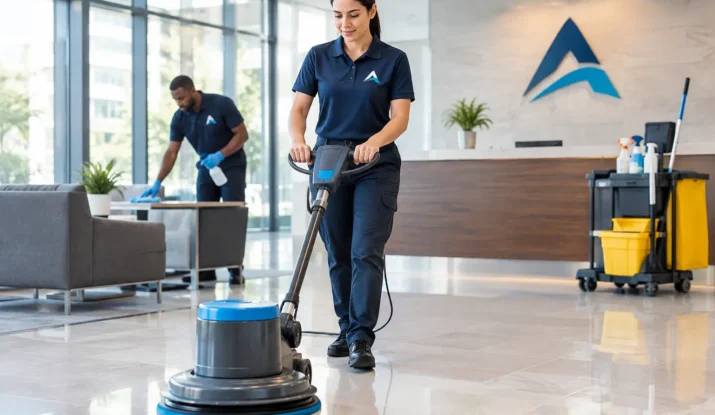
Modern floor-care equipment allows cleaning professionals to match the method to the surface. Auto scrubbers can clean broad hard-floor areas efficiently while managing water use. Burnishers and floor machines can restore gloss where appropriate. Carpet extractors remove embedded soil that routine vacuuming cannot reach. Pressure washing equipment can address exterior walkways, loading areas, and other durable surfaces that need deeper cleaning.
The right machine is not always the largest or fastest one. A crowded medical office, a restaurant dining area, and an industrial facility have different access, scheduling, and soil-removal needs. Using aggressive pads, excess water, or the wrong chemical can damage flooring and create avoidable downtime. A knowledgeable cleaning provider evaluates the material, traffic pattern, condition, and desired appearance before recommending a service method.
Chemical Control Supports Safety and Consistency
Cleaning chemicals should be selected for the surface, the soil being removed, and the people who use the space. More chemical does not automatically mean better cleaning. In fact, overuse can leave residue on floors, dull finishes, create odors, and waste money.
Controlled dilution systems help teams mix products at the intended concentration. This improves consistency from shift to shift and helps reduce the risk of improper handling. For routine commercial cleaning, environmentally responsible products, including Green Seal-certified options where suitable, can support facility sustainability goals without compromising day-to-day performance.
Disinfection also requires a disciplined process. A disinfectant must be used on an already cleaned surface and allowed to remain wet for the specified contact time. Simply spraying a product and wiping it away immediately may not deliver the intended result. In high-touch or health-sensitive areas, trained cleaning personnel should follow product directions and facility protocols carefully.
High-Filtration Vacuums Improve Indoor Cleanliness
Dust is not limited to what employees can see on a desk or windowsill. Fine particles settle in carpet fibers, corners, upholstery, vents, and entryways. Foot traffic can stir those particles back into the air, particularly in busy offices, schools, common areas, and reception spaces.
High-filtration vacuums are designed to capture smaller particles during routine carpet and hard-surface vacuuming. They are especially useful in facilities concerned with dust buildup, allergens, and the appearance of carpeted areas. Combined with regular carpet extraction, entry mat service, and attention to vents and edges, filtration-focused cleaning helps maintain a more polished indoor environment.
This is also where frequency matters. A low-traffic executive suite may need a different schedule than a lobby used by hundreds of people each day. Cleaning technology provides the capability, but a customized plan determines whether that capability is being used where it delivers the greatest value.
Cleaning Technology Is Also a Supply Strategy
A clean restroom loses credibility the moment soap, towels, tissue, or hand sanitizer runs out. The same is true when a kitchen lacks gloves, a maintenance closet has no mop heads, or an entrance mat is saturated with soil. Facility cleanliness depends on reliable consumables as much as it depends on scheduled labor.
A coordinated provider can manage recurring cleaning alongside restroom products, janitorial supplies, gloves, reusable towels and mops, floor mats, and, where needed, restaurant linens and aprons. This one-provider approach reduces the administrative burden of monitoring several vendors and gives facility leaders a clearer path for resolving service or inventory concerns.
Technology can support this work through usage tracking, service schedules, and responsive replenishment planning. Still, automation does not replace accountability. A supply program must be reviewed against actual traffic, seasonal changes, special events, and the needs of each location. A restroom near a public lobby will consume products differently than one in a small back-office area.
Choosing Cleaning Technology for Your Building
The best cleaning technology is not necessarily the newest product on the market. It is the equipment and process that solve a specific facility problem reliably. Start by identifying the areas that cause the most disruption: recurring restroom complaints, dull floors, dust accumulation, pest-related sanitation concerns, waste buildup, or inconsistent cleaning after business hours.
Then consider how the building operates. Facilities with 24-hour activity may need quiet equipment and flexible service times. Industrial sites may require equipment that can manage heavier soils and safety requirements. Health care, education, hospitality, and food-service environments may need more detailed sanitation procedures and tighter attention to touchpoints. The right plan depends on the property, not a generic checklist.
Ask potential service providers how they train staff on equipment, chemical handling, OSHA practices, and cross-contamination prevention. Confirm that teams are insured, uniformed, and prepared to work around occupants without disrupting operations. It is also reasonable to ask how quality is monitored, how concerns are addressed, and whether the provider can support specialty work and supplies in addition to recurring cleaning.
For Chicagoland facilities, weather is another consideration. Entryways, mats, and hard floors require added attention during wet and winter conditions, when tracked-in debris can affect safety and appearance quickly. A responsive cleaning program adjusts to these predictable demands rather than waiting for a complaint.
ABF Facility Services applies this practical approach through trained, OSHA-compliant teams, color-coded cleaning systems, high-filtration vacuums, sustainable product options, and specialized floor-care equipment. The goal is not to add technology for its own sake. It is to help clients maintain facilities that are clean, stocked, safe, and ready for the people who rely on them.
The most useful next step is to walk your facility with fresh eyes. Notice the entryway, restroom supplies, floor condition, touchpoints, and areas employees or visitors see first. Those observations can help shape a cleaning plan that solves real operational problems before they become visible ones.