
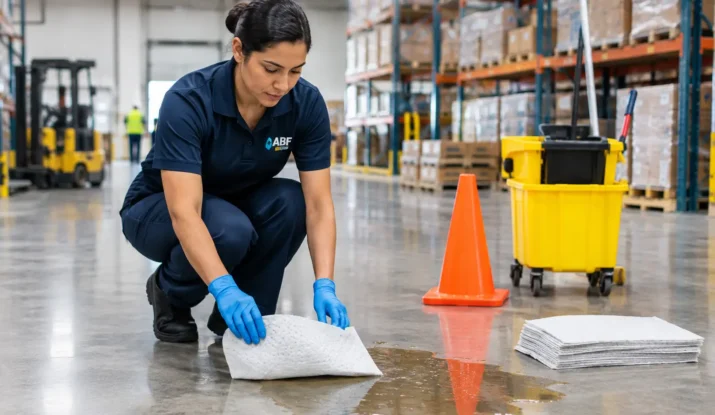
A leaking drum near a loading lane can turn into a slip hazard, a product-loss issue, and an operational delay within minutes. To manage warehouse spills effectively, teams need more than paper towels and a mop closet. They need a clear response process, the right materials close at hand, and trained people who know when a spill is safe to handle internally and when it requires specialized support.
For warehouse and industrial facility managers, the goal is not simply to make a spill disappear. It is to protect employees, preserve inventory and floors, prevent contamination from reaching drains, and return the area to service without creating a second hazard.
Start With a Written Warehouse Spill Response Plan
A spill response plan should be specific to the materials, traffic patterns, equipment, and risks inside your facility. A plan for a dry-goods distribution center will look different from one for a food warehouse, automotive operation, manufacturing facility, or chemical storage area.
The plan should identify who has authority to stop work, block access, assess the substance, and authorize cleanup. It should also show where employees can find safety data sheets, spill kits, emergency contact information, eyewash stations, and personal protective equipment. If a worker has to search for these items after a spill occurs, valuable time is already being lost.
Keep the procedure visible in employee areas and include it in onboarding, shift meetings, and periodic safety training. Written instructions matter, but practical drills reveal whether spill supplies are accessible and whether staff understand their roles under pressure.
How to Manage Warehouse Spills in the First Minutes
The first response should be controlled, not rushed. An employee who immediately tries to wipe up an unknown liquid can expose themselves to fumes, splashes, or a dangerous chemical reaction. The safest response depends on the substance, quantity, location, and whether the spill is actively spreading.
For a known, minor spill that trained personnel are equipped to address, the response generally follows five steps:
- Stop the source if it can be done safely, such as uprighting a container or closing a valve.
- Isolate the area with cones, caution tape, barriers, or temporary signage to keep pedestrians and forklifts away.
- Identify the material by reviewing the container label and safety data sheet.
- Use compatible absorbents, tools, and protective equipment to contain and collect the material.
- Dispose of used cleanup materials according to the product requirements and your facility’s waste procedures.
If the substance is unknown, flammable, corrosive, producing strong odors or vapors, entering a drain, or present in a large volume, employees should not attempt routine cleanup. Evacuate or restrict the area as appropriate, notify the designated supervisor, and follow the facility’s emergency escalation procedures. The exact response requirements can depend on the substance and applicable regulations, so it is wise to establish those decisions before an incident occurs.
Protect Drains, Doors, and High-Traffic Paths
Spills become more costly when they travel. A liquid that reaches a floor drain may create environmental and compliance concerns. Material that spreads into dock doors, elevator thresholds, racking aisles, or forklift lanes can disrupt operations long after the original container has been removed.
Place drain covers, absorbent socks, and containment materials in spill kits near loading docks, battery charging areas, chemical storage rooms, maintenance shops, and waste-handling zones. These are often the locations where leaks, overfills, damaged containers, and equipment failures occur. In facilities with large footprints, one centrally stored kit is rarely enough.
Match the Cleanup Method to the Spill
Not every spill should be treated the same way. Water, cooking oil, hydraulic fluid, cleaning chemicals, food products, battery electrolyte, and fine powders each require different containment and cleanup methods. Using the wrong absorbent or chemical neutralizer can increase the hazard, damage a floor finish, or complicate disposal.
For example, oil-based fluids require materials that absorb and contain oil without spreading it across smooth concrete. A food or beverage spill may require cleaning followed by sanitation, particularly in areas that affect product handling. Fine powders can become airborne if workers sweep aggressively, so appropriate collection methods and protective equipment are essential.
Floor type matters as well. Sealed concrete, epoxy, tile, quarry tile, and unfinished surfaces respond differently to liquids and cleaning agents. Repeated chemical exposure can weaken coatings, stain porous floors, or reduce slip resistance. A professional industrial cleaning partner can help identify the right products and procedures for both the spilled material and the surface underneath it.
Do Not Reopen the Area Too Soon
A floor can look clean while remaining unsafe. Residual moisture, oily film, dust from absorbents, or improperly rinsed cleaning products can create a slip risk for employees and equipment operators. Before removing barriers, inspect the area under good lighting and confirm that it is dry, free of residue, and safe for foot and vehicle traffic.
If the spill occurred beneath storage racks, conveyors, machinery, or dock equipment, inspect adjacent surfaces too. Product can collect along base plates, wheels, pallet jacks, floor joints, and low points that are easy to miss during a quick cleanup.
Stock Spill Kits Where Work Actually Happens
A spill kit is useful only when it is complete, accessible, and suitable for the hazards nearby. Facility teams should inspect kits routinely, replacing used supplies and checking that materials have not become wet, damaged, or scattered.
A practical warehouse kit often includes absorbent pads and socks, disposal bags or containers, caution tape, drain protection, gloves, eye protection, scrapers, a dustpan, and clear instructions. Facilities that store or use hazardous materials may need purpose-specific kits and additional protective equipment based on their safety data sheets and internal requirements.
Color-coding and labeling help employees choose the correct kit quickly. It also reduces the chance that general cleaning tools will be used for a hazardous spill and then returned to normal service. This is especially valuable in busy warehouses where multiple crews work different shifts.
Build Prevention Into Daily Warehouse Operations
The most efficient spill response is the one you do not have to make. Many warehouse spills are preventable through consistent inspection, proper storage, and better housekeeping around high-risk areas.
Start with receiving and staging. Inspect inbound containers for damaged caps, cracked pails, punctured drums, and loose shrink wrap before materials are moved into storage. Keep incompatible materials separated and make sure containers are stored securely at the correct height. A small leak from an elevated shelf can affect several pallets before anyone sees it.
Next, review equipment and maintenance practices. Forklifts, pallet jacks, floor scrubbers, batteries, hydraulic lines, and waste compactors can all create leaks. Operators should report drips promptly rather than waiting until a scheduled cleaning round. A small absorbent pad placed under a recurring leak is not a repair plan.
Housekeeping also plays a direct role. Clear aisles improve visibility, reduce the chance of striking stored materials, and allow cleanup teams to reach a spill without navigating clutter. Regular floor cleaning removes residue that can hide fresh leaks or make it harder to identify where a spill began.
Document Incidents and Look for Patterns
After cleanup, record what happened. A useful incident record includes the date and time, location, material, estimated quantity, source, cleanup method, disposal method, staff involved, and any damage or near-miss concerns. It should also note whether the spill reached a drain, affected inventory, or interrupted operations.
Documentation is not busywork. It helps managers spot recurring causes, such as a leaking piece of equipment, a poorly designed transfer process, a problem supplier container, or a location with frequent forklift impacts. Those patterns guide preventive maintenance, training, layout changes, and supply decisions.
For larger facilities, review spill records monthly with operations, maintenance, safety, and cleaning teams. The best improvements often come from connecting the people who see the spill, repair the cause, clean the area, and manage the compliance record.
Know When to Bring in Professional Support
Internal teams can often handle routine, low-risk spills when they have the training and correct supplies. However, large-volume releases, unknown materials, chemical residue, drain contamination, difficult-to-access areas, and repeated industrial floor contamination may call for specialized support.
ABF Facility Services helps Chicagoland warehouses maintain cleaner, safer working environments through responsive industrial cleaning, floor care, sanitation, supply support, and customized service plans. A dependable partner can also help keep absorbents, gloves, mops, mats, and other everyday facility essentials available before an incident puts them to the test.
A well-managed spill response protects more than a square of floor. It protects the people moving through the facility, the condition of your building, and the dependable pace of your operation.