
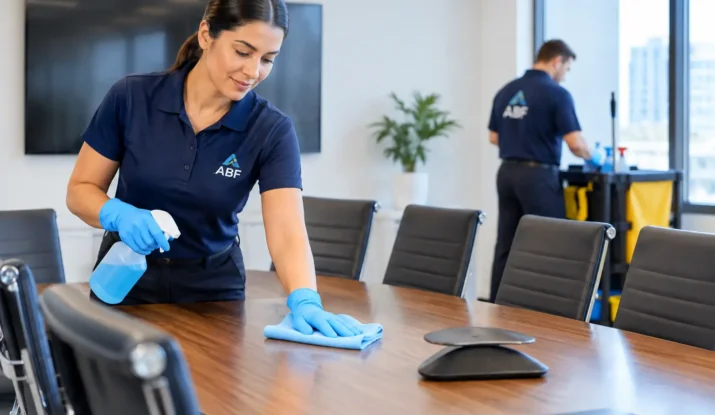
A conference room can look orderly five minutes after a meeting and still carry the fingerprints, food residue, cough droplets, and shared-device contact left behind by a dozen attendees. To sanitize conference rooms effectively, facility teams need more than a quick wipe of the table. They need a repeatable process that addresses high-touch surfaces, protects finishes and electronics, and fits the pace of a busy workplace.
For office managers, property managers, and operations leaders, the goal is not to make a room smell freshly cleaned. The goal is to provide a clean, professional setting where employees, clients, tenants, and visitors can meet with confidence. A consistent sanitation plan also prevents small presentation issues – smudged glass, stained upholstery, overflowing waste bins, and sticky tables – from becoming a recurring source of complaints.
Why Conference Rooms Need Focused Sanitizing
Conference rooms concentrate shared contact. The same door handle, table edge, remote control, chair arm, presentation clicker, touchscreen, and light switch may be touched by multiple groups in one day. Food and beverages add another layer of concern, especially in rooms used for client presentations, training sessions, interviews, or catered meetings.
These spaces also create a visibility issue. A neglected break room may be out of sight, but a poorly maintained conference room is often where a customer, prospective employee, tenant, or vendor forms an opinion about the organization. Dust on a display screen or residue on a glass tabletop can make an otherwise well-managed facility feel less prepared.
Sanitizing is not identical to cleaning or disinfecting. Cleaning removes visible soil, dust, crumbs, and residue. Sanitizing reduces certain germs on a surface to safer levels. Disinfecting uses an appropriate product to kill or inactivate a broader range of germs, according to the product label. The right approach depends on the facility, the room’s use, current health concerns, and the surfaces involved. In many offices, routine cleaning and sanitizing paired with targeted disinfection of high-touch points is the practical standard.
How to Sanitize Conference Rooms Properly
A reliable process begins after the room is cleared. Removing trash, cups, food containers, and used disposable supplies first prevents cleaners from spreading residue across tables and chairs. It also gives the team a clear view of the room’s condition and any maintenance concerns that need to be reported.
Start With High-Touch Surfaces
The highest-priority surfaces are the ones people handle repeatedly: door handles, push plates, light switches, table edges, chair arms, remote controls, control panels, whiteboard markers, presentation clickers, and shared keyboards or adapters. These areas should be cleaned and sanitized with products suitable for the specific material.
A trained cleaning team should follow product-label instructions, including the required contact time. Spraying a product and wiping it away immediately may not deliver the intended sanitizing or disinfecting result. For electronics, applying product directly to a cloth rather than spraying the device helps protect ports, screens, and internal components.
Clean Tables Before Applying Sanitizer
A sanitizer cannot work as intended through a layer of food residue, dried coffee, or dust. Wipe tables with the appropriate cleaner first, then apply the sanitizing product as directed. This is particularly important for laminate conference tables, glass surfaces, and wood finishes, which can be damaged by harsh or incompatible chemicals.
Microfiber cloths are a practical choice because they capture fine dust and residue effectively. Color-coded cleaning systems further reduce the risk of cross-contamination by keeping cloths and tools assigned to the right tasks and areas. A restroom cloth should never be used on a conference table, regardless of how clean it appears.
Address the Parts of the Room That Are Easy to Miss
A complete service includes more than the tabletop. Vacuuming or spot-cleaning the floor removes crumbs and debris that accumulate around chairs. Cleaning glass panels, whiteboards, interior windows, and display screens improves the room’s appearance and usability. Emptying waste and replacing liners controls odors and ensures the next meeting starts with adequate capacity.
Chairs deserve attention, too. Hard chair arms and bases should be wiped regularly, while upholstered seating may need scheduled vacuuming and periodic extraction or upholstery cleaning. The proper frequency depends on traffic, food service, and the number of outside visitors using the space.
Build the Schedule Around How the Room Is Used
A single nightly cleaning may be enough for a small conference room used once or twice a day. It may not be enough for a downtown office, medical facility, school, hospitality property, or shared workspace where meetings turn over continuously. The best sanitation schedule reflects actual room traffic rather than a generic checklist.
For high-use rooms, a light reset between meetings can make a meaningful difference. That reset may include removing waste, wiping and sanitizing high-touch surfaces, straightening chairs, cleaning visible spills, and checking supplies. A more detailed cleaning can be completed after business hours, when floors, glass, seating, and technology areas can receive proper attention without disrupting meetings.
Managers should also plan for events. Board meetings, recruiting days, tenant presentations, training sessions, catered lunches, and customer visits often require pre-event preparation and a prompt post-event reset. Scheduling those services in advance avoids asking a cleaning team to rush through a room while the next group is waiting in the hallway.
Avoid Shortcuts That Create Bigger Problems
The most common sanitation mistake is treating every surface with the same product and method. Conference rooms may contain wood veneer, leather, fabric, glass, metal, touchscreens, and specialty coatings. Using an overly aggressive chemical can leave streaks, discoloration, residue, or permanent damage. Product selection should be based on both sanitation needs and manufacturer recommendations.
Another issue is relying on disposable wipes as the entire program. Wipes can be useful for a quick response to a spill or a between-meeting touch-up, but they do not replace a structured cleaning routine. They can dry out, get used on too many surfaces, or be stored where employees cannot find them when needed.
Supply gaps can also undermine otherwise good work. A conference room sanitation plan should account for liners, hand sanitizer, tissues, paper products, cleaning cloths, and any approved surface products. When one provider manages cleaning alongside recurring consumable supply, facility teams spend less time chasing separate vendors or responding to last-minute shortages.
What to Expect From a Professional Conference Room Service
A professional commercial cleaning provider should begin by learning how each room is used, when it is occupied, what surfaces it contains, and what level of service is required. A room used for executive meetings has different expectations than a training room near a warehouse floor, even if both have tables and chairs.
Look for trained, uniformed, insured teams that follow OSHA-conscious work practices and use organized procedures. High-filtration vacuums, microfiber tools, color-coded systems, and appropriate Green Seal-certified products can support a cleaner work environment while helping facilities meet their sustainability goals. When disinfection is needed, the provider should use suitable products and follow their labeled directions rather than making vague promises.
Responsiveness matters just as much as the checklist. A spill before a client meeting, an overflowing waste bin after a training session, or a conference room that needs an urgent reset should receive prompt attention. ABF Facility Services helps Chicagoland facilities coordinate recurring janitorial care, targeted sanitization, specialty floor care, and ongoing supply needs through one accountable service relationship.
A well-sanitized conference room quietly supports every meeting held inside it. When the room is clean, stocked, odor-free, and ready on time, your team can focus on the conversation at the table rather than the condition of the space around it.