
A maintenance technician wipes down a machine with the same towel used moments earlier on a greasy floor spill. A restaurant employee grabs an unlabeled rag from a bin near the dish area. These small moments can create cross-contamination, wasted labor, and an untidy facility fast. Reusable shop towels can be a practical answer, but only when a facility manages them with the same discipline it applies to cleaning chemicals, gloves, and waste handling.
For commercial and industrial properties, the right towel program is not simply about replacing disposable wipes. It is about giving employees dependable tools for spills, equipment cleaning, detailing, and daily upkeep while maintaining control over cleanliness, inventory, and laundering.
Why Reusable Shop Towels Matter in Commercial Settings
Shop towels handle the work that paper products often cannot. They absorb oil, water, cleaning solution, food residue, and general soil while standing up to repeated wiping, scrubbing, and handling. In auto shops, warehouses, manufacturing spaces, kitchens, schools, health care support areas, and property maintenance operations, that durability can make a noticeable difference.
The operational benefit is consistency. When teams have clean, properly stocked towels available where work happens, they are less likely to improvise with restroom hand towels, paper towels, or old rags of unknown origin. That helps protect supplies, supports better cleaning practices, and makes routine tasks easier to complete correctly.
Reusable towels can also reduce the volume of single-use wiping material a facility sends to the trash. That does not mean reusable is automatically the better choice in every application. Heavily contaminated material, infection-control requirements, and hazardous substances may call for dedicated disposal procedures or single-use products. The best approach depends on the task, the material being handled, and the facility’s safety plan.
Choose Towels by Task, Not by Convenience
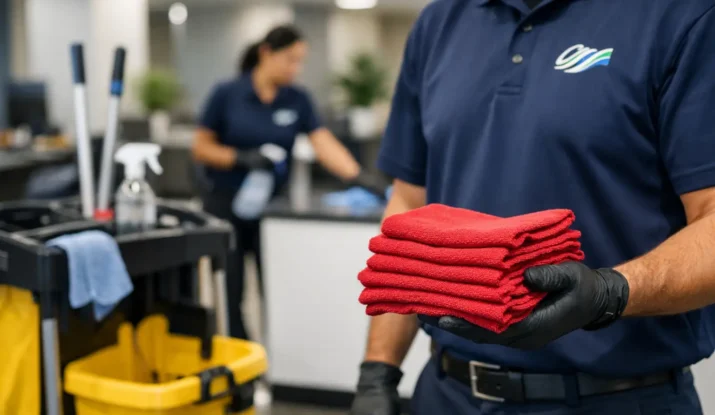
A mixed pile of generic rags creates confusion. A well-run program assigns towels by purpose and gives employees a clear way to identify, use, and return them. Color-coded cleaning systems are especially useful because they make the intended use visible at a glance.
For example, one color may be reserved for restrooms, another for breakrooms and food-service surfaces, another for general office detailing, and another for maintenance work. The exact color assignment matters less than training the team and enforcing the system consistently. A towel used around restroom fixtures should never migrate to a desk, dining area, or shared workspace.
Match Material to the Work
Cotton shop towels are often valued for absorbency and durability, particularly for oil, grease, and heavier maintenance tasks. Microfiber towels are effective for dusting, glass, finished surfaces, and detail cleaning because their fine fibers capture soil efficiently. Blended materials may work well for general-purpose wiping.
The wrong material can slow down a crew. A lint-producing towel may be a poor fit near sensitive equipment or glass. A lightweight towel may not hold up to a substantial spill. Before standardizing a purchase or rental program, identify the most common uses in each area of the property.
Separate General Cleaning From Contaminated Work
Facilities should establish clear limits for towel reuse. Towels used with petroleum products, chemicals, bodily fluids, or unknown substances require special attention. Employees need to know when to stop using a towel, where to place it, and who is responsible for the next step.
For some industrial settings, contaminated towels may be subject to specific handling, laundering, or disposal requirements. Review applicable OSHA requirements, product safety data sheets, local regulations, and internal procedures. A towel program should support safe work, not create a hidden compliance issue.
Build a Collection and Laundering Routine
The biggest weakness in reusable towel programs is usually not the towel itself. It is the lack of a controlled return process. Clean towels may start out organized, then used pieces accumulate on workbenches, carts, loading docks, supply closets, and employee lockers. At that point, no one can tell what is clean, what is contaminated, or how much inventory is missing.
Place clearly labeled collection containers near the point of use. Containers should be sturdy, easy to access, and appropriate for the materials employees may deposit. Keep clean towel storage separate from used-towel collection, ideally in covered containers or dedicated cabinets that protect inventory from dust, moisture, and accidental contact.
Set a collection frequency based on actual use. A busy kitchen or maintenance department may need daily service, while a small office maintenance area may need less frequent pickup. Inventory should be sufficient to cover normal demand, peak workloads, and unexpected spills without encouraging employees to reuse a visibly soiled towel.
Laundering standards matter as much as collection. Towels need a process designed to remove the soils they encounter, not a quick wash that leaves odors, residue, or stains behind. If a facility handles laundry internally, it must account for sorting, wash chemistry, water temperature, drying, employee exposure, and equipment capacity. Many organizations prefer a managed towel service because it shifts laundering logistics, inventory rotation, and replacement planning to a dedicated provider.
Train for Better Results and Less Waste
A reusable towel program only works when employees understand the reason behind it. Training should be short, practical, and repeated as part of onboarding and routine safety discussions. Show team members which towel belongs in which area, how to avoid cross-contamination, when to change towels, and where used materials go.
Supervisors should also address a common misconception: reusable does not mean use it until it falls apart. A towel that is saturated, heavily soiled, torn, or contaminated is no longer a useful cleaning tool. Replacing it at the right time protects the quality of the work and reduces the chance of spreading soil from one surface to another.
Routine checks can reveal whether the program is working. If clean towel bins are empty before the end of a shift, increase par levels or service frequency. If used towels are appearing in regular trash, improve container placement and employee reminders. If towels are being used in the wrong areas, simplify color coding and reinforce expectations.
Consider the Full Cost, Not Just the Unit Price
Disposable wipes may appear less expensive because the purchase decision is straightforward. Reusable shop towels involve inventory, collection, laundering, replacement, storage, and employee handling. Still, the relevant comparison is total operational cost.
Consider how much time employees spend searching for usable material, how often paper products are consumed for heavy cleanup, whether spills are addressed promptly, and how much waste leaves the building each week. A consistent towel program can improve readiness and reduce avoidable consumption, particularly in facilities with frequent maintenance, cleaning, or production activity.
There are trade-offs. A low-volume office may not generate enough towel use to justify a complex service schedule. A high-volume industrial site may need several towel types, tighter controls, and more frequent exchanges. Food service and health care environments may require added safeguards based on local health rules and the type of surface being cleaned.
Make Towels Part of a Complete Facility Supply Plan
Towels work best when they are managed alongside the supplies that support the same work: gloves, mop heads, cleaning chemicals, dispensers, floor mats, trash liners, and restroom products. When these items come from disconnected sources, a facility manager spends more time tracking deliveries, resolving shortages, and responding to preventable complaints.
A coordinated supply and cleaning plan helps maintain the right amount of inventory without overcrowding storage rooms. It also creates accountability. If a restroom lacks supplies, a maintenance closet is disorganized, or a work area has no clean towels available, the issue can be corrected before it affects employees, tenants, customers, or inspections.
For Chicagoland facilities with demanding daily operations, ABF Facility Services can help align reusable towel supply with janitorial service, maintenance cleaning, and other essential consumables. The goal is not to add another process for your team to manage. It is to give your team clean, reliable materials that support a safer, more presentable workplace.
A clean towel should always be within reach when the job calls for one, and a clear process should always be in place for what happens after it is used.