
A restroom dispenser runs empty between class periods. A spill kit is missing when a student drops a drink in the corridor. The floor crew has disinfectant but no compatible dilution equipment. These are small supply failures, but in a school, they quickly become safety concerns, staff frustrations, and avoidable complaints.
This school custodial supply guide is designed for facility leaders who need a practical way to keep classrooms, restrooms, cafeterias, gyms, offices, and entryways clean, stocked, and ready for the next bell. The goal is not to buy the most products. It is to maintain the right products, in the right quantities, with a reliable system for replenishment and safe use.
Start With the Spaces Students and Staff Use Most
Supply planning should follow the way people move through the building. A K-12 school, college building, or campus facility has distinct cleaning demands by area. Treating every room the same can lead to excess inventory in one location and shortages in another.
Restrooms require a consistent supply of hand soap, toilet tissue, paper towels, feminine hygiene products where provided, liners, disinfectant, and equipment for daily touchpoint cleaning. High-use restrooms may need checks several times a day, especially around lunch periods, assemblies, athletic events, and after-school programs.
Classrooms need dependable general-purpose cleaners, microfiber cloths, waste liners, hand sanitizer where appropriate, and spot-cleaning supplies. Cafeterias need food-service-safe cleaning products, degreasers for applicable surfaces, floor care products, and a fast response plan for spills. Gyms, locker rooms, and nurse’s offices may require products chosen for their specific surfaces, sanitation protocols, and moisture conditions.
Entryways deserve special attention during Chicago-area winters. Wet floors, road salt, slush, and tracked-in debris increase slip hazards and can shorten the life of hard flooring and carpet. Entrance matting, wet-floor signs, neutral floor cleaner, mop systems, and replacement mats should be planned as core seasonal supplies, not last-minute purchases.
Build a Core School Custodial Supply List
A functional inventory is easier to manage when it is organized by purpose rather than by brand or storage closet. Every school will have different needs, but most custodial programs require products in the following categories:
- Restroom consumables, including soap, tissue, paper towels, dispensers, liners, and odor-control products
- Cleaning chemicals, such as neutral cleaners, restroom cleaners, disinfectants, glass cleaners, degreasers, and carpet spot treatments
- Floor-care supplies, including microfiber mops, pads, finish, stripper when required, entry mats, and compatible cleaning solutions
- Tools and equipment, such as carts, color-coded microfiber cloths, mop buckets or flat-mop systems, vacuums with high-filtration capability, scrubbers, and wet-floor signs
- Personal protective equipment, including gloves, safety glasses, aprons, and any product-specific protective gear
- Waste and response supplies, including can liners, spill kits, pickup tools, absorbent materials, and properly labeled containers
The exact mix depends on building size, enrollment, number of restrooms, flooring types, food service operations, and whether the school hosts public events. A small elementary school and a multi-building high school should not use the same par levels or ordering cycle.
Choose Products That Match the Task and Surface
Using one chemical for every job may appear simple, but it often creates performance and safety problems. A product that works well on restroom fixtures may damage a finished floor. A strong degreaser may be useful in a kitchen area but unnecessary for a classroom desk. Disinfectants must be used according to their labeled instructions, including required contact time.
Facility leaders should also confirm compatibility before introducing a new product. Check flooring manufacturer recommendations, dispenser requirements, dilution-control systems, and local district procedures. Concentrated chemicals can reduce packaging and storage demands, but only if staff have proper dilution equipment and training. Ready-to-use products may be more practical for limited staff or quick-response stations.
Sustainable options can be a strong fit for schools when they meet the cleaning task at hand. Green Seal-certified products, microfiber tools, and efficient dilution systems can support environmental goals while helping reduce unnecessary chemical use. The trade-off is that a sustainable product still needs to perform reliably in a busy school environment. Select based on documented use requirements, not marketing language alone.
Set Par Levels Before Supplies Run Low
The most reliable supply programs do not rely on someone noticing an empty shelf. They use par levels, which are minimum and maximum quantities for essential items. When inventory drops to the minimum level, it triggers a reorder before the item becomes unavailable.
Start by tracking actual usage for 30 to 60 days. Record how many cases of tissue, towels, liners, soap refills, gloves, and key chemicals are used each week. Then account for delivery lead time, storage capacity, upcoming school events, and seasonal shifts. Flu season, winter weather, graduation, sports tournaments, and summer floor projects can all change demand quickly.
For example, a school may normally keep a two-week reserve of paper towels and tissue. Before an extended holiday closure or a major event, that reserve may need to increase. On the other hand, overstocking chemicals can create expiration, storage, and safety issues. The right level is enough to protect operations without turning the custodial closet into an unmanaged warehouse.
Assign one person to own inventory counts, but do not make that person solely responsible for identifying usage changes. Custodians, food-service staff, office administrators, and maintenance teams often see problems first. A simple weekly check-in can prevent repeated shortages.
Protect Staff With Color Coding and Clear Storage
Supplies are only effective when staff can use them safely and consistently. Color-coded microfiber systems are one practical way to reduce cross-contamination. For instance, one color can be designated for restrooms, another for classrooms and offices, and another for food-service areas. The specific colors matter less than using the system consistently and training every team member.
Chemical storage should be secure, labeled, ventilated as needed, and organized to prevent incompatible materials from being stored together. Safety Data Sheets should be accessible, and secondary containers must be labeled correctly. Keep personal protective equipment near the products that require it, rather than locked away in another area.
Training should cover more than how to use a product. Staff need to understand proper dilution, contact time, surface compatibility, spill response, equipment care, and when to report a maintenance issue instead of attempting a cleaning fix. A cloudy floor, recurring odor, leak, pest activity, or damaged dispenser may indicate a larger facility problem.
Plan for Daily Service and Unexpected Events
A school supply plan needs two layers. The first supports routine cleaning: restroom replenishment, classroom waste removal, floor care, and touchpoint cleaning. The second supports the unexpected: bodily fluid incidents, weather emergencies, cafeteria spills, event cleanup, and supply disruptions.
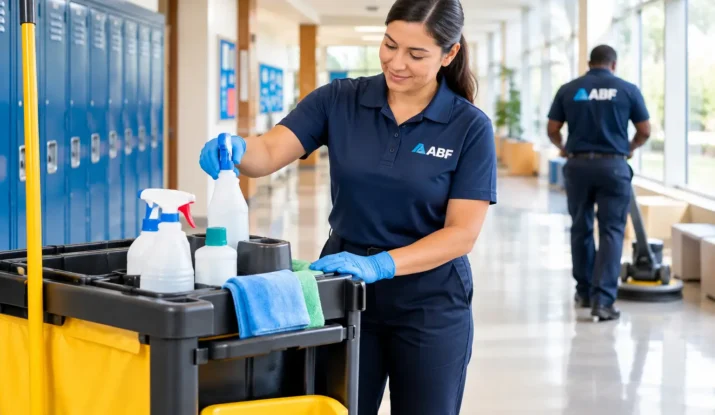
Keep response supplies accessible on custodial carts and in designated storage areas. Each cart should be inspected at the start or end of a shift so it is ready for the next one. That includes checking gloves, liners, microfiber cloths, wet-floor signs, hand tools, and the chemical bottles authorized for the cart.
For larger campuses, consider satellite supply locations. A central storeroom may be efficient for bulk inventory, but it can slow response times if staff must cross a large building for a liner refill or spill kit. Satellite closets should hold controlled quantities of high-use essentials and be included in the same inventory process.
Review Results, Not Just Purchase Orders
A lower supply cost is not always a better outcome. If less expensive liners tear, towels are used excessively, soap dispensers fail, or a floor product leaves residue, the labor and complaint costs can exceed the savings. Review supply performance through practical measures: stockout frequency, restroom inspection results, staff feedback, product waste, slip incidents, and service calls.
A dependable supplier can simplify this work by coordinating recurring consumables with cleaning and maintenance needs. ABF Facility Services helps Chicagoland schools and facility teams manage janitorial supplies, restroom products, floor mats, gloves, reusable mops, and related facility services through one accountable relationship.
The best custodial supply program is rarely the one with the fullest shelves. It is the one that gives custodians what they need when they need it, supports safer cleaning practices, and helps every student, employee, and visitor enter a building that feels cared for.