
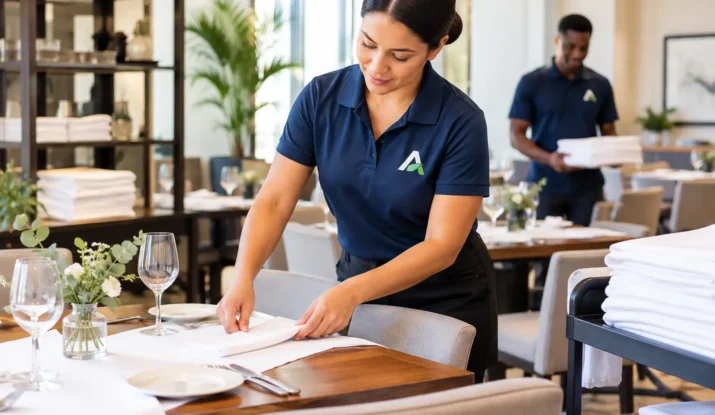
A missing case of napkins before the dinner rush can create a bigger problem than an empty shelf. Servers lose time, tables turn more slowly, and guests notice the inconsistency. A dependable restaurant linen service guide begins with that operational reality: linens are not a minor supply item. They affect presentation, sanitation practices, labor planning, and the pace of service.
For restaurant operators, the right program should deliver clean, usable inventory on the schedule your operation requires. It should also make shortages, quality concerns, and changing demand easier to address. Whether you run a neighborhood dining room, a high-volume kitchen, a catering operation, or a multi-location concept, choosing linen service deserves the same attention as selecting food suppliers and cleaning partners.
What a Restaurant Linen Service Should Cover
Restaurant linen service is a managed rental and laundering program for the reusable textiles used in food service. Depending on the provider and your needs, it can include tablecloths, cloth napkins, kitchen towels, bar towels, aprons, chef coats, floor mats, and other reusable items. The provider supplies inventory, picks up soiled goods, launders them, and returns clean items on an established route.
The convenience is real, but the purpose is larger than convenience. A well-managed service helps establish a consistent standard from the front of house to the dish area. Clean, properly folded napkins support the guest experience. Fresh aprons and towels help employees begin each shift with the supplies they need. Scheduled pickup prevents soiled textiles from accumulating in storage areas where they can create odor, clutter, or cross-contamination concerns.
Not every restaurant needs the same mix. A white-tablecloth restaurant may prioritize napkin quality, stain removal, and exact color consistency. A busy quick-service operation may place more value on durable towels, aprons, and reliable replacement stock. Catering companies often need flexibility because event volume can change sharply from one week to the next.
How to Evaluate a Restaurant Linen Service
Price matters, but the lowest quoted rate can become expensive if deliveries are inconsistent or inventory is poorly managed. Compare providers by how well their program fits the way your restaurant operates, not just by the per-piece cost.
Start with your real weekly usage
Before requesting a quote, review what your team actually uses in a normal week and during your busiest periods. Count par levels for napkins, towels, aprons, and mats. Consider seat count, average covers, number of shifts, menu style, bar volume, and catering commitments.
A service provider needs accurate information to recommend the right inventory level. Underestimating usage can leave you short during a holiday weekend. Ordering too much can create unnecessary recurring charges and storage issues. Build in a reasonable buffer for delayed returns, unexpected spills, weather-related volume changes, and special events.
Confirm delivery frequency and route reliability
Delivery schedules should match the rhythm of your operation. Many restaurants need weekly service, while high-volume kitchens may need more frequent exchanges for towels, aprons, or mats. Ask what happens when a scheduled delivery falls on a holiday, severe-weather day, or unexpected closure.
Reliability also means receiving the correct items in usable condition. Ask how deliveries are documented, how shortages are handled, and who your team contacts when an issue needs immediate attention. A responsive provider should have a clear process for correcting errors rather than leaving managers to make do until the next route day.
Inspect quality standards, not just samples
A sample napkin or apron can look excellent when it is new. The better question is how items look after repeated use and laundering. Ask about inspection practices for stains, tears, frayed edges, lingering odors, and discoloration. Damaged or poorly finished linens can undermine a polished dining room even when the rest of the facility is clean.
For kitchen textiles, consider absorbency and durability. Thin towels that wear out quickly may not serve a fast-paced prep area well. For front-of-house linens, confirm that the available sizes, colors, and fabric choices support your brand presentation. If you use specialty linens for private events, ask whether the provider can accommodate those needs without creating a separate, difficult-to-manage process.
Understand the contract and billing details
Linen agreements can include base rental charges, laundering fees, replacement charges, delivery fees, fuel or environmental fees, minimums, and terms for lost or damaged inventory. There is nothing wrong with these charges when they are transparent and appropriate. The concern is discovering them after service begins.
Review how the provider defines normal wear versus billable loss or damage. Clarify whether you are committing to a fixed weekly quantity and how changes are requested. Seasonal patios, banquet business, and shifts in menu format can all change your linen needs. A good agreement gives you a practical way to adjust without excessive administrative friction.
Sanitation, Storage, and Staff Habits Matter Too
A linen provider can launder and deliver inventory properly, but your on-site handling still matters. Establish separate, clearly marked collection points for soiled linens. Keep clean deliveries off the floor and away from food-prep areas, chemicals, leaks, and waste. Do not use clean towels for multiple purposes simply because they are nearby.
Color-coded procedures can help staff distinguish bar towels, food-prep towels, cleaning cloths, and front-of-house textiles. This reduces confusion and supports a more controlled sanitation process. Your employees should know where clean textiles are stored, where soiled items go, and when to report a shortage or damaged delivery.
Floor mats deserve particular attention. Mats help manage moisture and debris near entrances, bar stations, dish areas, and back doors, but only when they are exchanged and maintained on a dependable schedule. A worn, curled, or saturated mat can become a slip hazard instead of a safety measure. Coordinate mat service with your cleaning plan so the floor beneath and around each mat receives regular care.
When a Single Facility Partner Makes Sense
Restaurants frequently manage linens, aprons, mats, restroom supplies, pest control, waste removal, and janitorial work through separate vendors. That arrangement can work, particularly for operators with established contracts and internal purchasing support. It can also create avoidable gaps: a mat issue gets reported to one company, a floor-cleaning concern to another, and a supply shortage to a third.
For many Chicagoland restaurants, consolidating related facility services with one accountable provider reduces handoffs and simplifies communication. A partner that understands both recurring cleaning and reusable supply programs can help align delivery schedules, storage needs, floor care, and sanitation priorities. The trade-off is that you should still confirm the provider has the specific linen capacity, quality controls, and responsiveness your operation requires.
ABF Facility Services supports restaurants with managed linens and aprons alongside commercial cleaning, reusable towels and mops, floor mats, supplies, and sanitation-focused facility services. That integrated approach can be especially useful when operators want fewer vendor calls and a clearer path to resolving day-to-day issues.
Questions to Ask Before You Sign
Use these questions to move beyond a basic price comparison:
- What items are included, and what are the available fabric, size, and color options?
- How often will deliveries and pickups occur, and what is the process for emergency needs?
- How do you inspect items for stains, tears, odor, and wear before delivery?
- What charges may appear beyond the quoted weekly rate?
- How are shortages, missed items, damaged goods, and delivery errors documented and corrected?
- Can the program scale for catering, seasonal traffic, private events, or an additional location?
- Who is the day-to-day contact, and how quickly can the provider respond to service concerns?
The answers should be specific. Vague promises of good service do not tell you whether clean aprons will arrive before a weekend event or whether a missing towel bundle will be resolved that day.
A linen program works best when it is treated as part of restaurant operations, not an afterthought. Choose a provider that delivers consistent quality, communicates clearly, and can adapt to the realities of your service schedule. When clean inventory arrives where it belongs, on time and ready to use, your team can keep its attention where it should be: delivering a safe, welcoming experience to every guest.