
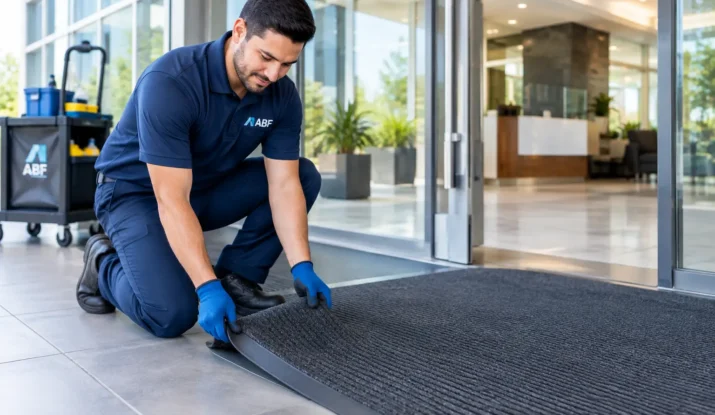
A worn entrance mat can make an otherwise well-maintained facility look neglected before a visitor reaches the front desk. It can also stop trapping moisture and soil effectively, creating slip risks and sending abrasive grit onto your floors. If you are asking how often to replace entry mats, the practical answer is based on traffic, weather, mat location, and the condition of the mat itself – not a single calendar date.
For commercial properties in Chicagoland, winter salt, slush, rain, and heavy foot traffic can shorten a mat’s useful life considerably. A planned inspection and replacement schedule helps protect flooring, improve appearance, and give employees and guests a cleaner, safer arrival.
How Often to Replace Entry Mats
Most commercial entry mats should be evaluated every month and replaced when they no longer perform their intended job. For a typical office or low-traffic professional building, a quality mat may last one to two years with proper cleaning and rotation. In high-traffic environments, such as retail stores, schools, healthcare facilities, restaurants, warehouses, and multifamily properties, replacement may be necessary every six to 12 months.
The highest-use locations may need attention even sooner. A mat at a main entrance used by hundreds of people each day wears differently than one placed at a side office entrance. The same is true for mats exposed to snowmelt, road salt, grease, or rolling equipment.
Rather than relying only on age, facility managers should assess whether the mat is still removing debris, absorbing moisture, lying flat, and presenting a professional appearance. A mat that looks acceptable but has flattened fibers may no longer capture dirt effectively. That means more soil reaches carpet, tile, concrete, or hard flooring, increasing cleaning needs and accelerating surface wear.
A practical replacement timeline by traffic level
For low-traffic entrances, inspect mats monthly and plan to replace them roughly every 18 to 24 months, depending on their construction and cleaning routine. Medium-traffic locations should be inspected monthly and often benefit from replacement every 12 to 18 months.
High-traffic entrances require closer monitoring. Inspect these mats weekly during wet weather and throughout the winter season. Many high-use mats need replacement within six to 12 months, especially when they are exposed to tracked-in salt, water, and fine grit. Industrial facilities may also need more frequent replacement if mats are exposed to oils, metal filings, dust, or heavy cart traffic.
These timeframes are planning guidelines, not guarantees. A well-made mat in a controlled office lobby may outlast the schedule, while a mat in a busy school entrance may require replacement far earlier.
Signs Your Entry Mats Need Replacement
A damaged mat is easier to identify than a worn-out one, but both require action. Cracked rubber backing, curled edges, holes, separated borders, and loose fibers are clear signs that a mat should be removed from service. These conditions can become trip hazards and may expose your organization to avoidable liability.
Other warning signs are less obvious. If the pile is permanently crushed or matted down, the mat has less capacity to trap dirt and absorb moisture. If water pools on top instead of being absorbed, it is no longer helping control slips. Lingering odors after cleaning can also indicate that the material has retained too much moisture or contamination.
Appearance matters as well. Faded colors, visible stains, frayed edges, and embedded debris can undermine the first impression of a lobby, reception area, showroom, or tenant entrance. Regular cleaning can extend mat life, but it cannot restore fibers, backing, or absorption capacity once they are worn down.
Why Replacing Mats on Time Protects Your Facility
Entry mats are one of the first lines of defense for your floors. Properly placed matting captures dirt, moisture, salt, and grit at the door, before those materials travel through the building. This reduces the burden on janitorial teams and helps preserve finishes, carpet fibers, grout lines, and floor coatings.
The cost of replacing mats is typically much lower than the cost of restoring neglected flooring. Fine grit acts like sandpaper under shoes and rolling traffic. During Chicago winters, deicing salt and moisture can discolor finishes, damage carpet, and leave hard floors looking dull long after the weather improves.
There is also a safety benefit. Wet entryways are a common concern in commercial buildings, particularly during rain and snow. Mats with intact backing and absorbent surfaces help reduce tracked-in moisture. They do not eliminate the need for routine floor checks, caution signage, and prompt spill response, but they are a critical part of a sensible slip-prevention plan.
Cleaning Can Extend Mat Life, but It Cannot Fix Wear
Routine vacuuming, extraction, laundering, and rotation are essential to getting the most value from entry mats. The right service frequency depends on soil load. A light-traffic office may need regular vacuuming and periodic deep cleaning, while a busy retail or healthcare entrance may require daily service and more frequent exchanges.
However, cleaning has limits. When fibers are compressed, backing becomes brittle, or edges start to curl, more cleaning will not return the mat to safe working condition. Keeping damaged mats in place to delay replacement can lead to more expensive floor care and a less professional entrance.
A mat rental and exchange program can simplify this process for facilities that need clean, serviceable mats on a recurring basis. Instead of storing spares, tracking laundering, and waiting until a mat fails, the facility can receive scheduled replacements based on its actual traffic patterns and seasonal needs.
Build a Mat Plan Around Your Entrances
One mat at the exterior door is rarely enough for a busy commercial facility. Effective entry matting often uses a combination of outdoor scraper mats, indoor wiper mats, and longer walk-off coverage inside the building. The goal is to give shoes enough steps to release and absorb debris before people reach finished flooring.
Start by reviewing each entrance separately. Consider how many people use it, whether it receives direct exposure to rain or snow, the type of flooring beyond the door, and whether carts, wheelchairs, or equipment pass over the mat. A loading entrance, employee entrance, customer lobby, and side door may each need a different mat style and service schedule.
Seasonal adjustments are especially valuable in the Chicago area. Additional mat coverage during snow and rain season can reduce moisture migration and protect floors when conditions are at their worst. When the season changes, facilities can reassess coverage rather than using the same approach year-round.
ABF Facility Services helps commercial and industrial facilities coordinate mat supply, recurring service, janitorial cleaning, and floor care through one accountable relationship. A tailored program can identify worn mats early, keep entrances presentable, and support cleaner floors throughout the property.
A good entry mat should not call attention to itself. It should lie flat, look clean, capture what comes in on shoes, and help visitors enter with confidence. When it no longer does those things, replacement is not an extra expense – it is routine facility protection.