
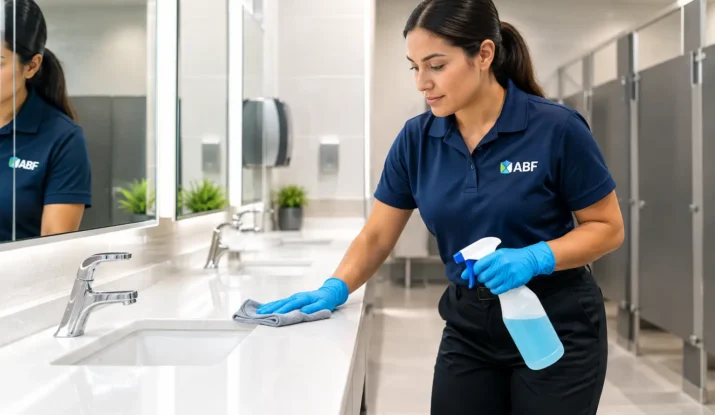
A restroom complaint rarely starts with a formal report. It starts when an employee notices an empty soap dispenser, a customer sees paper on the floor, or a tenant encounters an odor before reaching the sink. This commercial restroom hygiene guide helps facility decision-makers turn those small but visible failures into a reliable cleaning, stocking, and inspection process.
For offices, schools, medical facilities, restaurants, retail locations, industrial properties, and multi-tenant buildings, restroom hygiene is part of daily operations. A clean restroom supports health, reduces complaints, protects your property’s image, and gives people confidence that the rest of the facility is being maintained with the same level of care.
Build a Restroom Hygiene Standard That Fits the Facility
The right standard depends on traffic, restroom layout, business hours, and the people using the space. A corporate office with steady weekday traffic needs a different service plan than a restaurant restroom, a health care facility, or a busy warehouse locker room. Using one generic cleaning checklist across every area can leave high-touch and high-traffic spaces under-served.
Start by identifying when each restroom is busiest. In an office, demand may peak before meetings, at lunch, and near the end of the workday. In a school, it may spike between class periods. In a restaurant or retail setting, it often follows customer volume. These patterns determine how often attendants or cleaning teams should inspect, restock, and clean.
A practical standard should define what “clean” looks like, not just what tasks occur. Floors should be dry and free of debris. Fixtures should be visibly clean and functioning. Dispensers should be filled and operational. Mirrors should be clear, waste receptacles should not overflow, and the restroom should smell neutral rather than heavily fragranced. Strong fragrance can mask a problem temporarily, but it does not remove the source of an odor.
Focus on the Areas That Spread Germs and Create Complaints
A restroom can look acceptable from the doorway while still missing the surfaces people touch most. Door handles, stall latches, flush handles, faucet controls, soap dispensers, hand dryers, paper towel dispensers, grab bars, and baby changing stations require consistent attention. These are the points where good cleaning practices have the greatest impact on user confidence and hygiene.
Cleaning and disinfecting are related but different. Cleaning removes soil, residue, and visible debris. Disinfecting uses an appropriate product and contact time to reduce germs on a cleaned surface. Skipping the cleaning step can make a disinfectant less effective, especially around sinks, toilet bases, and frequently touched fixtures.
Teams should follow product label directions for dilution and dwell time. Applying a disinfectant and immediately wiping it away may not achieve the intended result. At the same time, overusing chemicals or combining products can damage finishes, create irritating odors, and introduce safety risks. Trained personnel, clear procedures, and properly labeled containers matter as much as the products themselves.
Use Color-Coded Tools to Prevent Cross-Contamination
Restroom tools should never move freely between toilets, sinks, floors, break rooms, and general office spaces. Color-coded microfiber cloths and mop systems help teams keep tasks separated and reduce the risk of spreading contaminants from one area to another.
Microfiber is especially useful because it captures fine soil effectively when used and laundered correctly. Disposable materials may be appropriate for certain contamination events, while reusable towels and mops can be an efficient choice when a facility has a controlled laundering and replacement process. The best option depends on your traffic level, sanitation requirements, and available storage and laundry support.
Keep Supplies Stocked Before Users Notice a Problem
Restroom cleanliness is only one part of the experience. A spotless sink area still creates frustration if soap, toilet tissue, paper towels, or hand sanitizer are unavailable. Supply outages also increase the likelihood of messy workarounds, such as visitors using excessive tissue or leaving water on counters because they cannot dry their hands.
Establish minimum inventory levels for every restroom and check them during each service visit. High-traffic facilities often benefit from a par-level system: when supplies fall below a specified amount, replenishment is triggered before the dispenser runs empty. This is more dependable than relying on staff to report shortages after the fact.
Pay attention to dispenser performance, not just product quantity. A jammed paper towel dispenser, leaking soap unit, or battery-powered fixture that has stopped working can appear to guests as poor maintenance even when replacement products are on site. Facility teams should document recurring equipment issues and replace worn dispensers before they become a regular source of complaints.
For properties managing several vendors, consolidating restroom consumables with janitorial service can reduce administrative work and prevent accountability gaps. When one provider is responsible for both service and replenishment, there is less room for a cleaning crew to blame a supply vendor, or vice versa, when an essential product is missing.
Manage Odors at the Source
Odor is one of the fastest ways a restroom loses the confidence of employees, customers, patients, or tenants. Air fresheners may improve the immediate impression, but they should not be the primary response. Persistent odor usually points to a cleaning, plumbing, ventilation, waste, or moisture issue.
Urine buildup around toilet bases and grout lines, overflowing waste, dirty floor drains, clogged plumbing, and damp mop heads are common causes. In older buildings, failed seals and ventilation limitations can also contribute. A recurring odor should be investigated rather than covered up. Cleaning teams can address soil and waste-related causes, while facility maintenance professionals may need to inspect drains, exhaust fans, leaks, or fixture connections.
Floor care deserves particular attention. Restroom floors collect moisture, soap residue, tracked-in debris, and contaminants around fixtures. Daily mopping may be sufficient for light traffic, but periodic machine scrubbing or detail cleaning is often needed to remove buildup from grout, corners, and textured surfaces. The trade-off is downtime: deeper floor cleaning can require closing a restroom temporarily, so schedule it during low-traffic periods whenever possible.
Make Inspections Visible and Actionable
A cleaning schedule is useful only when someone verifies the results. Routine inspections help catch empty dispensers, damaged fixtures, slip hazards, graffiti, overflowing trash, and developing odor issues before they affect more people.
For highly used restrooms, a simple time-stamped inspection log can provide accountability and reveal patterns. If the same restroom repeatedly runs out of paper towels at 2 p.m., the answer may be a midday restock rather than more product storage. If floors are consistently wet near a specific sink, the issue may be a leaking faucet, splash-prone fixture, or inadequate hand-drying capacity.
Inspection standards should cover both appearance and safety. Look for wet floors, loose hardware, blocked access, sharp edges, damaged partitions, and accessibility concerns. Restroom cleaning often involves wet surfaces and chemical use, so OSHA-aligned training, proper personal protective equipment, caution signage, and safe storage are essential parts of the program.
Respond Quickly to Spills and Contamination Events
Not every restroom issue fits the normal route schedule. Vomit, blood, sewage backups, broken glass, and major spills require prompt isolation and trained response. Staff should know whom to contact, how to keep people away from the affected area, and when a restroom must be closed until it is safe to reopen.
A written escalation process prevents confusion during these events. It should distinguish between routine cleaning needs, maintenance calls, and incidents requiring specialized sanitation procedures. Speed matters, but so does using the correct equipment, protective gear, and disposal process.
Train for Consistency, Not Just Speed
A rushed restroom cleaning can create the appearance of service without delivering the result your facility needs. Staff should understand the sequence of work: remove trash, clean high-touch surfaces and fixtures, apply disinfectant according to label instructions, clean mirrors and dispensers, address floors, replenish supplies, and complete a final visual check.
Training should also cover customer awareness. Cleaning professionals in occupied facilities represent the property while they work. Uniformed, insured, trained teams who communicate respectfully and place safety signs correctly make the process less disruptive for employees and visitors.
ABF Facility Services supports Chicagoland facilities with recurring janitorial service, sanitation support, restroom supplies, and responsive specialty cleaning designed around each property’s operating needs. A single accountable service relationship can be especially valuable when your team is balancing cleaning quality, supply availability, maintenance coordination, and tenant or customer expectations.
A restroom is a small space, but it sends a large message about how a facility is managed. Set clear standards, inspect often, replenish before supplies run out, and address recurring problems at their source. Those habits give every person who walks through the door a cleaner, safer, and more welcoming experience.