
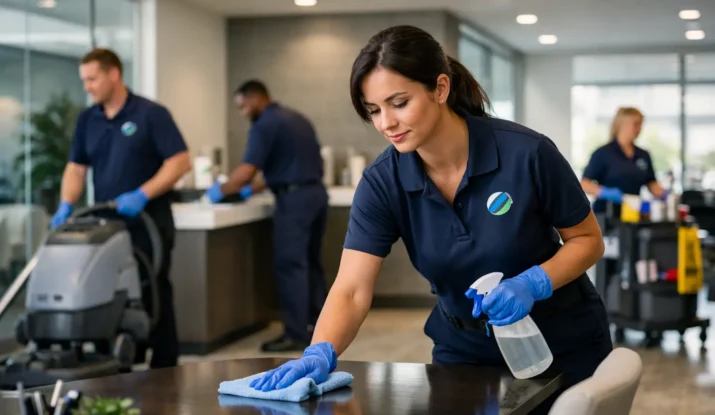
A clean facility should not require daily follow-up from your office manager, property manager, or operations team. Reliable Alsip cleaning means more than emptying trash and wiping visible surfaces. It means having a workplace that is ready for employees, customers, tenants, inspections, and the unexpected demands of a busy day.
For commercial properties, cleaning affects far more than appearance. Poorly maintained restrooms create complaints. Neglected floors wear down early. Overflowing waste areas can attract pests and create safety concerns. Inconsistent service also puts facility leaders in the difficult position of checking work that should already be completed. The right cleaning plan replaces that uncertainty with consistent standards and one accountable point of contact.
What Professional Alsip Cleaning Should Cover
No two facilities have the same traffic patterns, operating hours, or sanitation priorities. An office with client meetings needs a different approach than a warehouse with dust, debris, and high-traffic break areas. A restaurant, medical setting, school, retail space, or multi-tenant property also has its own cleaning pressures.
That is why a dependable service plan starts with a walkthrough. A professional provider should assess the building layout, occupancy, floor types, restroom usage, waste needs, entryways, and any areas that require special attention. From there, the cleaning schedule can match the facility rather than forcing the facility into a generic checklist.
Recurring janitorial service typically addresses the daily or weekly work that keeps a building presentable: restroom cleaning and restocking, trash removal, vacuuming, hard-floor care, dusting, breakroom cleaning, touchpoint disinfection, and lobby or common-area maintenance. The details matter. High-touch surfaces, corners, door frames, elevator buttons, and baseboards are often where inconsistent crews fall short.
Specialty work fills the gaps that regular service cannot always handle. Carpet extraction, machine floor scrubbing, stripping and waxing, pressure washing, deep sanitization, post-construction cleanup, junk removal, and pest-control programs may be scheduled as needed or built into a broader maintenance plan.
The Business Cost of Inconsistent Cleaning
Many facility problems begin as small visual issues. A stained entry mat, dusty reception counter, or empty soap dispenser may seem minor on its own. Together, they tell employees, customers, and tenants that the property is not being actively managed.
The operational costs can be more serious. Dirt and grit act like sandpaper on hard floors, shortening the life of finishes and increasing restoration costs. Poor restroom upkeep can lead to supply shortages, odors, and complaints. Unmanaged waste can create sanitation concerns and give pests an opportunity to settle in. For industrial facilities, accumulated dust and debris can interfere with safe, efficient operations.
There is also an administrative cost. When a manager has to contact one vendor about cleaning, another about floor mats, another about restroom paper, and a fourth about waste removal, every small issue takes longer to resolve. Consolidating related services reduces vendor coordination and makes accountability clearer.
A Cleaning Plan Built Around Your Facility
The best service frequency depends on the building, not a sales formula. A busy office may need evening cleaning five nights a week, while a smaller professional suite may be well served by two or three visits. A retail location may need focused attention before opening hours, while a manufacturing site may require cleaning around production schedules and safety rules.
A customized plan should clarify which areas are serviced, how often each task is completed, who handles specialty needs, and how concerns are reported. It should also allow for seasonal adjustments. Chicagoland winters bring salt, slush, and moisture into entryways, which can damage floors and increase slip risks. During allergy season or periods of elevated illness, more frequent attention to touchpoints, restrooms, and common areas may be appropriate.
For Alsip facilities, responsiveness matters just as much as the routine schedule. A burst trash area, an unexpected spill, a tenant move-out, or a last-minute inspection cannot always wait for the next planned visit. A cleaning partner should be prepared to communicate clearly and address urgent needs without creating confusion about who is responsible.
Equipment and Methods Make a Visible Difference
Cleaning quality is not only about effort. It also depends on using the right tools and processes for the environment. Microfiber cloths help capture dust and soil instead of spreading it across surfaces. Color-coded cleaning systems help prevent cross-contamination between restrooms, breakrooms, and general areas. High-filtration vacuums support better indoor air quality by collecting fine particles that basic equipment can recirculate.
Hard-floor care deserves particular attention because floors are among a facility’s most expensive and visible assets. The correct process depends on the surface. Vinyl composition tile may need periodic stripping and refinishing, while concrete, tile, wood, and luxury vinyl each require compatible products and equipment. Over-cleaning with harsh chemicals can be as damaging as neglect, so the goal is a maintenance program that protects the floor while preserving a clean appearance.
Sustainable products can also be part of a practical cleaning strategy. Green Seal-certified options and controlled chemical use can support environmental goals without compromising results. The appropriate product selection depends on the soil level, surface material, occupancy, and any facility-specific requirements.
Restrooms, Supplies, and First Impressions
A restroom can quickly become the most memorable room in a commercial building for the wrong reasons. It needs more than a quick wipe-down. Fixtures, partitions, mirrors, floors, dispensers, odor control, and waste receptacles all need regular attention. Just as important, soap, paper products, hand sanitizer, liners, and other consumables must be replenished before they run out.
Supply management is often overlooked until a shortage occurs. A single-provider approach can combine scheduled cleaning with recurring restroom supplies, janitorial products, floor mats, gloves, reusable towels and mops, or restaurant linens and aprons. This creates a simpler process for facility teams and helps prevent the frustration of discovering an empty dispenser during a busy shift.
Entryways deserve the same level of planning. Clean, properly maintained floor mats reduce tracked-in dirt and moisture while helping protect interior flooring. In customer-facing environments, this small detail improves the first impression before a visitor reaches the reception desk or showroom floor.
What to Ask Before Choosing an Alsip Cleaning Provider
A low quote is not always a low total cost. If service is inconsistent, supplies are missing, or floors deteriorate prematurely, the apparent savings disappear quickly. Before selecting a provider, ask direct questions about staffing, training, quality checks, scheduling, safety, and communication.
Look for trained, uniformed, insured teams that understand OSHA-aware work practices and know how to operate within active facilities. Confirm whether the provider can support your full range of needs, including recurring cleaning, deep cleaning, floor care, sanitization, pressure washing, pest concerns, and removal work. It is also reasonable to ask how service issues are documented and corrected.
A good provider will not promise that every facility needs the same package. Instead, they will explain the trade-offs. More frequent cleaning may be necessary for high-traffic restrooms and public areas, but lower-traffic back offices may need less attention. Some specialty work is best scheduled quarterly or seasonally, while other conditions call for immediate action.
ABF Facility Services helps commercial and industrial properties simplify these decisions through tailored cleaning, maintenance, sanitation, and supply support under one accountable relationship. The objective is straightforward: keep facilities clean, stocked, safe, and ready to support the people who rely on them.
A productive next step is a detailed facility walkthrough. It gives you a clear view of what is being cleaned, what is being missed, which assets need protection, and where a more dependable plan can save time for your team.