
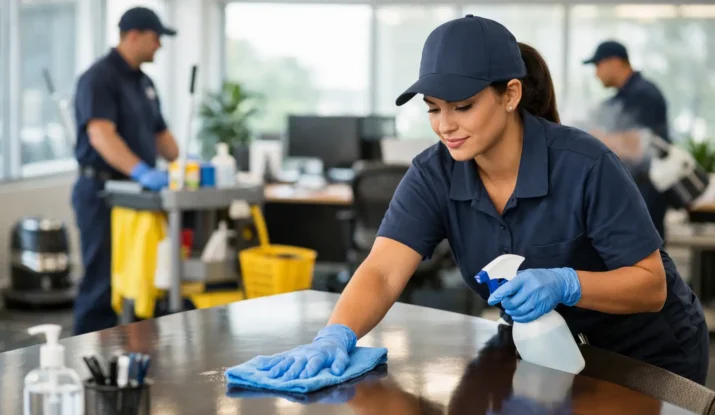
A streaked glass entry, an empty soap dispenser, or debris left near a loading dock can change how employees, tenants, customers, and inspectors view a facility within minutes. Workplace cleaning standards give facility leaders a clear way to prevent those avoidable problems. They turn cleaning from a reactive task into a defined operating system for safety, presentation, hygiene, and asset protection.
For Chicago-area offices, schools, health care settings, restaurants, retail spaces, and industrial facilities, the right standard is not simply a checklist copied from another building. It reflects how the space is used, who enters it, what risks are present, and what level of cleanliness the organization must maintain every day.
What Workplace Cleaning Standards Should Cover
Effective workplace cleaning standards define outcomes, responsibilities, frequencies, and verification. A statement such as “clean the restroom daily” leaves too much open to interpretation. A useful standard identifies which surfaces are cleaned, the approved process, the required supplies, when service occurs, and how the result is checked.
The goal is consistency without treating every area the same. A private office may need routine dusting, vacuuming, waste removal, and touchpoint cleaning. A busy employee restroom needs repeated attention throughout the day. A food-service area, clinic, or production floor may require more specialized procedures, products, personal protective equipment, and documentation.
A well-built program typically addresses four connected needs: routine cleaning, targeted disinfection, supply replenishment, and periodic specialty care. When one of these is overlooked, the rest of the program becomes less effective. A clean restroom with no paper towels or soap still fails the people using it. A polished floor that receives no proper maintenance can lose its finish quickly under heavy foot traffic.
Start With Risk, Traffic, and Building Use
Cleaning frequency should follow real conditions rather than a calendar alone. High-touch, high-traffic areas generally deserve the most attention because they affect health, safety, and first impressions all at once. Entrances, lobbies, elevators, break rooms, restrooms, reception counters, shared equipment, and door handles are common examples.
Facility managers should also consider what happens outside normal business hours. In Chicagoland, winter weather can bring salt, moisture, and tracked-in debris that damage hard floors and create slip risks. A retail location may need added service after weekend traffic. An industrial site may require cleaning around shift changes, while a medical office may need procedures that match patient flow and sanitation expectations.
There is no single “correct” frequency for every property. More frequent service raises the operating cost, but too little service often creates larger costs through tenant complaints, floor damage, absenteeism, pest activity, or an unsafe appearance. The practical answer is to assess the space, establish a baseline, and adjust service when traffic, seasons, or operations change.
Match the Task to the Area
Not every surface needs the same treatment. Cleaning removes visible soil and residues. Disinfection is a separate process that must use the correct product, contact time, and application method. Applying disinfectant to a visibly dirty surface without first cleaning it may not deliver the expected result.
Standards should distinguish between public areas, employee workspaces, restrooms, food-contact environments, storage areas, mechanical spaces, and production zones. This protects sensitive areas from cross-contamination and helps cleaning teams work efficiently. Color-coded tools and microfiber systems are especially useful because they keep restroom equipment separate from tools used in offices, break rooms, and other areas.
Build Standards That Crews Can Follow
A standard only works when it is clear enough to be performed the same way by every trained team member. Avoid vague instructions such as “clean thoroughly” or “sanitize as needed.” Instead, describe the expected condition: floors free of loose debris and visible spills, mirrors streak-free, waste containers emptied and relined, touchpoints cleaned, and consumables replenished to an agreed level.
Written scopes of work should identify daily, weekly, monthly, and project-based tasks. Daily work may include vacuuming, trash service, restroom care, break room cleaning, and touchpoint cleaning. Weekly or monthly work may include high dusting, detailed edge vacuuming, carpet spot treatment, machine scrubbing, floor burnishing, or interior glass cleaning.
Specialty work should be scheduled before it becomes an emergency. Carpet extraction, strip and wax service, pressure washing, deep restroom cleaning, junk removal, and pest-control support are examples of services that protect the building over time. Waiting until floors look permanently dull or waste accumulation blocks a service area usually means more disruption and a higher restoration cost.
Train for Safety and Consistency
Cleaning teams need more than a list of tasks. They need training on chemical labels, dilution, equipment use, slip-and-fall prevention, bloodborne-pathogen awareness where applicable, personal protective equipment, and proper waste handling. OSHA-compliant procedures help protect both the cleaning crew and the people who use the facility.
Training also supports better results. High-filtration vacuums can reduce the recirculation of fine dust and allergens when used correctly. Microfiber tools capture soil effectively while reducing unnecessary product use. Green Seal-certified products can be a practical choice for facilities seeking environmental awareness without compromising cleaning performance, provided the products are suitable for the surface and task.
Equipment matters, but process matters just as much. A floor machine in untrained hands can damage finish, leave excess moisture, or disrupt operations. The best service teams understand when to use specialized equipment and when a detailed manual process is the safer, more appropriate option.
Verify Results, Do Not Assume Them
Workplace cleaning standards need an inspection process. Supervisory walk-throughs, site checklists, issue logs, and regular client communication create accountability. They also catch recurring problems before they become complaints from employees, visitors, customers, or tenants.
Inspections should focus on the conditions people notice and the conditions that create operational risk. Are restrooms fully stocked? Are entry floors dry and presentable? Is waste being removed on schedule? Are touchpoints receiving attention? Are floors, carpets, and common areas being maintained according to the agreed plan?
A quality-control process should make it easy to report exceptions. A spill, depleted supply dispenser, damaged floor area, pest concern, or unexpected waste issue should not wait for the next routine visit. Responsive communication and a defined escalation path are part of the cleaning standard, not an extra service.
Keep Supplies Within the Same Standard
Supply management is often treated as separate from janitorial service, but users experience both as one thing. When toilet paper, hand soap, gloves, liners, mats, towels, or cleaning products run out, the facility appears poorly managed even if the cleaning itself was completed properly.
Set minimum inventory levels for critical consumables and review them based on actual usage. A small office may only need periodic replenishment, while a restaurant, school, health care facility, or high-occupancy building may need frequent monitoring. Centralizing cleaning, consumables, floor mats, reusable towels and mops, and related rental needs with one accountable provider can reduce gaps between service visits and simplify vendor coordination.
ABF Facility Services helps Chicagoland facilities build customized service plans that connect recurring cleaning, specialty maintenance, sanitation, and supply replenishment. That approach gives facility leaders one point of accountability while allowing the scope to reflect their building’s actual demands.
Review the Standard as Operations Change
A cleaning plan should be reviewed when occupancy changes, a tenant moves in or out, work shifts expand, construction occurs, seasonal conditions change, or complaints increase. The right response may be a temporary increase in service, a revised task schedule, new entry matting, additional restroom checks, or a deeper floor-care program.
The strongest workplace cleaning standards are visible in the details: a restroom that is clean and stocked, a lobby that stays presentable through bad weather, floors that last longer, and employees who can focus on their work rather than reporting avoidable facility issues. Set expectations clearly, inspect consistently, and choose service partners who treat every missed detail as an issue worth correcting.