
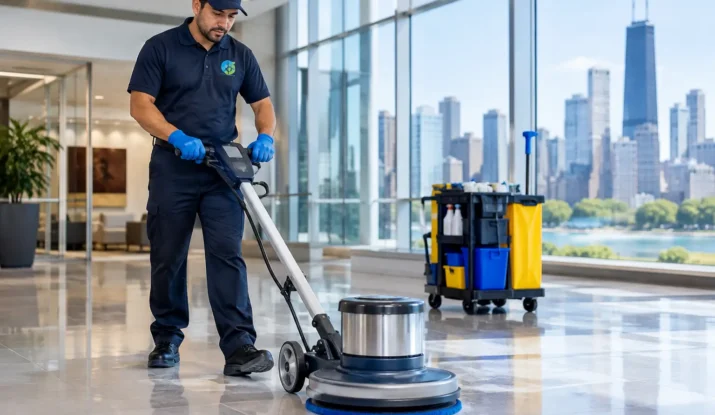
A dull entryway, stained restroom tile, or dusty warehouse concrete floor can change how people judge an entire property within seconds. Professional hard floor cleaning services Chicago facility managers can depend on do more than improve appearance. They remove soil that wears down finishes, reduce slip risks, support sanitation standards, and help protect a costly building asset.
For offices, health care environments, schools, retail spaces, restaurants, multifamily properties, and industrial facilities, floor care needs to match the surface, traffic level, and hours of operation. A one-size-fits-all approach can leave floors looking better for a few days while shortening their useful life over time.
Why Hard Floors Need More Than Routine Mopping
Daily mopping and spot cleaning are essential, but they cannot always remove embedded grime, salt residue, grease, scuff marks, or old cleaning-product buildup. Chicago weather makes this especially challenging. Snow, slush, road salt, and moisture are tracked inside during winter, while rain and construction dust create different concerns throughout the rest of the year.
Those contaminants can abrade a floor’s finish like sandpaper under foot traffic. On vinyl composition tile, worn finish may allow stains to penetrate more easily. On concrete, oils and fine dust can collect in pores and create a neglected appearance. On ceramic tile, the tile may look acceptable while grout lines gradually darken and hold soil.
Professional service addresses what routine cleaning misses. The right team evaluates the floor material, identifies the source of the soil, selects compatible chemistry and equipment, and uses a process designed to restore the surface without causing unnecessary damage.
Hard Floor Cleaning Services Chicago Properties Need
Effective floor care begins with the material underfoot. A method that works well for sealed concrete may be inappropriate for natural stone, and aggressive stripping can damage a floor when a less intensive scrub and recoat would achieve the desired result.
Vinyl Composition Tile and Luxury Vinyl
VCT remains common in schools, medical offices, corridors, break rooms, and commercial buildings because it is durable and cost-effective. Its appearance depends heavily on a properly maintained finish. Periodic machine scrubbing, stripping when needed, and wax application can help protect the tile from traffic, spills, and scuffs.
Luxury vinyl tile and plank require a different approach. These surfaces may not need traditional wax, and applying the wrong finish can make them harder to clean or alter their intended appearance. Low-moisture cleaning, approved neutral products, and manufacturer-aligned procedures are often the better choice.
Tile, Grout, and Restroom Floors
Restroom floors face a specific combination of moisture, soap residue, disinfectant buildup, and heavy daily use. A surface can look clean from a distance while grout lines remain discolored or slippery residue develops near fixtures and entrances.
Machine scrubbing and targeted grout cleaning help restore a more uniform appearance. Just as important, ongoing restroom service should include attention to corners, baseboards, drains, and high-touch fixtures so the whole space supports a clean, well-managed impression.
Concrete and Industrial Floors
Warehouses, loading areas, manufacturing spaces, garages, and utility rooms often require floor care built around operational realities. Dust, tire marks, pallet traffic, lubricants, and production debris can call for specialized equipment and cleaning methods.
The objective is not always a glossy finish. In many industrial settings, the priority is a cleaner, safer work surface that supports daily activity without interrupting production. Scheduling work during off-hours or low-traffic windows can limit disruption while addressing accumulated soil before it becomes a larger maintenance problem.
Natural Stone and Specialty Surfaces
Stone flooring can create an exceptional first impression, but it also demands care. Acidic or overly harsh cleaners can etch sensitive materials, while excessive water may affect grout, seams, or surrounding finishes. Stone should be cleaned with surface-appropriate products and equipment, then protected through appropriate sealing or maintenance plans when recommended.
The Right Service Level Depends on Your Facility
Not every floor needs a full restoration. Spending more than necessary on intensive service is inefficient, but delaying needed maintenance can result in deeper staining, finish failure, and early replacement costs. The best plan is based on floor condition and use rather than a fixed calendar alone.
A busy medical office or retail entrance may need frequent machine scrubbing and periodic finish maintenance. A low-traffic administrative suite may require less frequent specialty work, supported by consistent janitorial service. Restaurants may need focused degreasing around kitchen and service areas, while apartment common areas may need seasonal attention to salt and moisture damage.
A professional assessment should consider the floor type, square footage, traffic patterns, existing coatings, visible damage, and the facility’s operating schedule. It should also account for adjacent needs, such as entry mats, restroom supply replenishment, carpet cleaning, trash removal, or pressure washing. When those services are coordinated under one accountable provider, facility teams spend less time managing separate schedules and chasing follow-ups.
What a Quality Floor-Care Process Looks Like
Reliable results come from preparation as much as equipment. Before work begins, a trained crew should identify hazards, place appropriate safety signage, move or work around accessible furniture as agreed, and protect nearby surfaces. Floor cleaning should never create a new safety issue for employees, visitors, or tenants.
The cleaning method may involve dust removal, solution application, agitation with a floor machine, recovery of soil and moisture, rinsing, and drying. For finish work, the process can include stripping deteriorated wax, neutralizing the floor, allowing proper dry time, and applying even coats of finish. Shortcuts at any stage can lead to streaking, powdery residue, poor adhesion, or a floor that soils again too quickly.
Equipment and products matter. High-quality microfiber tools capture fine particles more effectively than basic dusting methods, while color-coded cleaning systems help prevent cross-contamination between areas. Green Seal-certified products can be a practical choice for facilities seeking effective cleaning with a more environmentally responsible approach. The product still has to be appropriate for the surface and the task.
Questions to Ask Before Hiring a Floor Cleaning Provider
A floor-care partner should be able to explain the plan in clear operational terms. Ask what method is recommended for your specific floor, why it is appropriate, how long the work will take, and what access the crew needs. You should also know whether the area can remain open, how long it must dry, and how the provider will manage safety during service.
It is also reasonable to ask about crew training, insurance, OSHA compliance, and quality control. Floor-care work involves machines, chemicals, wet surfaces, and sometimes after-hours access. A dependable provider has procedures for each of those responsibilities, not just a promise that the floor will look better.
Finally, ask how the service fits into ongoing maintenance. A specialty clean delivers the greatest value when routine janitorial staff or a recurring service program can help preserve the result. Clean entry mats, timely spill response, proper daily products, and consistent dust removal can extend the life of a restored finish.
Protect Appearance, Safety, and Your Flooring Investment
Floors carry the daily load of a commercial property. They absorb foot traffic, rolling equipment, moisture, grit, and the visual attention of everyone who enters the building. Treating them as an occasional cosmetic concern often leads to preventable wear and higher replacement costs.
ABF Facility Services provides customized hard-floor care for Chicago-area facilities that need dependable scheduling, trained and uniformed teams, and clear attention to safety and detail. Whether the need is recurring maintenance, a seasonal floor refresh, or a targeted restoration project, the right service plan should work around your operations and give your property a cleaner, more professional foundation every day.