
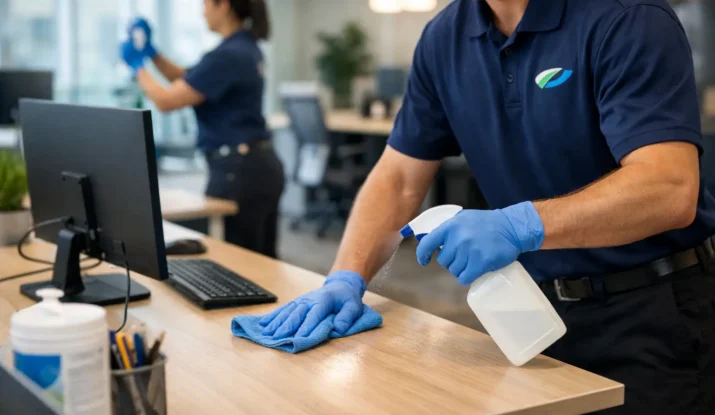
A conference room can look ready for the next meeting while its door handle, chair arms, remote control, and tabletop still carry the residue of a full day. The same is true for shared desks, break rooms, locker rooms, restrooms, and reception counters. To sanitize shared workspaces effectively, facility teams need more than an occasional wipe-down. They need a consistent process that targets the right surfaces, uses products correctly, and fits the pace of the building.
For office managers, property managers, operations leaders, and building owners, sanitation is part of daily facility management. It affects employee confidence, visitor impressions, tenant satisfaction, and the ability to keep a workplace functioning without avoidable disruptions. A clear plan also makes it easier to hold cleaning standards accountable across shifts and busy periods.
Start With Cleaning, Then Sanitize
Cleaning and sanitizing are related, but they are not interchangeable. Cleaning removes visible soil, dust, spills, grease, and debris. Sanitizing reduces germs on a cleaned surface to a safer level. When a surface is dirty, a sanitizer may not work as intended because soils can block contact with the surface.
That distinction matters in high-use areas. A break room table with food residue should be cleaned first, then sanitized with an approved product used according to its label directions. The same approach applies to restroom fixtures, shared keyboards, counters, and common equipment. Skipping the cleaning step may save a few minutes, but it can reduce the value of the sanitation work.
Disinfection is another separate process. It is generally used when a facility needs a higher level of germ reduction, such as during an illness concern or in environments with specific health requirements. The right service level depends on the facility, the area being treated, the product label, and applicable workplace or industry expectations.
Identify the Shared Surfaces That Need Attention
Not every surface needs the same frequency of service. A storage room shelf touched once a week should not receive the same attention as a break room refrigerator handle used throughout the day. Start by walking the facility during active hours and observing where people naturally place their hands.
Common high-touch points include:
- Door handles, push plates, elevator buttons, handrails, and light switches
- Shared desks, phones, keyboards, mice, printers, scanners, and copier controls
- Conference tables, chair arms, presentation remotes, and touchscreen controls
- Break room counters, appliance handles, cabinet pulls, tables, and vending controls
- Restroom faucets, flush handles, stall latches, dispensers, and baby changing stations
This assessment should also include facility-specific equipment. In an industrial setting, that may mean control panels, time clocks, tool cabinets, forklift touchpoints, and locker room benches. In a medical or school environment, the list may expand to check-in counters, classroom surfaces, shared devices, and waiting-area furniture. Restaurant operators may need additional attention on host stands, menus, point-of-sale equipment, and employee areas.
Build a Schedule Around Actual Use
A good sanitation schedule is based on traffic patterns, not assumptions. A lobby may need attention before business opens, during the lunch rush, and before an afternoon visitor appointment. A restocked and sanitized restroom can quickly lose its presentation if it serves a high-volume shift change.
For many commercial facilities, nightly janitorial service provides the foundation. Day porter support or scheduled daytime touchpoint service can handle the areas that see frequent use between full cleanings. The correct approach depends on occupancy, public access, the type of work performed, and the level of risk associated with the space.
Use a written scope that names the areas, expected frequency, and cleaning method. “Sanitize common areas” is too broad to manage well. A clearer instruction might identify the lobby door hardware, reception counter, elevator controls, break room appliances, and conference rooms, with a defined schedule for each. This creates a standard that managers can inspect and cleaning teams can follow consistently.
Adjust After Events, Spills, and Heavy Traffic
A schedule should not prevent a team from responding to real conditions. A catered meeting, a crowded training session, a flu-related absence, or a spill in a shared area may require service outside the usual routine. Facilities that plan only for normal conditions often fall behind at the moments when cleanliness is most visible.
Keep escalation procedures simple. Staff should know who to contact for an urgent sanitation need, what information to provide, and how quickly a response is expected. This is especially helpful in multi-tenant buildings, manufacturing sites, schools, and customer-facing properties where delays can create complaints or operational concerns.
Use Products and Tools Correctly
Product selection should match the surface and the task. A chemical that works well in a restroom may not be appropriate for a food-contact area, electronic equipment, natural stone, or delicate finishes. Always follow label directions for dilution, application, safety precautions, and dwell time. Dwell time is the period a product must remain visibly wet on a surface to achieve the claimed result. Wiping it dry immediately can undermine the process.
Tools matter as much as chemicals. Color-coded microfiber cloths help prevent cross-contamination by separating restroom work from break room, office, and general-area cleaning. High-filtration vacuums help control dust and fine debris before it settles onto shared surfaces. Well-maintained dispensers, mop heads, gloves, and cleaning carts also support consistent service rather than turning sanitation into a rushed, improvised task.
Sustainable products can be part of a strong program when they are selected for performance and proper use. Green Seal-certified options may support environmental goals, but facility managers should still confirm that the product fits the intended surface and sanitation requirement. The best choice is not simply the strongest chemical or the greenest label. It is the product that can be used safely, correctly, and consistently in that specific setting.
Protect the People Doing the Work
Shared-workspace sanitation often happens near employees, tenants, patients, students, customers, or visitors. That makes communication and safe work practices essential. Cleaning personnel should be trained on chemical handling, personal protective equipment, wet-floor controls, waste disposal, and the proper sequence of work.
For example, a team should work from cleaner areas toward dirtier areas and avoid using the same cloth in a restroom and on an office counter. They should replace soiled microfiber promptly, label secondary containers when required, and keep chemicals secured. Uniformed, insured, OSHA-compliant cleaning teams provide an added layer of confidence because they arrive with defined procedures instead of relying on guesswork.
Facilities should also communicate practical expectations to occupants. Employees can help by clearing desks before scheduled service, reporting spills quickly, and avoiding the use of shared supplies when ill. The goal is not to shift the cleaning burden onto staff. It is to prevent simple obstacles from limiting the work of the cleaning team.
Keep Restrooms and Break Rooms Fully Supplied
Sanitation fails when hand soap dispensers are empty, paper towels run out, or waste bins overflow. These are not minor supply issues. They directly affect how people use the space and how they judge the condition of the facility.
A dependable program pairs cleaning with consumable management. Monitor soap, sanitizer, toilet tissue, paper towels, liners, gloves, and other essential items based on real usage. High-traffic locations may need more frequent checks or larger-capacity dispensers. A building with multiple vendors for cleaning and supplies can also experience gaps in accountability when inventory is low.
ABF Facility Services helps Chicagoland facilities combine recurring cleaning, sanitation, and supply support through one accountable service relationship. That model can simplify communication when a restroom needs attention, a break room requires restocking, or a common area needs an extra service visit.
Verify Results Instead of Assuming Them
A sanitation plan should be visible in the building and measurable behind the scenes. Managers can inspect high-touch areas at different times of day, review service checklists, track supply outages, and note recurring concerns from occupants. If a conference room is regularly missed after meetings or a restroom runs out of towels every afternoon, the schedule or scope needs adjustment.
Quality checks are most useful when they lead to action. A missed detail should prompt retraining, a change in route timing, an equipment adjustment, or clearer communication. It should not become a routine complaint that everyone accepts as normal.
The best shared-workspace sanitation programs are designed around how people actually move through a property. When surfaces are cleaned before sanitizing, supplies remain available, and trained teams follow a dependable schedule, the workplace feels cared for at every touchpoint. That is the standard employees, tenants, and visitors notice long before they put it into words.