
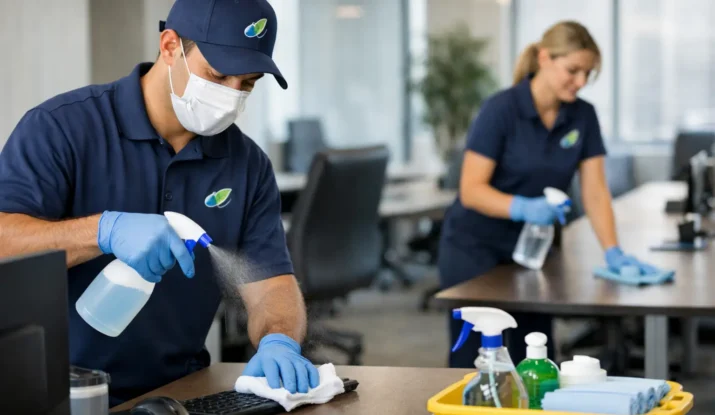
A restroom can look spotless while high-touch surfaces still need a targeted germ-control step. That distinction is at the center of disinfecting versus sanitizing workplaces. Facility managers do not need to disinfect every square inch of a building every day, but they do need a clear plan for when sanitizing is sufficient and when disinfection is the responsible choice.
The right approach protects employees, visitors, customers, and tenants without wasting labor, chemicals, or operating budget. It also helps cleaning teams deliver consistent results across offices, schools, medical settings, restaurants, industrial facilities, and common areas.
What Sanitizing Does
Sanitizing reduces bacteria and other microorganisms on a surface to levels considered safer under public-health standards. It is commonly used as part of routine cleaning in spaces where people touch shared surfaces throughout the day.
For example, a janitorial team may sanitize restroom fixtures, breakroom tables, door handles, elevator buttons, touchscreens, shared office equipment, and dining surfaces. In food-service environments, sanitizing is especially important for food-contact surfaces after they have been properly cleaned.
Sanitizing is not a substitute for removing visible soil. Dust, grease, food residue, and buildup can prevent a sanitizer from making proper contact with the surface. The effective sequence is simple: clean first, then apply the appropriate sanitizing product according to its label instructions.
For many facilities, sanitizing is the practical baseline for daily service. It supports a cleaner environment, reduces routine exposure on frequently touched surfaces, and can be performed efficiently without disrupting operations.
What Disinfecting Does
Disinfecting is a more intensive process designed to kill or inactivate a broader range of germs on hard, nonporous surfaces. It is often appropriate when a facility has a known illness concern, a bodily-fluid incident, a higher-risk population, or a requirement for more rigorous infection-control procedures.
A disinfectant must remain wet on the surface for the full contact time listed on its label. This detail matters. Spraying a surface and immediately wiping it dry may not allow the product enough time to work as intended. Cleaning staff should also follow label directions for dilution, ventilation, personal protective equipment, and surface compatibility.
Disinfection may be necessary after an employee reports a contagious illness, in a clinic waiting room, in a school health office, or on high-touch surfaces in a senior-care environment. It can also be appropriate after a spill or contamination event, with the exact protocol depending on the material involved and the facility’s safety procedures.
Using disinfectants everywhere, every day is not automatically better. Some products can be harsh on finishes, electronics, flooring, or sensitive surfaces if used incorrectly or too frequently. They may also require longer dwell times and more careful application than routine sanitizers. A well-managed program uses disinfection where the risk justifies it.
Disinfecting Versus Sanitizing Workplaces: The Practical Difference
The most useful question is not, “Which one is better?” It is, “What does this space need right now?”
Sanitizing is generally suited to routine maintenance of shared spaces and food-service areas. Disinfecting is generally suited to elevated-risk situations, illness response, health-focused environments, and contamination concerns. Both processes work best after physical dirt and residue have been removed.
Consider an office breakroom. Daily cleaning should remove crumbs, spills, fingerprints, and waste. Tables, refrigerator handles, microwave buttons, and sink fixtures can then be sanitized as part of the normal service plan. If several employees are out sick or an illness has been reported, a targeted disinfection of shared, high-touch areas may be the appropriate next step.
Now consider a warehouse. The risk profile may center less on desk surfaces and more on shared equipment, time clocks, locker rooms, restrooms, handrails, breakrooms, and dispatch counters. The schedule should reflect shift changes, employee traffic, the type of work being performed, and any site-specific safety requirements.
A medical office requires a different plan than a retail store, and a restaurant requires different controls than a manufacturing plant. One-size-fits-all cleaning scopes often create gaps because they treat every facility as though it has the same traffic, surfaces, and operational risks.
Cleaning Comes Before Either Process
One of the most common mistakes in workplace sanitation is treating a disinfectant or sanitizer as a cleaning product. These are related tasks, but they are not identical.
Cleaning removes visible dirt, debris, oils, and other material from surfaces. This step improves appearance and prepares the surface for sanitizing or disinfection. A disinfectant applied over grease or grime may not reach the microorganisms underneath. In a busy facility, that can create a false sense of security because the surface has been sprayed but not truly treated.
Professional teams use structured methods to avoid cross-contamination while moving through a facility. Color-coded cleaning systems help separate tools used in restrooms from those used in breakrooms, offices, or general areas. Fresh microfiber cloths, properly maintained mop heads, and high-filtration vacuums also support cleaner results by capturing soil rather than redistributing it.
The process matters as much as the product. Teams should work from cleaner areas toward dirtier areas, change cloths when needed, and give special attention to touchpoints that match how people actually use the building.
Build a Schedule Around Risk and Traffic
An effective workplace plan distinguishes between routine service and response service. Routine service addresses the predictable needs of the facility. Response service adds focused disinfection or specialty cleaning when conditions change.
Start by identifying the spaces with the greatest touch frequency. Restrooms, entrances, reception counters, breakrooms, conference rooms, elevators, shared devices, and door hardware usually deserve regular attention. In industrial facilities, add equipment controls, locker rooms, shared tools, and timekeeping stations. In schools and health care settings, review waiting areas, desks, exam spaces, and other surfaces used by multiple people.
Then consider timing. A high-traffic lobby may need touchpoint service throughout the day, while a low-traffic administrative suite may be adequately served during nightly janitorial cleaning. A restaurant may need continuous sanitizing of food-contact surfaces during service, along with a more comprehensive cleaning schedule after closing.
Documenting these decisions creates accountability. A clear scope of work should identify which areas are cleaned, sanitized, or disinfected; how often each task occurs; which products are used; and who is responsible for verifying completion. This is particularly valuable for multi-tenant properties, regulated environments, and facilities that need to demonstrate consistent maintenance practices.
Product Choice and Training Affect Results
The label is part of the cleaning procedure, not an afterthought. A product must be approved for its intended use and used on surfaces compatible with its ingredients. Teams should never mix cleaning chemicals, improvise dilutions, or assume that more product produces better results.
Training is equally important. Staff should understand contact time, dilution ratios, safe storage, ventilation needs, and the correct use of gloves or other protective equipment. OSHA-compliant practices help protect the cleaning crew as well as everyone who occupies the building.
Environmental considerations also belong in the conversation. Sustainable products, including Green Seal-certified options where appropriate, can support a facility’s environmental goals. However, sustainability claims should not replace performance requirements. The selected product still needs to be suitable for the surface, the task, and the level of germ control required.
Signs Your Current Program May Need Adjustment
Tenant complaints, recurring restroom odors, empty soap dispensers, sticky breakroom surfaces, visible residue on touchpoints, and inconsistent cleaning quality are operational signals worth addressing. So are illness-related concerns that do not trigger a clear response plan.
A facility may not need more chemicals. It may need better scheduling, clearer task assignments, improved supply management, or trained personnel who understand the difference between cleaning, sanitizing, and disinfecting. Consolidating routine janitorial work, restroom consumables, specialty cleaning, and targeted disinfection with one accountable provider can also reduce the gaps that appear when multiple vendors work independently.
For Chicago-area facilities, ABF Facility Services can tailor cleaning frequencies and sanitation procedures to the way your building operates, from daily office service to specialized industrial and customer-facing environments.
A safer workplace is built through consistent decisions made at the surface level: clean what is dirty, sanitize what needs routine germ reduction, and disinfect when the risk calls for a higher level of control.