
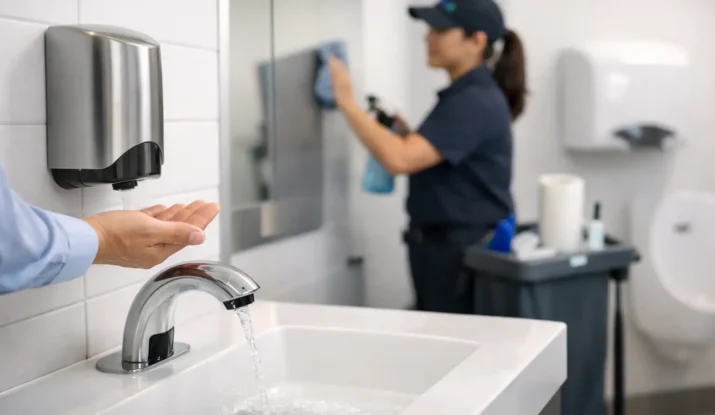
A restroom can look clean at 8:00 a.m. and still generate complaints by noon if soap runs out, a faucet leaks, or paper towels pile up near an overfilled waste bin. That is why touchless restroom technology trends deserve attention from facility managers. The best systems do more than reduce contact with high-touch surfaces. They help commercial facilities improve hygiene, conserve resources, and give cleaning teams clearer signals about what needs attention.
For offices, schools, health care settings, restaurants, industrial sites, and multi-tenant properties, the goal is not to add technology for its own sake. The goal is a restroom that stays clean, supplied, safe, and easy to use throughout the day. The right mix depends on traffic levels, building infrastructure, user needs, and the service plan behind the equipment.
Touchless Restroom Technology Trends Shaping Facilities
The first wave of touchless upgrades focused on automatic faucets, soap dispensers, flush valves, hand dryers, and paper-towel dispensers. Those fixtures remain essential because they remove common hand-contact points and create a more modern visitor experience. The current trend is toward connected systems that pair hands-free operation with inventory monitoring, usage data, and more reliable maintenance planning.
This shift matters because restrooms are operational spaces, not just fixtures behind a closed door. A missed refill or malfunctioning dispenser can undermine the work of an otherwise strong cleaning program. Technology can help identify issues earlier, but it does not replace trained personnel who inspect, clean, disinfect, replenish, and respond when conditions change.
Smart dispensers are becoming practical, not experimental
Connected soap, sanitizer, paper, and tissue dispensers can track fill levels and, in some systems, report battery condition, dispensing activity, and service alerts. For a high-traffic facility, this can reduce avoidable stockouts and help teams prioritize the restrooms that need service first.
The value is strongest when the information leads to action. If a facility receives a low-paper alert but does not have a defined response process, the technology becomes another dashboard to monitor. A dependable restroom program connects dispenser data with scheduled checks, available consumables, and accountable cleaning staff.
Smart dispensers also require realistic planning. Sensors can be affected by poor placement, product compatibility, battery maintenance, wireless coverage, and heavy use. Facility leaders should ask how alerts are delivered, who owns the response, and whether replacement soap, towels, tissue, and batteries are readily available.
Touchless fixtures are improving water control
Automatic faucets and sensor-operated flush valves continue to gain ground in commercial restrooms. Properly calibrated fixtures can reduce unnecessary water flow while making handwashing and flushing more convenient for users. Some newer models offer adjustable run times, leak alerts, and usage tracking that can help facilities spot abnormal consumption.
However, sensor fixtures are not automatically efficient. A faucet that runs too long wastes water, while one that shuts off too quickly frustrates users and may discourage proper handwashing. A flush valve set incorrectly can create repeat flushes, clogs, or sanitation concerns. Installation, calibration, and periodic inspection matter as much as the equipment selection.
For older Chicago-area properties, plumbing conditions may influence the decision. Retrofitting can be worthwhile, but the facility should evaluate pipe condition, water pressure, power requirements, accessibility, and the cost of future parts before standardizing on a system.
Better hand-drying choices are driving design decisions
The choice between touchless paper-towel dispensers and hand dryers is no longer only about appearance. It affects restroom traffic flow, waste volume, energy use, noise, and user preference. Paper towels offer a familiar option and can help users avoid touching door handles after washing. High-speed hand dryers can reduce paper consumption, but their noise level and drying performance may not suit every environment.
Health care facilities, schools, restaurants, and customer-facing businesses may have different priorities than an office building or industrial site. Many facilities choose to offer both options where space and budgets allow. The practical question is whether the selected system can be kept clean, stocked, and functioning during the busiest periods of the day.
Occupancy and traffic data can improve service timing
Some restroom management systems use door counters, occupancy sensors, or fixture-use data to estimate traffic and trigger service needs. This can be useful in airports, campuses, large office buildings, event venues, and other properties where restroom demand changes sharply during shifts, lunch periods, or special events.
Traffic-based service can be more efficient than treating every restroom the same. A lightly used executive-floor restroom may need a different inspection schedule than a first-floor public restroom near a cafeteria. Still, data should support, not eliminate, visual quality checks. A sensor cannot always identify a spill, odor, clogged toilet, damaged partition, or a customer concern that requires immediate attention.
The Hygiene Case Is Bigger Than Touch-Free Fixtures
Touchless equipment reduces routine contact with handles, buttons, and levers, but hygiene depends on the entire restroom environment. Sink basins, counters, partitions, floors, door hardware, waste receptacles, and refill areas still need consistent attention. A touchless soap dispenser with residue on its nozzle or an automatic faucet surrounded by standing water does not create a clean impression.
A complete approach includes correct cleaning chemistry, color-coded tools that help prevent cross-contamination, microfiber materials, and clear restroom procedures. High-touch surfaces still need routine disinfection where appropriate, even when many fixtures operate by sensor. Teams should also inspect sensors and dispensing openings for buildup that can affect performance.
For facilities responsible for employee, tenant, patient, student, or customer safety, restroom technology should fit within a documented sanitation plan. That means defining service frequencies, inspection standards, replenishment levels, escalation procedures, and quality checks. It also means training staff to recognize when a sensor issue is actually a plumbing, battery, connectivity, or misuse problem.
How to Prioritize Upgrades Without Overspending
A full restroom renovation is not the only path to better touchless performance. Many commercial properties can start with targeted upgrades in their highest-use restrooms. Automatic soap dispensers, touchless faucets, and controlled paper dispensing often deliver visible improvements without requiring a complete redesign.
Before purchasing equipment, facility leaders should assess the daily traffic pattern, current complaints, supply usage, maintenance history, and available service coverage. It is also useful to look at the total operating picture: upfront fixture cost, installation, batteries or power, compatible consumables, repair parts, labor, and expected life span.
Avoid selecting equipment solely because it has the most features. A straightforward, durable dispenser that accepts a dependable supply program may outperform a highly connected model that is difficult to service. Standardizing fixtures across a property or portfolio can also simplify training, stocking, repairs, and quality control.
Build the service plan at the same time
Every technology decision should include a plan for cleaning, replenishment, and repair. Assign responsibility for checking alerts and inspecting equipment. Keep approved replacement products on hand. Establish a process for reporting leaks, low batteries, clogs, vandalism, and sensor failures before they affect users.
This is where a single accountable facility-services partner can reduce administrative burden. ABF Facility Services can coordinate recurring janitorial care with restroom consumables and supply support, helping clients keep the operational details aligned rather than managing separate service gaps.
What Facility Managers Should Watch Next
The next phase of restroom technology will likely place more emphasis on practical automation: systems that identify service needs, reduce waste, and simplify maintenance without making the restroom harder to use. Expect continued improvements in low-battery reporting, controlled dispensing, water monitoring, and data that helps teams schedule service around actual demand.
Privacy should remain part of the conversation. Occupancy and traffic tools should be selected and managed with clear policies that focus on aggregate use and maintenance needs, not individual tracking. Facilities should also consider cybersecurity and vendor support when adding connected devices to building networks.
The most successful upgrades will be the ones users barely have to think about. When soap dispenses reliably, water runs at the right time, towels are available, fixtures work properly, and the room is consistently clean, the technology is doing its job. Start with the restrooms creating the most friction, match the equipment to real operating conditions, and support it with attentive cleaning and replenishment.