
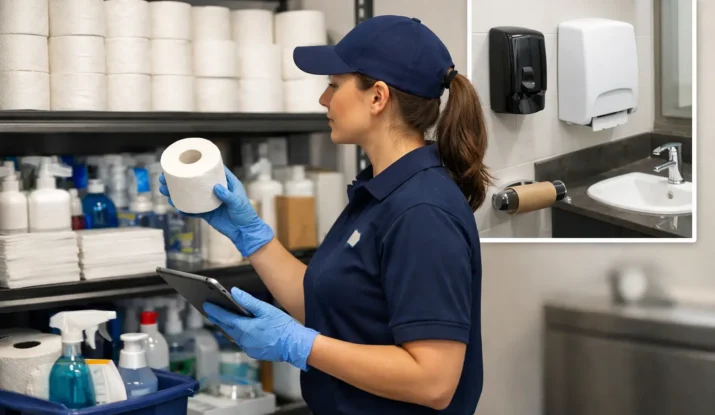
A restroom can be cleaned at 6:00 a.m. and still generate complaints by 10:00 a.m. if the soap dispenser is empty, paper towels are gone, or a stall has no tissue. Restroom inventory management is what closes that gap between a visibly clean facility and one that is actually ready for employees, tenants, customers, patients, and visitors throughout the day.
For facility managers, shortages are rarely just a supply problem. They can point to unclear ownership, inconsistent service schedules, poor storage practices, or purchasing decisions based on guesswork. A dependable system helps protect sanitation standards, control spending, and avoid the frustration of responding to the same preventable complaints.
Why Restroom Inventory Management Is a Facility Issue
Restrooms are high-traffic spaces with little room for failure. A missing roll of tissue or empty soap dispenser is noticed immediately, especially in office buildings, schools, restaurants, health care settings, retail locations, and industrial facilities. Those small failures can affect employee confidence, tenant satisfaction, customer impressions, and perceptions of the entire property.
There is also a health and safety component. Hand hygiene depends on soap, running water, and a practical way to dry hands. Waste receptacles need liners and timely service. In some environments, gloves, feminine hygiene products, sanitizer, and cleaning chemicals must be available to support the staff responsible for maintaining the space. Inventory controls help ensure these essentials are present when they are needed, rather than ordered after a shortage is reported.
The goal is not to fill every storage room with excess cases. Overbuying ties up money, consumes valuable space, and can leave a facility with products that do not fit installed dispensers or have been replaced by a new standard. The right approach balances availability with realistic usage.
Start With a Restroom Inventory Baseline
Before setting reorder quantities, identify what each restroom requires to operate properly. Walk every location, including employee-only restrooms, locker rooms, public areas, and single-occupant restrooms. A large building may have very different demand patterns between floors, shifts, or tenant areas.
Define the items that must be available
Create a standard inventory list that separates consumables from cleaning supplies. Consumables commonly include toilet tissue, hardwound or folded towels, hand soap, hand sanitizer, liners, air freshener refills, and feminine hygiene supplies where provided. Cleaning inventory may include disinfectant, restroom cleaner, bowl cleaner, microfiber cloths, gloves, mop heads, caution signs, and replacement dispenser batteries or parts.
Standardizing products makes the system easier to manage. If one restroom uses several brands or formats of tissue and towels, it becomes harder for staff to restock accurately and harder for purchasing teams to keep compatible products on hand. Whenever possible, choose dispenser systems and refill formats that are practical for the building and easy to service.
Set par levels by location
A par level is the minimum amount of an item that should be available before a reorder or restock is triggered. It should be based on actual consumption, delivery timing, storage capacity, and the consequences of running out.
A high-traffic public restroom may need enough stock for several days plus a safety reserve. A low-use executive suite restroom may require a smaller on-site supply but still needs routine checks. Facilities with limited closet space may need more frequent deliveries, while locations with secure storage can carry a larger backup inventory.
Do not use one blanket par level for every restroom. Measure traffic and usage where possible. If a restroom serves a day shift, night shift, visitors, and a lunch rush, its demand will not resemble a restroom in a lightly occupied office wing.
Build a Replenishment Routine That Staff Can Follow
A good inventory plan becomes useful only when it is tied to a repeatable service routine. Staff should know who checks supplies, what is checked, where backup products are stored, and what action to take when stock reaches the established minimum.
For many facilities, restrooms need more than one service touchpoint each day. Morning cleaning may establish a clean starting condition, but mid-day checks can catch heavy usage before it becomes a complaint. Restaurants, schools, medical offices, event venues, and busy retail sites may require checks several times daily. In a smaller professional office, daily service and a quick afternoon walk-through may be enough.
Use a clear checklist for each service visit. It should confirm dispenser levels, tissue supply, liner availability, odor conditions, fixture cleanliness, and visible damage. A checklist is not paperwork for its own sake. It gives managers a consistent record, helps train new team members, and makes it easier to identify recurring consumption or maintenance issues.
Storage matters as much as the checklist. Keep backup supplies in a clean, labeled, accessible location near the restrooms when possible. Store chemicals separately from paper products and toiletries. Rotate stock so older products are used first, and keep cartons off the floor to reduce the risk of moisture damage in utility rooms.
Track Consumption Before Changing Your Order
When a facility regularly runs out of supplies, the first response is often to order more. That may solve the immediate problem, but it may not address the cause. A sudden increase in soap or towel use could reflect higher occupancy, a new tenant, a seasonal event, a dispenser malfunction, or product waste.
Track usage by product and location over several weeks. Simple records can reveal patterns, such as one restroom consuming twice as many towels as another with similar traffic. That difference may be legitimate, but it is worth investigating. A leaking soap dispenser, improperly adjusted towel dispenser, or missing dispenser key can create unnecessary waste and cost.
Usage data also helps with budgeting. Instead of estimating annual supply needs from last year’s invoices, managers can forecast from current occupancy and known service levels. This is particularly valuable for facilities with changing headcounts, multiple shifts, or seasonal business cycles.
Match Products to the Facility, Not Just the Price
Lowest unit cost does not always mean lowest operating cost. A cheaper towel may require more sheets per hand-drying cycle. An undersized tissue roll may create more frequent change-outs. A poorly designed soap dispenser can leak, jam, or encourage overuse. Those issues increase labor time and can leave restrooms looking neglected even when supplies were technically purchased at a lower price.
Consider product performance alongside cost, dispenser compatibility, user experience, and sustainability requirements. High-capacity systems can reduce refill frequency in heavily used restrooms, while controlled-dispensing products can reduce waste. In a customer-facing environment, the feel and appearance of towels, soap, and dispensers may also affect how visitors judge the property.
Sustainable options deserve practical evaluation as well. Products with recognized environmental certifications can support facility goals, but they still need to perform reliably in the actual restroom environment. Test a product in a representative area before making a building-wide switch.
Make Accountability Visible
Inventory management works best when responsibility is specific. Assign a primary person or service team to check and replenish supplies, with a backup contact for absences or unusual demand. Facility leaders should also know who can approve emergency orders and who receives delivery confirmations.
For multi-tenant or larger commercial properties, it helps to establish an escalation process. If an attendant notices a damaged dispenser, unusual product use, or recurring stockout, that issue should reach the appropriate manager quickly. Repeated shortages are often a process signal, not a failure by one employee.
A service partner can also reduce the administrative burden by combining restroom consumables with recurring janitorial service. ABF Facility Services can coordinate cleaning, supply replenishment, and restroom-related facility needs through one accountable relationship, helping Chicagoland organizations avoid the gaps that occur when separate vendors are working from different schedules.
Review the System When Conditions Change
Par levels and service schedules should not be permanent assumptions. Review them after a major occupancy change, tenant move-in, new shift, event season, renovation, or change in restroom product selection. A facility that was adequately stocked last quarter may be under-supplied today for entirely valid reasons.
The most effective restroom programs make routine readiness feel ordinary. When tissue, towels, soap, liners, and cleaning supplies are consistently available, occupants do not have to think about them. That quiet reliability is exactly what a well-managed facility should deliver.