
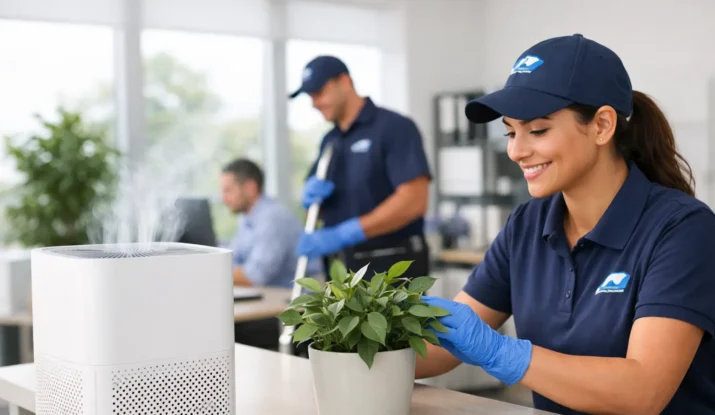
A stale lobby, lingering restroom odor, or visible dust on workstations can signal more than a cleaning concern. They can point to indoor air conditions that affect employee comfort, customer confidence, and day-to-day facility performance. The best workplace air quality practices bring ventilation, cleaning methods, moisture control, maintenance, and occupant feedback into one practical operating plan.
For facility managers, the goal is not to make a building smell strongly fragranced. It is to reduce airborne particles, avoid introducing unnecessary chemical irritants, control sources of odors and moisture, and keep the systems that move air working as intended. That approach is especially valuable in Chicago-area facilities, where windows may remain closed for long stretches during extreme heat or winter weather.
Start With the Sources of Poor Indoor Air
Indoor air quality problems are often treated as a ventilation issue alone. Ventilation matters, but it cannot fully correct an ongoing source of dust, odors, moisture, or chemical vapors. A better first step is to identify what is entering the air and where it is coming from.
Common sources include tracked-in dirt at entrances, accumulated dust above ceilings or on high ledges, overflowing waste, poorly maintained restrooms, cooking fumes, cleaning products used incorrectly, damp carpet, and stored materials that collect dust. In industrial spaces, production processes, loading docks, equipment exhaust, and fine particulate matter may require additional controls.
Walk the facility at different times of day. Notice conditions after a busy shift, following cleaning, near loading areas, and during humid weather. Ask employees where they notice odors, irritation, or stuffy conditions. Patterns matter. If complaints occur only in one conference room, one restroom bank, or one production area, a building-wide response may waste time and money.
Best Workplace Air Quality Practices Begin at the Entrance
A large share of indoor dust and debris arrives on shoes, carts, and rolling equipment. Entry matting is one of the most practical ways to stop those contaminants before they travel across carpet, hard floors, and work areas.
Use sufficient matting at public entrances, employee doors, and high-traffic service access points. The right setup captures moisture and soil in stages, but it only works when mats are regularly vacuumed, exchanged, or professionally cleaned. Saturated mats can become a source of dirt and odor rather than a barrier.
Floor care supports air quality as well as appearance. Fine dust sitting on hard surfaces gets stirred back into the air by foot traffic. Carpet that is not vacuumed with effective filtration equipment can hold particles, allergens, and debris. Scheduled vacuuming with high-filtration vacuums, along with appropriate carpet extraction and hard-floor maintenance, reduces the material available to become airborne.
Use Cleaning Methods That Capture Dust
Dry dusting can simply move particles from one surface to another. For desks, ledges, vents, baseboards, and other touchpoints, microfiber tools are more effective at capturing fine particles when used correctly and maintained properly.
A color-coded cleaning system also helps prevent cross-contamination between restrooms, break rooms, general offices, and other areas. This is not just a sanitation detail. It reduces the risk of spreading soil, residue, and odor-causing contaminants throughout the facility.
High dusting should be part of the plan, particularly in warehouses, lobbies with open ceilings, gyms, retail spaces, and facilities with exposed ductwork. Dust on rafters, light fixtures, pipes, and supply vents will eventually fall or circulate. The proper frequency depends on the building, but waiting until buildup is visibly heavy is usually too late.
Match Cleaning Products to the Environment
Strong fragrance is not proof of a clean facility. In fact, overly scented products and aerosol sprays can aggravate sensitivities for some employees or visitors. A workplace air quality program should favor products and processes that clean effectively without leaving unnecessary airborne residue.
Use products according to label instructions, including dilution requirements and dwell times. Overusing disinfectant or cleaner does not improve results. It can leave residue, create avoidable odors, and damage surfaces over time. Trained cleaning teams understand which products belong on which surfaces and how to use them safely.
When appropriate for the facility, Green Seal-certified products and low-odor options can support environmental goals while maintaining cleaning standards. However, product selection should fit the task. A health care setting, food-service operation, school, office, and industrial plant each have different sanitation needs. The best choice balances occupant comfort, required disinfection, surface compatibility, and operational demands.
Keep HVAC Maintenance Connected to Cleaning
Your heating, ventilation, and air conditioning system is central to indoor air quality, but it needs consistent maintenance to perform well. Dirty filters, blocked vents, damaged insulation, standing water in condensate systems, or unbalanced airflow can contribute to dust, odors, humidity problems, and uneven comfort.
Facility teams should maintain a documented schedule for filter changes, inspections, and service calls. Filter selection should be based on the system’s capabilities and the building’s needs. A more restrictive filter may capture smaller particles, but if the HVAC system is not designed for it, airflow can suffer. This is a decision for a qualified HVAC professional, not a one-size-fits-all upgrade.
Keep supply and return vents clear of boxes, furniture, decorations, and storage. During routine cleaning, vents and grilles should be carefully cleaned so settled dust does not reenter occupied areas. If recurring debris appears around a vent or certain rooms feel consistently stuffy, investigate the cause rather than cleaning the symptom repeatedly.
Control Moisture Before It Becomes a Bigger Issue
Moisture is one of the most urgent air-quality concerns in a commercial property. Water intrusion, plumbing leaks, roof issues, condensation, and damp materials can create persistent odors and support microbial growth. A musty smell should never be covered with fragrance and forgotten.
Respond quickly to spills, leaks, and flooding. Remove wet materials when they cannot be dried promptly, and document the affected area. Restrooms, kitchens, locker rooms, mechanical rooms, and lower levels deserve regular inspection because they are more likely to experience moisture-related issues.
Carpet and upholstery cleaning require the same attention. Deep cleaning can improve appearance and remove embedded soil, but materials must dry thoroughly. Schedule extraction work when traffic is low, use the right equipment, and support drying with appropriate airflow. If carpeting stays damp, the service meant to improve the space can create a new concern.
Manage Odors at Their Source
Odors affect how people judge a facility almost immediately. They can also reveal an operational issue, from a missed trash pickup to a floor drain problem. Air fresheners may provide temporary relief, but they are not a substitute for source control.
Review waste handling, restroom cleaning frequency, food-storage practices, floor drain maintenance, and cleaning of break rooms and refrigerator areas. In restaurants and food-service environments, grease, trash, drains, and pest activity need coordinated attention. In office buildings, overlooked vending areas, upholstered furniture, and waste receptacles can contribute to recurring odors.
Pest control also belongs in the conversation. Pests and their droppings can affect cleanliness and indoor conditions, while improper pesticide use can introduce its own concerns. An integrated approach that addresses sanitation, exclusion, monitoring, and targeted treatment is more responsible than reacting only after activity becomes visible.
Measure, Communicate, and Adjust
Air-quality monitors can be useful, especially in larger facilities or spaces with specific concerns. Carbon dioxide readings may indicate that occupied areas need an airflow review, while humidity and particulate trends can help identify patterns. Still, monitoring is only valuable when someone reviews the results and takes action.
Do not rely on a single number to declare a building healthy or unhealthy. Indoor air conditions change with occupancy, weather, outdoor pollution, construction activity, and the work being performed. Combine data with maintenance records, cleaning inspections, odor reports, and employee feedback.
Construction, remodeling, and seasonal deep-cleaning projects deserve extra planning. Isolate dust-producing work, protect return-air openings, schedule disruptive tasks during lower-occupancy periods, and clean thoroughly before reopening the area. A clean-looking renovation can still leave fine dust behind if containment and post-project cleaning are incomplete.
Build Accountability Into the Daily Routine
The most effective programs are consistent. Assign clear ownership for filter schedules, leak reporting, waste removal, restroom checks, floor care, supply replenishment, and cleaning quality inspections. When these tasks are split across several vendors without coordination, small issues can linger until they become tenant complaints, customer concerns, or costly repairs.
A single accountable facility-services partner can simplify communication between routine janitorial work, specialty floor care, consumable supply, sanitization, waste removal, and related services. ABF Facility Services helps Chicagoland businesses build customized cleaning programs that support cleaner, more comfortable, and better-maintained workplaces.
Better air quality is rarely the result of one product or one service visit. It comes from noticing the details early, responding to conditions quickly, and maintaining the everyday habits that keep dust, moisture, odors, and avoidable pollutants from taking hold.