
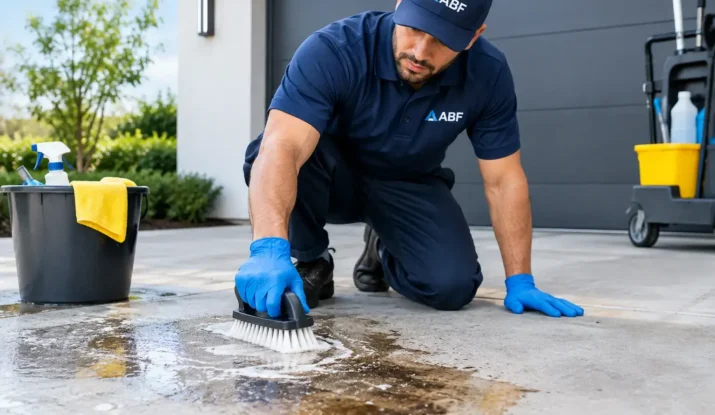
A dark grease spot near a loading dock, commercial kitchen, service bay, or dumpster enclosure is more than an appearance issue. It can reduce traction, track into customer-facing areas, attract dirt, and create a slip-and-fall concern. To remove grease from concrete effectively, a facility needs more than a quick rinse. The right approach depends on the age of the spill, the type of grease, the concrete finish, and where runoff will go.
For facility managers, the goal is not simply making a stain less visible. It is restoring a clean, safe surface without damaging concrete, sending oily wastewater into a storm drain, or disrupting daily operations.
Why grease is difficult to remove from concrete
Concrete may look solid, but it is porous. Fresh oil, cooking grease, hydraulic fluid, and automotive lubricants can soak below the surface instead of remaining on top. Once that happens, ordinary mopping or cold-water rinsing typically spreads the contamination rather than lifting it out.
The location also matters. Grease outside a restaurant may combine with food residue and foot traffic. In a warehouse or fleet area, petroleum-based oils may be mixed with dirt, salt, metal debris, and tire marks. A polished concrete floor requires a different cleaning method than unfinished concrete at a loading dock. Applying a harsh chemical or aggressive pressure setting without evaluating the surface can leave etching, discoloration, or a roughened finish that traps soil even faster.
Start with safety, containment, and surface assessment
Before cleaning begins, protect employees, visitors, and the surrounding property. Block off the area with cones or signage, especially when grease is near an entry, walkway, ramp, or work zone. Wet concrete can be slippery even after much of the grease has been removed.
Identify nearby floor drains, storm drains, landscaping, and doorways. Cleaning solutions and greasy wastewater should not be allowed to flow unchecked into drainage systems. For exterior work, containment and wastewater recovery may be necessary. For interior service bays and industrial floors, determine whether the drain connects to an approved sanitary system and follow site procedures.
Next, assess the stain. Fresh, glossy grease calls for absorption first. Older stains that have turned dark and dull may require repeated degreasing and agitation. If the concrete has a coating, sealer, epoxy finish, or polished surface, test any cleaning product in a small inconspicuous area before treating the full stain.
How to remove grease from concrete step by step
A reliable grease-removal process works from dry removal to chemical treatment and final rinsing. Skipping the first step often makes the rest of the job harder.
1. Absorb fresh grease before adding water
Cover fresh spills with an absorbent material designed for oil and grease. Let it sit long enough to draw up as much liquid as possible, then sweep or shovel it into an appropriate container. Avoid using a hose at this stage. Water can push grease into cracks, across walkways, and toward drains.
For a small, contained spill, this first response can significantly reduce staining and limit the amount of degreaser required. For larger leaks from equipment or vehicles, the priority is containment. Address the source of the leak before cleaning the floor, or the same problem will return quickly.
2. Apply a concrete-safe degreaser
Choose a commercial degreaser formulated for the type of contamination and concrete surface. Food-service grease, automotive oil, and industrial lubricants do not always respond equally to the same product. Follow the manufacturer’s dilution, dwell-time, and personal protective equipment instructions.
Apply enough solution to wet the affected area evenly without flooding it. Allow the product to dwell so it can break down the grease. Do not let the solution dry on the concrete, particularly in warm weather or direct sun. Dried product can leave residue and may require additional cleaning.
3. Agitate the surface instead of relying on chemicals alone
Use a stiff deck brush, rotary floor machine, or other appropriate equipment to work the degreaser into the concrete pores. Mechanical agitation is often the difference between a surface that looks temporarily better and one that is genuinely cleaner.
For restaurant back-of-house areas, use tools dedicated to grease work so residue is not transferred into other areas. In industrial environments, select brushes and pads that can handle the soil load without damaging protective coatings or floor markings.
4. Recover the loosened grease and rinse properly
After agitation, remove the dirty solution with a wet vacuum, floor scrubber, or wastewater recovery equipment. This step is essential. If the suspended grease is simply pushed away with water, it can settle elsewhere on the concrete or enter a drain.
Rinse the area with clean water as needed and recover that water as well. A pressure washer can be useful for exterior concrete, loading docks, dumpster pads, and heavily soiled service areas, but it should be paired with proper containment and recovery. Pressure alone does not neutralize grease. Used incorrectly, it can atomize contamination, damage joints, and spread oily water over a larger area.
5. Inspect, repeat, and restore traction
Once the concrete dries, inspect it from several angles. Some stains become more noticeable after drying because residual oil rises from deeper pores. Heavily saturated areas may need a second treatment or a poultice-style product designed to pull embedded oil upward.
Check traction before reopening the area. If the concrete remains slick, additional degreasing may be required. In high-risk zones such as kitchen exits, ramps, and receiving areas, consider whether improved cleaning frequency, floor mats, drain maintenance, or a protective coating would reduce future buildup.
Methods that can make the problem worse
Using the wrong technique can turn one grease stain into a wider facility issue. Avoid pouring strong acids, bleach, or unapproved solvents onto concrete. These products may harm the surface, create hazardous fumes, react with other chemicals, or fail to address the grease itself.
Do not use hot water as the only solution. While heat can soften some grease, it can also carry oily residue deeper into porous concrete if there is no effective degreaser and recovery plan. Similarly, do not assume a high-pressure washer is always the fastest answer. Exterior surfaces may benefit from hot-water pressure washing, but only when runoff is controlled and the pressure is appropriate for the concrete condition.
Household remedies may be acceptable for a very small, noncritical spot, but they are rarely practical for a commercial facility. They can leave behind residue, produce inconsistent results, and add labor without resolving grease embedded in the slab.
Preventing repeat grease stains in commercial facilities
Grease removal is most cost-effective when paired with prevention. Inspect equipment that leaks, including forklifts, vehicles, compactors, hydraulic systems, and kitchen appliances. Place drip pans or absorbent mats where leaks are recurring, and keep spill-response materials accessible to trained employees.
A routine floor-care schedule also makes a measurable difference. High-traffic concrete should be cleaned before grease bonds with tracked-in dust and grime. Dumpster pads, loading areas, parking-garage service zones, and restaurant receiving areas often need scheduled degreasing rather than occasional emergency cleaning.
For facilities with persistent exposure, a properly selected concrete sealer or coating can make future cleanup easier. This is not a cure-all. Coatings require proper surface preparation and ongoing maintenance, and some may not be suitable for every industrial or food-service environment. Still, when selected for the site’s traffic and chemical exposure, they can reduce absorption and help preserve the concrete’s appearance.
When professional cleaning is the better choice
Call in trained cleaning professionals when a spill is large, near drains, involves unknown fluids, has created a slip hazard, or keeps returning despite routine cleaning. Professional teams can match degreasers, agitation tools, hot-water equipment, and wastewater recovery methods to the surface and the contamination. That reduces the risk of surface damage, uncontrolled runoff, and costly downtime.
For Chicagoland facilities, ABF Facility Services provides scheduled and responsive cleaning support for grease-prone areas, including pressure washing, industrial cleaning, hard-floor care, and property-maintenance cleaning. A planned service approach helps keep the issue from becoming a recurring complaint, safety concern, or first-impression problem.
The cleanest concrete is not necessarily the brightest-looking concrete. It is the surface that is dry, stable underfoot, free of greasy residue, and maintained often enough that a minor spill never becomes a major cleanup project.