
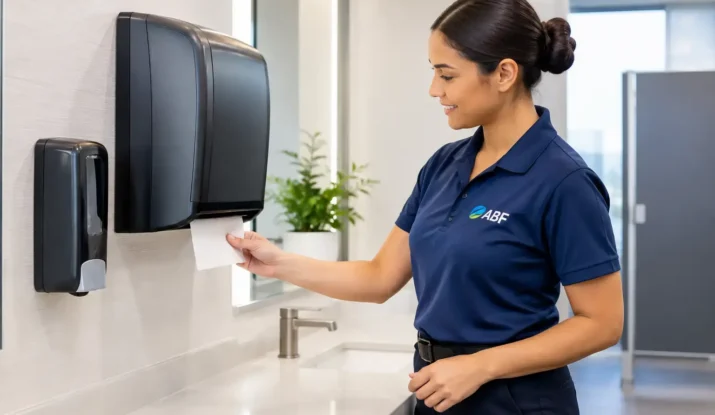
A restroom can look clean at 8:00 a.m. and still create complaints by 10:30 if soap is empty, towels are jammed, or tissue rolls are difficult to replace. Choosing the best restroom dispensers for offices is therefore less about selecting a sleek wall fixture and more about building a dependable system that supports hygiene, controls supply use, and keeps maintenance from becoming a daily interruption.
For office managers and facility teams, the right choice depends on restroom traffic, user expectations, cleaning schedules, wall conditions, and the products your team can reliably stock. A small professional office has different needs than a multi-tenant building, medical office, school, warehouse, or customer-facing retail location. The goal is the same: every visitor should find a clean, functioning, well-supplied restroom every time.
What the Best Restroom Dispensers for Offices Have in Common
The strongest dispenser programs are consistent. Soap, towels, tissue, and other consumables should be easy for users to access and easy for trained staff to inspect and refill. When each restroom uses a different model, refill type, or key system, simple service visits take longer and inventory mistakes become more likely.
Durability matters just as much as appearance. Commercial dispensers must withstand frequent use, routine cleaning, moisture, and occasional rough handling. Choose units with secure covers, dependable hinges, readily available replacement parts, and housings that can be wiped down without showing damage quickly. Plastic can be a practical, economical choice for many offices, while metal or high-impact finishes may be appropriate for upscale lobbies or high-traffic public restrooms.
Capacity should match actual traffic, not an estimate based on square footage alone. A restroom near a training room, cafeteria, waiting area, or production floor may need larger-capacity dispensers and more frequent checks than one serving a small department. Oversized units can reduce refill trips, but they can also tie up more product inventory and may be unnecessary in lightly used spaces.
Easy servicing prevents empty dispensers
A dispenser only works when someone can refill it quickly and correctly. Look for clear fill-level visibility where possible, simple loading instructions, and a shared key system across the building. Units that require complicated loading steps often lead to torn towels, poorly seated refills, or wasted product.
It is also wise to confirm that the refill products are consistently available before standardizing a building. Switching dispenser models after installation because supplies are difficult to source creates avoidable cost and frustration. A managed supply program can help keep compatible refills, tissue, gloves, and other restroom essentials on hand without requiring office staff to track multiple vendors and purchase orders.
Soap Dispensers: Manual, Touchless, Foam, or Liquid?
Soap is one of the most visible signals of restroom readiness. If a user presses a pump and gets nothing, confidence in the rest of the facility drops immediately. The best option is usually the one that delivers a consistent dose, minimizes dripping, and fits the frequency of use in that restroom.
Manual dispensers remain a practical choice for many offices. They are generally simple to maintain, do not rely on batteries, and offer dependable performance when cleaned and refilled on schedule. The trade-off is that users touch the activation point, so the push bar or button needs regular disinfection as part of restroom cleaning.
Touchless dispensers reduce contact with dispenser surfaces and can create a more modern user experience. They work especially well in healthcare-adjacent settings, high-traffic offices, and facilities where hygiene perception is a priority. However, they require battery monitoring or power access, and sensor performance can suffer when units are poorly positioned or not maintained.
Foam soap is often an efficient office choice because each activation uses a measured amount and creates a good handwashing experience with less product volume. Liquid soap may be preferable where users expect a traditional lather or where a specific product formulation is required. In either case, avoid mixing refill types or transferring bulk soap into closed cartridge systems. Using the intended refill helps protect dispenser function and supports a more sanitary process.
Paper Towel and Tissue Dispensers Need Different Planning
Hand-drying and tissue systems are often where supply waste becomes most visible. The right dispenser can reduce overuse, but it should never make access difficult. A unit that dispenses too slowly or tears sheets inconsistently can frustrate users and lead them to pull excessive product.
For paper towels, controlled-dispense roll systems are a strong fit for busy office restrooms. They provide a consistent towel length and reduce the piles of unused towels commonly found near open-roll dispensers. Folded towel dispensers can suit smaller offices and executive restrooms, particularly when a more traditional appearance is desired, but they need frequent attention to prevent empty units or damp, overstuffed stacks.
Tissue dispensers should be selected based on stall use and service intervals. Jumbo-roll systems reduce the chance of a completely empty dispenser in high-traffic restrooms, while compact double-roll units can work well in lower-traffic office environments. Dual-roll designs are especially useful because staff can load a reserve roll before the active roll is finished. That simple feature prevents many avoidable service calls.
Avoid placing dispensers where doors, grab bars, waste receptacles, or personal bags interfere with use. Consider how a custodian will service the unit, too. If a dispenser is squeezed behind a toilet partition or installed too close to another fixture, refilling becomes unnecessarily difficult and staff may be tempted to delay the task.
Do Not Overlook Mounting, Accessibility, and Appearance
A dispenser program should support accessible restroom use. Mount soap, towel, tissue, and feminine hygiene product dispensers at appropriate reachable heights and locations, with clear floor space where required. Local building requirements and accessibility standards can vary by setting and renovation scope, so confirm installation details before drilling into walls.
Mounting also affects durability. Heavy-use dispensers should be secured to wall surfaces that can support them, rather than attached with adhesive alone. In older Chicagoland buildings, facility teams may encounter tile, masonry, uneven walls, or hidden plumbing. A site review helps prevent damaged finishes, loose equipment, and costly reinstallation.
Appearance is not superficial. Clean, coordinated dispensers make a restroom feel maintained, while stained, cracked, mismatched units suggest neglect even when the room has been recently cleaned. Choose a finish that suits the facility and can be maintained easily. Highly polished surfaces may look sharp in a lobby restroom but can show fingerprints quickly. Matte, smoke, or neutral finishes are often more forgiving in busy employee restrooms.
Build a Restroom Supply Plan Around Service Frequency
No dispenser selection can compensate for an inconsistent service routine. A reliable plan identifies who checks restrooms, how often checks occur, what products are stocked, and how empty or damaged dispensers are reported. High-traffic restrooms may require multiple inspections each day, especially during meetings, shift changes, or public events.
A practical inspection should cover soap level, towel and tissue availability, dispenser operation, visible residue around nozzles and levers, waste capacity, and any loose or damaged hardware. Keeping a small backup supply near the service area can reduce delays, provided products are stored cleanly and securely.
For facilities managing multiple service needs, consolidating cleaning and consumable replenishment under one accountable provider can simplify oversight. ABF Facility Services helps commercial clients coordinate recurring restroom supplies and professional cleaning so service teams can address cleanliness, inventory, and presentation as part of one organized facility plan.
Choose for the Restroom You Have, Not the Catalog Photo
The best dispenser is the one your staff can keep full, clean, and functioning without disrupting the workday. Start with traffic patterns, select durable compatible systems, verify accessible placement, and establish a refill schedule that matches real use. When restroom essentials are managed with the same care as floors, common areas, and front entrances, employees and visitors notice the difference before they ever need to ask for a refill.