
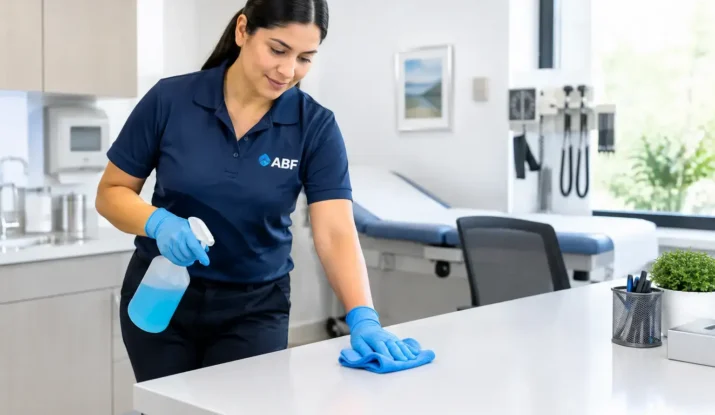
A medical office can look clean and still fall short of compliance. A wiped reception desk does not prove that an exam room was disinfected with the right product, that high-touch surfaces received enough contact time, or that a blood spill was handled safely. This medical office cleaning compliance guide helps facility and practice managers turn daily cleaning into a documented, repeatable process that supports patient safety and inspection readiness.
The goal is not to make every outpatient office operate like a hospital. The right plan depends on the services provided, patient volume, procedures performed, and local requirements. A dermatology clinic, pediatric practice, urgent care center, dental office, and imaging center each have different exposure risks. Still, every medical setting needs clear cleaning responsibilities, approved products, trained personnel, and records that show the plan is being followed.
Start With a Written Cleaning Scope
Compliance starts before a cleaner enters the building. Create a written scope that identifies every area, its risk level, how often it must be cleaned, and whether the task is cleaning, disinfecting, or both. Cleaning removes visible soil and organic material. Disinfecting uses an appropriate product to inactivate targeted germs on a pre-cleaned surface. Confusing those two steps is a common weakness in medical office programs.
Separate the office into practical zones. Public spaces such as waiting rooms, lobbies, and public restrooms need frequent attention because of traffic and shared touchpoints. Clinical areas require more controlled procedures. Exam tables, counters, stools, door handles, light switches, and equipment surfaces should be addressed between patients when appropriate to the practice’s workflow and manufacturer instructions.
Your scope should also account for back-of-house areas, including staff break rooms, administrative offices, supply storage, utility rooms, and waste holding areas. These spaces may have lower clinical risk, but neglecting them can contribute to cross-contamination, pests, odors, trip hazards, and poor overall facility conditions.
Build Your Medical Office Cleaning Compliance Plan Around Risk
A useful cleaning plan answers four questions for each task: what is cleaned, who cleans it, what product and tools are used, and how is completion verified? Without those details, staff members and cleaning crews are left to make assumptions during busy periods.
High-touch and patient-care surfaces
High-touch surfaces deserve defined frequencies, not vague instructions such as clean as needed. In reception areas, focus on door hardware, check-in counters, pens or shared devices, elevator buttons, armrests, and payment terminals. In clinical spaces, include the surfaces touched by patients and staff during care, while following equipment manufacturers’ instructions to avoid damage.
For patient-care areas, the practice should determine which surfaces require turnover between patients and which can be handled on a scheduled interval. That decision should reflect the type of care delivered and the potential for contamination. Cleaning teams should not move supplies or disinfect equipment without direction from clinical leadership when that could affect patient care or sterile processes.
Restrooms and hand hygiene areas
Restrooms are a visible measure of facility standards and a potential source of contamination when service is inconsistent. A compliant routine addresses fixtures, flush handles, dispensers, door handles, partitions, floors, and waste receptacles. It also includes inventory checks for soap, paper products, hand sanitizer where provided, feminine hygiene supplies, and liners.
Stocking is part of sanitation. An empty soap dispenser can undermine an otherwise well-maintained restroom. A single-provider approach that combines recurring cleaning with consumable replenishment can reduce the gaps that occur when different vendors handle cleaning and supplies.
Floors, textiles, and waiting areas
Floors collect dirt, moisture, allergens, and contaminants tracked in from outdoors. Daily vacuuming with high-filtration equipment and prompt attention to spills help protect indoor conditions and reduce slip risks. Hard floors may need damp mopping, machine scrubbing, or periodic refinishing based on traffic and surface type.
Avoid using the same mop, cloth, or bucket across restrooms, public areas, and clinical rooms. Color-coded cleaning systems make it easier for crews to keep tools assigned to the appropriate area. Microfiber tools can improve soil removal, but they must be laundered, stored, and replaced according to a controlled process.
Choose Products That Match the Task
The label is part of the compliance process. Disinfectants should be appropriate for the facility’s intended use and used according to their manufacturer directions. This includes dilution, personal protective equipment, surface compatibility, ventilation requirements, and the required wet contact time. Spraying a surface and wiping it dry immediately may not deliver the disinfecting result the product claims.
Keep safety data sheets accessible to employees who use or may be exposed to cleaning chemicals. Store products in labeled containers, separate incompatible chemicals, and never allow unmarked spray bottles in closets or carts. Teams should never mix chemicals unless the manufacturer specifically directs it. Mixing products can create dangerous fumes and may damage surfaces.
Sustainable purchasing can fit a medical cleaning program when product performance and required disinfection claims are maintained. Green Seal-certified general-purpose products may be appropriate for routine cleaning tasks, while clinical disinfection calls for products selected for the actual risk and surface involved. The most environmentally preferable product is not automatically the right product for every task.
Train Staff and Cleaning Crews for Consistency
A written plan only works when the people carrying it out understand it. Training should cover hand hygiene, glove use and removal, chemical safety, tool separation, sharps awareness, waste handling, spill response, and escalation procedures. It should also explain where cleaning crews stop and clinical staff take over.
For example, cleaners should know never to reach into trash containers where sharps could be present. Sharps containers, regulated medical waste, and clinical instruments should be managed under the practice’s established protocols. If a cleaner encounters a needle, blood spill, overflowing regulated waste container, or damaged sharps container, the correct response is to secure the area and notify the designated contact, not improvise.
Uniformed, insured, OSHA-compliant teams give facility managers a clearer chain of accountability. However, outsourced cleaning does not remove the practice’s responsibility to establish site-specific expectations. The best results come from a shared process: clinical leadership defines care-area requirements, while the facility partner translates them into workable schedules, training, quality checks, and supply controls.
Document Work So You Can Verify It
Documentation is what turns a cleaning routine into a defensible program. Checklists do not need to be complicated, but they must reflect real work rather than become paperwork completed at the end of a shift. Use time-stamped logs where practical, assign clear areas of responsibility, and review exceptions promptly.
A dependable recordkeeping process commonly includes:
- Daily and between-patient cleaning checklists for designated areas
- Product inventory, safety data sheets, and dilution or dispensing records
- Staff and contractor training records, including refresher training
- Incident reports for spills, exposures, damaged containers, or service failures
- Quality inspection notes, corrective actions, and completed follow-up
Digital tools can make reporting faster, but a paper system can work if it is legible, accessible, and consistently reviewed. The important point is accountability. If a restroom runs out of soap or an exam room turnover is missed, the process should identify the gap, correct it, and reduce the likelihood of repetition.
Inspect What Patients and Regulators Will Notice
Routine inspections should include the details people overlook during a busy day: residue on exam tables, dust on vents, full waste bins, sticky floors, low dispenser levels, damaged floor edges, cluttered storage rooms, and unlabeled chemicals. These conditions affect infection-control efforts, patient confidence, staff morale, and the professional image of the practice.
Inspect at different times, not only immediately after cleaning. A facility may appear ready at opening but decline after a high-volume afternoon. Review service levels against actual traffic patterns and adjust staffing or visit frequency when recurring problems appear.
Chicago-area medical offices also face seasonal concerns, including winter salt, water, and debris that can quickly damage floors and create slip hazards. Entry mat service, frequent lobby checks, and prompt floor care are practical compliance supports as well as asset-protection measures.
Know When the Plan Needs to Change
A cleaning plan should be reviewed when the practice adds services, changes its patient population, remodels, experiences an outbreak concern, receives a complaint, or sees repeated inspection findings. New equipment may require different approved products. Expanded hours may require additional restroom and waiting-room service. A construction project may create dust-control and post-construction cleaning needs that routine janitorial service cannot cover.
For medical offices that need a consistent operating partner, ABF Facility Services can coordinate recurring janitorial care, disinfection support, floor maintenance, restroom consumables, and responsive specialty services through one accountable relationship. The right scope is customized to the facility, its workflow, and the standards its patients expect.
A well-run medical office cleaning program should be almost invisible to patients: clean rooms, stocked restrooms, safe floors, and staff who can focus on care. Behind that result should be a visible system of trained people, appropriate products, documented work, and quick correction when conditions change.