
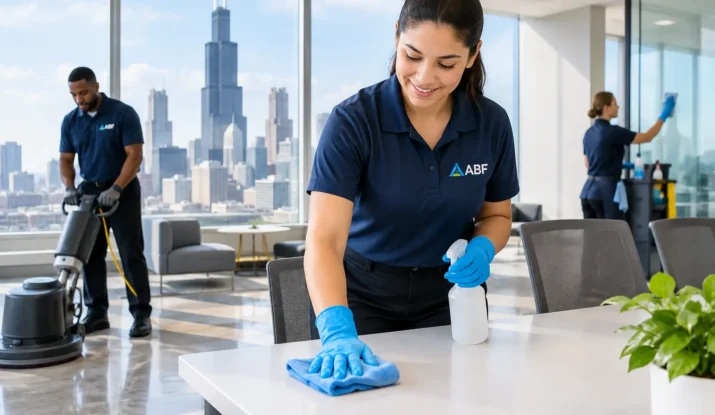
A Chicago cleaning vendor comparison should begin well before a price quote lands in your inbox. For a facility manager, property manager, or operations leader, the real question is not who can clean a building. It is who can consistently protect your workplace, respond when conditions change, keep essential supplies available, and take ownership when something needs attention.
A low monthly number can look attractive until missed details create tenant complaints, restroom stockouts, safety concerns, or repeated follow-up calls. The right vendor relationship reduces those disruptions. It gives your team a clear point of accountability and a service plan that fits how your facility actually operates.
What to Compare Beyond the Cleaning Price
Price belongs in the decision, but it needs context. Two proposals may list similar tasks while assuming very different labor hours, visit frequencies, quality controls, and supply responsibilities. A meaningful comparison starts with a shared scope of work so every vendor is quoting the same expectations.
Ask how often high-touch surfaces, restrooms, break rooms, entrances, and waste areas will be serviced. Clarify whether floor care, carpet extraction, pressure washing, disinfection, pest control, and trash removal are included, available as scheduled add-ons, or billed separately. A proposal that is less expensive because it excludes necessary work is not necessarily the lower-cost option.
It also helps to compare the cost of coordination. When one company handles nightly janitorial service but another handles restroom consumables, mats, specialty floors, and removal projects, your staff becomes the connector between vendors. That can work for a small, simple site. For a larger office, retail location, healthcare setting, school, restaurant, or industrial property, consolidating related services can reduce administrative work and make accountability clearer.
Chicago Cleaning Vendor Comparison: Questions That Reveal Quality
A polished proposal does not show how a vendor will perform at 6 a.m. after a winter storm, during a busy event week, or when a restroom needs immediate attention. These questions get closer to the day-to-day reality of the relationship.
Who will be assigned to your facility?
Find out whether the service team is directly employed, trained for the work, uniformed, insured, and supervised. Ask whether the same crew will return consistently or whether staffing may change often. Familiar teams learn your building layout, traffic patterns, sensitive areas, access procedures, and priorities. That familiarity supports better results and fewer missed details.
Training should be specific. Commercial cleaning teams need to understand safe chemical handling, personal protective equipment, bloodborne pathogen procedures where applicable, proper equipment use, and facility security. OSHA-compliant practices are particularly relevant for industrial sites, healthcare environments, kitchens, schools, and properties with active loading areas.
How is work inspected and corrected?
Every provider can promise quality. Strong vendors explain how they verify it. Ask who conducts inspections, how frequently they occur, whether findings are documented, and how deficiencies are corrected. A clear escalation process matters just as much as a quality checklist.
For example, if a tenant reports dirty elevators or an operations manager notices overflowing waste, you should know who receives the request, how quickly they respond, and when you will receive confirmation that the work is complete. Responsiveness is not only about answering the phone. It is about resolving the issue without making the client chase updates.
What products and equipment are being used?
Cleaning methods affect appearance, indoor air quality, surfaces, and employee comfort. Ask about the products used in restrooms, offices, food-service areas, and high-touch spaces. Green Seal-certified products may be a good fit for facilities that prioritize environmental considerations, though the right approach depends on the surfaces, soil levels, and sanitation requirements involved.
Equipment also matters. High-filtration vacuums can help reduce dust and allergens. Microfiber tools collect soil effectively while reducing cross-contamination risk when used correctly. Color-coded cleaning systems can keep restroom tools separate from those used in other areas. For hard floors, ask whether the provider has the machines and experience needed for scrubbing, burnishing, stripping, waxing, or deep cleaning without damaging the finish.
What happens when the scope changes?
Facilities are not static. A construction project leaves fine dust behind. A tenant moves out. A production area has a spill. A seasonal rush increases foot traffic. A dependable vendor should be able to distinguish between included recurring work and a billable specialty project, then provide a clear recommendation and timeline.
This is where a local operating presence can be valuable. Chicago weather, salt residue, slush at entrances, and rapid temperature changes put added pressure on floors and entryways. A vendor familiar with Chicagoland properties should help you plan for seasonal conditions rather than wait for damage or complaints to build.
Compare Scope, Supplies, and Service Ownership
Many cleaning programs fail at the handoff points. The crew cleans the restroom, but no one replenishes soap. The entry floor is mopped, but worn mats continue tracking in moisture and debris. Waste is collected, but a large disposal need sits unresolved because it falls outside the routine contract.
When comparing vendors, look at whether they can coordinate the operational pieces that support a clean facility. This may include restroom paper products and toiletries, janitorial supplies, gloves, reusable towels and mops, floor mats, restaurant linens and aprons, pest-control programs, and scheduled removal work. Not every business needs every service. The advantage is having one accountable partner when those needs overlap.
Request clear information about replenishment procedures. Who monitors inventory? Is restocking based on a fixed schedule, usage levels, or client requests? What happens if your facility hosts an event, adds shifts, or experiences unusually high traffic? Supply management is a small detail until a restroom runs out of towels during a busy workday.
Look for a Service Plan Built Around Your Building
A generic checklist rarely serves every facility equally. A medical office may need focused disinfection practices and careful waiting-room presentation. A warehouse may require dust control, break-room cleaning, and attention to high-traffic concrete floors. A restaurant may need frequent sanitation support, linen service, grease-area cleaning, and pest prevention. An office tower may prioritize tenant-facing common areas, elevator cabs, lobbies, and after-hours access control.
Ask each provider to walk the property before finalizing the scope. During that walk-through, discuss occupancy, operating hours, traffic flow, restricted areas, flooring types, waste volume, loading access, and seasonal concerns. The goal is not to make the scope more complicated. It is to prevent assumptions that later become gaps in service.
A practical service plan should identify cleaning frequencies, approved tasks, communication contacts, response expectations, quality review procedures, and any specialty work that may be needed throughout the year. It should also identify what the client will provide, such as access credentials, water access, storage space, or site-specific safety instructions.
Red Flags During Vendor Selection
Be cautious when a proposal is vague about labor, frequency, materials, or exclusions. A simple price with no operational detail makes it difficult to hold either party accountable. The same is true of a provider that will not perform a site walk, cannot explain its training process, or treats insurance and safety documentation as an afterthought.
Another concern is overpromising. A vendor that claims every request can be handled immediately without discussing staffing, scheduling, or scope may create unrealistic expectations. Honest providers explain what is routine, what requires scheduling, and how emergencies are prioritized.
References and service history can also be useful, especially for facilities with similar operating conditions. Rather than asking only whether clients are satisfied, ask whether the provider communicates well, maintains consistent crews, handles corrections promptly, and adapts when the facility’s needs change.
Choose Accountability, Not Just Coverage
The strongest cleaning relationship is one where the provider understands that visible cleanliness is tied to business performance. Clean floors protect assets. Stocked restrooms support employee and visitor comfort. Reliable sanitation helps create healthier workplaces. Prompt removal of waste and clutter improves safety and presentation.
For properties across Chicago and surrounding suburbs, ABF Facility Services approaches this work through a single-provider model that can combine recurring cleaning, specialty services, consumables, and facility support under one accountable relationship. The best fit will always depend on your building and priorities, but the comparison should make one thing clear: you are selecting a partner for daily operational standards, not simply purchasing cleaning hours.
Before signing an agreement, ask each finalist to explain how they would handle your first month of service, your most common service issue, and an unexpected facility need. Their answers will tell you far more than a line-item total. Choose the team that gives you confidence your facility will be clean, stocked, safe, and ready when people walk through the door.