
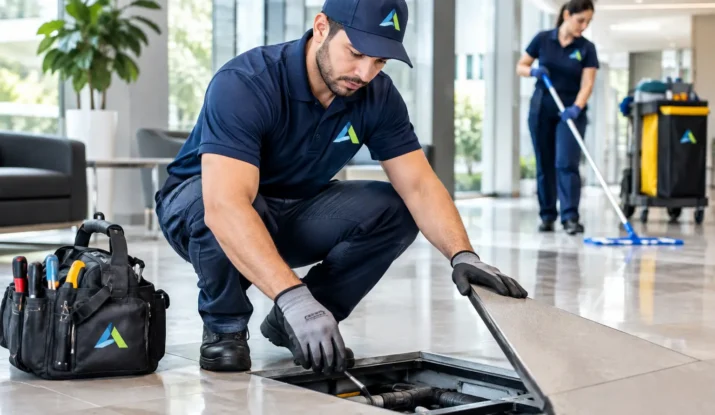
A restroom runs out of soap before the lunch rush. A loading-area spill sits too long. Floor finish wears down in a busy entrance, and a tenant notices dust on a ledge before your team does. These may seem like separate issues, but they are all signs that facility maintenance is being handled reactively instead of through a coordinated plan.
For commercial properties, maintenance is not limited to fixing what breaks. It is the daily work of keeping a building clean, sanitary, stocked, safe, and presentable for employees, visitors, tenants, customers, and inspectors. When those responsibilities are split among disconnected vendors or handled only after a complaint, small gaps quickly become operating problems.
What Facility Maintenance Should Cover
A practical facility-maintenance program begins with the way people actually use the property. An office with high employee traffic needs reliable restroom service, touchpoint cleaning, waste removal, and floor care. A restaurant needs sanitation support, linens or aprons, grease-prone area cleaning, pest control, and dependable supply replenishment. A warehouse or industrial site may require more frequent cleaning of breakrooms, restrooms, high-traffic floors, and loading areas, along with attention to dust and debris.
The right scope depends on the building, its hours, occupancy, and risk profile. Still, most commercial facilities benefit from coordinated coverage across several core responsibilities:
- Recurring janitorial cleaning for restrooms, common areas, offices, breakrooms, and waste containers
- Consumable management for toilet paper, hand soap, paper towels, gloves, liners, and other daily-use products
- Floor and carpet care that protects appearance, improves traction, and extends the life of expensive surfaces
- Specialty services such as pressure washing, sanitization and disinfection, pest control, junk removal, and post-project cleaning
- Exterior and property-maintenance cleaning that keeps entryways, sidewalks, parking areas, and shared spaces orderly
This does not mean every facility needs every service every week. A medical office, retail space, school, multifamily property, and manufacturing operation have different priorities. The value comes from building a schedule around actual conditions rather than choosing a generic cleaning checklist.
Why Reactive Service Costs More
Waiting for visible problems often feels economical because it limits service to immediate needs. In reality, reactive maintenance can create higher costs, more interruptions, and more administrative work.
Consider hard floors. Regular dust mopping, damp mopping, and periodic machine scrubbing help remove abrasive soil that dulls and damages finishes. When that work is deferred, floors may need more intensive restoration sooner. The same principle applies to carpets. Routine vacuuming with high-filtration equipment and scheduled extraction can reduce embedded soil and allergens, while neglected carpet may require replacement before its time.
Restroom supplies offer another clear example. A depleted dispenser is not merely an inconvenience. It affects hygiene, creates an avoidable complaint, and pulls staff away from more productive work. A managed supply program helps prevent those gaps by pairing product replenishment with cleaning visits and predictable ordering.
Reactive service also makes accountability harder. When multiple vendors handle janitorial work, supplies, pest activity, floor care, and removal projects, facility managers can spend considerable time identifying who owns a problem. A single provider relationship can reduce that burden, provided the provider has clear service standards, responsive communication, and the ability to coordinate the work properly.
Cleanliness Is an Operational Standard
Visible cleanliness shapes how people judge a property, often before they interact with staff. A streaked glass door, overflowing trash container, or poorly maintained restroom can make a well-run business appear careless. For tenant-facing and customer-facing properties, that impression can influence satisfaction and retention.
There is a less visible side as well. Consistent cleaning supports healthier indoor environments by addressing dust, high-touch surfaces, restroom hygiene, and waste. In facilities with vulnerable populations, food service operations, schools, or high employee density, the cleaning plan should reflect the heightened need for sanitation, documentation, and dependable execution.
Building a Facility Maintenance Plan That Works
The strongest plans are specific enough to be accountable and flexible enough to adjust when conditions change. Start with a walkthrough of the facility, not a standard price sheet. Look at traffic patterns, hours of operation, surface types, storage access, waste volume, restroom usage, seasonal conditions, and areas that generate frequent complaints.
From there, separate tasks by frequency. Daily work may include restroom cleaning, trash removal, vacuuming, entryway care, breakroom cleaning, and disinfecting high-touch points. Weekly or monthly work may include detailed dusting, interior glass, machine floor cleaning, carpet spot treatment, and deeper restroom service. Quarterly or seasonal work could include pressure washing, floor refinishing, carpet extraction, junk removal, or exterior cleanup.
The schedule should also identify who supplies the materials. This is easy to overlook until a site runs short on hand soap, liners, gloves, or paper towels. Assigning responsibility for consumables, delivery timing, dispenser checks, and inventory levels prevents uncertainty. It also gives managers a more accurate view of the total cost of keeping the facility operational.
Use the Right Methods for the Space
A maintenance plan is only as good as its execution. Professional teams should use methods that reduce cross-contamination and protect the surfaces being cleaned. Color-coded cleaning systems, for example, help keep restroom tools separate from those used in offices or food-service areas. Microfiber tools capture soil effectively while reducing unnecessary product use. High-filtration vacuums can improve the removal of fine dust from carpets and hard-to-reach areas.
Product selection matters, too. Green Seal-certified products and other environmentally responsible options may support sustainability goals while maintaining cleaning performance. However, product choices should always be appropriate for the surface, the facility’s requirements, and the task at hand. A stronger chemical is not automatically a better solution, especially if it can damage finishes, create odors, or complicate safe use.
For industrial settings, safety controls deserve special attention. Teams should be trained, uniformed, insured, and OSHA-compliant, with clear procedures for wet floors, chemical handling, equipment use, and restricted areas. Cleaning should improve the workplace, not introduce another risk.
How to Measure Service Quality
“Clean” can be subjective unless expectations are documented. Facility managers should establish clear standards for appearance, supply levels, response times, and recurring trouble areas. Regular inspections make those standards visible and allow problems to be addressed before they become patterns.
Useful performance questions include: Are restrooms consistently stocked at peak times? Are high-traffic entrances clean when visitors arrive? Is trash removed on the agreed schedule? Are floors free from preventable buildup? When an urgent issue occurs, does the provider respond quickly and communicate clearly?
It is also worth reviewing the plan after operational changes. A new tenant, a busier shift, a renovation, winter weather, or a change in building use can alter cleaning needs. In Chicagoland, winter slush and salt can place heavy demands on entryways and floor finishes, while warmer months may increase exterior cleaning and pest-control needs. A provider should be ready to adjust frequency, equipment, and supplies without forcing the client to start over.
One Relationship, Clear Accountability
Managing facility needs through one accountable partner can simplify daily operations. Instead of coordinating one company for janitorial work, another for mats, another for restroom supplies, and another for specialty cleaning, managers can work from one service plan and one point of contact. The benefit is not simply fewer invoices. It is better visibility into what is happening across the property.
That model works best when the provider can handle routine work with the same care as specialty requests. ABF Facility Services supports commercial and industrial facilities with integrated cleaning, maintenance, sanitation, supply, and rental solutions designed around each site’s needs. The goal is consistent service that helps managers spend less time chasing vendors and more time running their operations.
A dependable maintenance program should make the building feel easier to manage. When cleaning is consistent, supplies are available, floors are protected, and the right team responds when something changes, the facility is ready for the people who rely on it each day.