
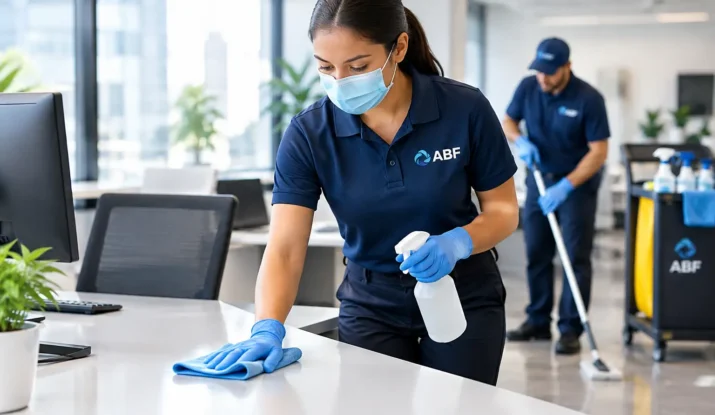
A disinfecting schedule that is too light leaves high-touch surfaces exposed between cleanings. A schedule that is too aggressive can waste labor, disrupt operations, and damage sensitive finishes. The right disinfecting frequency is not a single number for every building. It is a practical decision based on how people use the space, what risks are present, and how consistently the work can be completed.
For Chicago-area facility managers, office managers, property owners, and operations leaders, the goal is clear: maintain a visibly clean, healthy environment without creating unnecessary downtime or paying for work that does not match the facility’s actual needs. A well-designed program focuses attention where it matters most and adjusts quickly when conditions change.
What Determines Disinfecting Frequency?
Disinfection is the process of using an appropriate product to reduce germs on hard, nonporous surfaces after cleaning. It is different from routine cleaning. Removing dust, soil, spills, and fingerprints improves appearance and helps disinfectants work as intended, but a surface still needs the proper disinfecting product, dilution, and contact time when disinfection is required.
The correct schedule begins with traffic. A lightly occupied administrative office does not have the same exposure as a busy medical waiting room, school restroom, restaurant kitchen, fitness center, or manufacturing break room. More people mean more hand contact, more shared surfaces, and more opportunities for contamination to move through the facility.
Risk also matters. A building serving vulnerable populations, such as a health care setting, senior-living operation, or child-care environment, may need more frequent attention to touchpoints and restrooms. Food-service spaces have sanitation requirements that are distinct from general office cleaning. Industrial facilities may need a schedule that accounts for shift changes, shared tools, locker rooms, dust, oils, and production schedules.
Finally, consider the operational consequences of a missed cleaning. If a dirty lobby leads to tenant complaints, a depleted restroom affects customer confidence, or an illness cluster interrupts a shift, the cost of an inadequate schedule can be much higher than the cost of targeted recurring service.
A Practical Disinfecting Frequency Framework
Most commercial facilities benefit from separating routine disinfection from response-based disinfection. Routine work covers the predictable points of contact created by normal daily use. Response-based work increases service after illness reports, heavy events, seasonal respiratory-virus activity, construction activity, spills, or other conditions that change the risk level.
A useful baseline looks like this:
| Area or surface | Typical frequency | When to increase service | | — | — | — | | Entry doors, elevator buttons, reception counters, shared equipment | Daily in occupied facilities | Multiple shifts, heavy visitor traffic, illness concerns | | Restrooms and break rooms | At least daily, often multiple times per day | High occupancy, food preparation, events, visible soil or odor | | Desks, private offices, low-touch rooms | Scheduled routine cleaning, with disinfection as needed | Shared workstations, hot-desking, confirmed illness, high use | | Fitness areas, classrooms, waiting rooms, shared meeting spaces | Daily or between defined use periods | Continuous turnover, vulnerable users, outbreaks | | Food-contact and food-prep areas | According to food-safety procedures and throughout operations | Spills, raw-food handling, shift changes, inspection requirements |
This is a planning framework, not a substitute for site-specific requirements. Health care, food service, schools, laboratories, and regulated industrial environments may have internal policies or local, state, and federal rules that set more specific expectations.
High-Touch Surfaces Deserve the Closest Attention
Facilities often make the mistake of disinfecting large, low-risk surfaces while missing the places hands repeatedly land. A practical route should include door handles, push plates, railings, light switches, elevator controls, faucet handles, toilet flush handles, soap dispensers, refrigerator handles, microwave buttons, shared keyboards, phones, copier panels, and conference-room controls.
The best frequency depends on use. For example, an executive conference room used twice a week may need disinfection after meetings, while a shared training room with rotating groups may require service between sessions. In a warehouse, time clocks, break-room tables, vending controls, and shared lift-truck touchpoints can be more relevant than traditional office surfaces.
Why More Disinfectant Is Not Always Better
Increasing disinfecting frequency can be necessary, but it has trade-offs. Some products can dull finishes, affect sensitive electronics, or leave residue when applied too heavily or used incorrectly. Overwetting floors creates slip risks. Strong fragrances or poorly selected chemicals can also cause comfort concerns for employees and visitors.
The answer is not to reduce standards. It is to use trained personnel, approved products, correct dwell times, and methods that fit the surface. A disinfectant cannot do its job if it is wiped away too quickly. Likewise, applying a product to a visibly dirty surface without first removing soil may reduce effectiveness.
Color-coded cleaning systems are especially useful in commercial environments because they help prevent cross-contamination between restrooms, break rooms, general offices, and other areas. Microfiber tools can capture soil effectively when used and laundered properly, while high-filtration vacuums support a cleaner indoor environment by removing fine dust rather than redistributing it.
Build a Schedule Around the Building’s Actual Use
A schedule should follow people, not just a calendar. Start by reviewing occupancy patterns over a typical week. Note when visitors arrive, when shifts change, when restrooms experience their heaviest use, and which spaces are shared across departments. This walkthrough often reveals that a single evening service is not enough for certain areas, even if it remains appropriate for the rest of the building.
Next, identify the surfaces and areas that require a documented standard. Restrooms may need checklists completed several times a day. A food-service break area may need a cleaning and sanitizing routine at defined times. Shared equipment may require employees to wipe down touchpoints between users, supported by readily available supplies and clear instructions.
Then, establish accountability. A strong program identifies who performs the work, what product is used, how long it must remain wet, and how completion is verified. This may include supervisor inspections, digital or paper service logs, replenishment records, and client feedback. Consistency matters more than a schedule that looks impressive on paper but is not reliably executed.
When to Temporarily Increase Disinfecting Frequency
Certain events call for a faster response. Reports of gastrointestinal or respiratory illness, a large on-site meeting, severe weather that tracks moisture and debris indoors, or a sudden spike in occupancy can all justify additional service. The same is true after a restroom overflow, a bodily-fluid incident, or a contamination event that requires trained cleaning personnel and appropriate protective procedures.
A response plan should define who to contact, which areas need immediate attention, and whether normal operations can continue while cleaning occurs. For some facilities, after-hours service is the best fit. For others, daytime attendants are necessary to keep restrooms, entrances, and common spaces ready throughout the day.
This flexibility is one reason a single accountable facility-services provider can simplify operations. Rather than coordinating separate crews for janitorial work, restroom supplies, floor care, waste removal, and urgent sanitization needs, managers can work from one coordinated service plan.
Signs Your Current Schedule Needs Adjustment
Visible cleanliness is useful feedback, but it should not be the only measure. Repeated restroom complaints, empty soap or towel dispensers, sticky touchpoints, recurring odors, rising employee concerns, or inconsistent service logs suggest that the scope, timing, or oversight needs attention.
Pay attention to asset condition as well. Floors that lose their finish prematurely, damaged surfaces, and persistent residue may indicate that products or methods are not properly matched to the environment. A qualified provider will address these issues with a tailored plan instead of applying the same process to every facility.
ABF Facility Services helps commercial and industrial properties create practical schedules supported by trained, uniformed, insured, OSHA-compliant teams, sustainable product options, and detailed service execution. The best program gives your building the right level of attention at the right time, while allowing employees, tenants, and customers to focus on why they are there.