
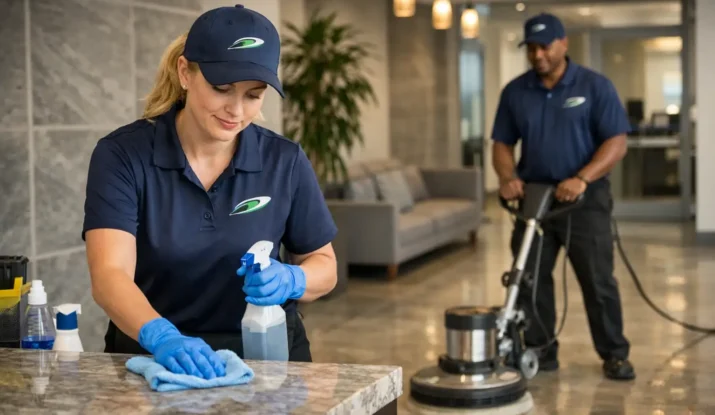
A scuffed lobby floor, an overflowing dumpster enclosure, or an empty soap dispenser can become a tenant complaint long before a property manager has a chance to address it. Property management cleaning is not simply about making a building look presentable after hours. It is an operating system for protecting the property, supporting tenant retention, reducing safety concerns, and keeping daily issues from becoming expensive problems.
For commercial properties, multifamily communities, office buildings, retail centers, and mixed-use sites, the standard has to be consistent. Tenants and visitors do not judge a property based on one deep-cleaning project. They judge it by what they see every day: clean entrances, odor-free restrooms, maintained floors, clear walkways, and waste areas that are under control.
What property management cleaning should cover
A dependable cleaning plan begins with the spaces people use most and the conditions that affect the property most. Common areas usually require recurring attention, including lobbies, elevators, corridors, stairwells, leasing offices, restrooms, break rooms, and amenity spaces. High-touch surfaces, glass entry doors, trash receptacles, and flooring need service at frequencies that match actual traffic, not a generic schedule copied from another building.
Exterior and support areas deserve the same attention. Sidewalks, loading areas, dumpster pads, parking structures, maintenance rooms, and vacant suites can quickly affect appearance, safety, and pest activity. Seasonal weather in Chicagoland makes this especially practical: salt residue, tracked-in moisture, leaves, and windblown debris can damage floors and create slip hazards if they are not addressed promptly.
The right scope also includes scheduled specialty work. Carpet extraction, hard-floor scrubbing and refinishing, pressure washing, sanitization, junk removal, and pest-control support may not be daily tasks, but they should not wait until conditions become visible to everyone. A property manager needs one clear plan for routine upkeep and a responsive process for the work that falls outside it.
Set service levels by traffic and risk
Cleaning frequency should reflect how a property operates. A busy office lobby with daily visitor traffic needs a different level of care than a lightly used professional building. A medical office, school, restaurant-adjacent retail space, or industrial facility may have heightened sanitation, safety, or compliance needs. The goal is not to overservice every square foot. It is to place labor and supplies where they make the largest difference.
Start by identifying high-visibility areas, high-touch surfaces, and high-risk conditions. Entryways, restrooms, elevators, break rooms, and shared workspaces generally need more frequent attention than storage rooms or low-traffic back corridors. Then consider peak periods. A cleaning crew may need to refresh a restroom during business hours, while vacuuming, trash removal, and detailed floor care may be better completed after tenants leave.
This is where a site walkthrough matters. A schedule that looks efficient on paper can fail if it ignores tenant hours, security procedures, access limitations, delivery times, or building events. A tailored plan should state what is cleaned, how often it is cleaned, what is included in periodic work, and who receives updates when priorities change.
Daily cleaning protects the first impression
Daily work keeps routine conditions from accumulating. It can include trash removal, restroom cleaning and replenishment, vacuuming, mopping, spot cleaning, touchpoint disinfection, and cleaning of entrance glass. These tasks are basic, but execution matters. Missed details are often the details tenants notice first.
Periodic services protect the asset
Floors, carpet, exterior surfaces, and less-used areas need planned deep cleaning. Hard-floor care can extend the life of finished surfaces and improve traction. Carpet cleaning removes embedded soil and allergens that routine vacuuming cannot reach. Pressure washing can restore exterior approaches and service areas when buildup affects appearance or safety.
The timing depends on the facility. High-traffic areas may need floor maintenance monthly or quarterly, while a quieter property may need it less often. The key is to schedule these services before wear becomes permanent or complaints begin.
Avoid the gaps created by multiple vendors
Property managers often inherit a patchwork of providers: one company handles nightly janitorial work, another supplies restroom paper, a third manages floor mats, and someone else is called when a dumpster area needs attention. Each vendor may perform well independently, yet the manager remains responsible for coordinating schedules, invoices, service requests, and follow-up.
A consolidated approach reduces those handoffs. When cleaning, consumables, floor mats, reusable towels and mops, sanitation support, and removal services are coordinated through one accountable provider, it is easier to see what is happening at the property and correct issues quickly. It also helps prevent common failures such as cleaned restrooms with empty dispensers, a polished lobby with worn entry mats, or a cleared suite with debris left behind.
Consolidation is not always the right answer. A large portfolio may have existing contracts or specialized service requirements that make separate providers practical. Still, every property manager should ask a simple question: when an issue crosses service categories, who owns the result? The answer should never be unclear.
Build quality control into the agreement
A cleaning contract should do more than define a checklist. It should establish accountability. That means clear service frequencies, documented scope, escalation procedures, site contacts, and a method for handling urgent requests. It also means the provider should have trained, uniformed, insured professionals who understand the building’s rules and can work safely around occupants.
Quality control works best when it is visible and routine. Supervisory inspections, communication logs, and periodic client reviews help catch declining performance before it becomes a tenant issue. Managers should be able to report a concern without repeating the same request to multiple people or waiting days for an acknowledgment.
Cleaning methods matter as well. Color-coded systems can reduce cross-contamination between restrooms, break rooms, and general areas. Microfiber tools capture more soil than many traditional materials, while high-filtration vacuums help manage fine dust. Sustainable, Green Seal-certified products can support environmental goals without sacrificing cleaning performance when they are selected for the surface and soil type.
Plan for turnover, emergencies, and the unexpected
Property management involves changing conditions. A tenant moves out, a pipe leaks, a lobby event creates unusual traffic, or abandoned materials appear in a vacant space. These situations need a provider that can respond beyond the recurring schedule.
For turnovers, the cleaning scope should be coordinated with maintenance and leasing timelines. Vacant suites may need trash and junk removal, detailed cleaning, floor restoration, restroom service, and window or glass cleaning before walkthroughs. Completing the work in the right sequence avoids rework and helps present the space at its best.
For urgent situations, establish the decision path before an incident occurs. Know who can authorize additional work, how after-hours requests are submitted, and what response time is expected. Not every problem requires an emergency callout, but water, biohazard concerns, unsafe debris, pest activity, and major waste accumulation should not wait for the next scheduled visit.
Measure results that tenants can actually feel
The most useful cleaning metrics are connected to property outcomes. Track recurring complaints by location, response time for service requests, restroom supply outages, inspection findings, and the condition of floors and common areas over time. If complaints continue in one area, the answer may be more frequent cleaning, a different method, better staffing coverage, or a building repair that cleaning alone cannot solve.
Tenant feedback is also valuable, particularly after a service change or a major project. Cleanliness affects whether people feel comfortable in a building, but it can be difficult to measure through a single score. Look for patterns in comments about odors, restrooms, elevators, entryways, and trash areas. Those patterns reveal where a cleaning plan is either supporting the property or falling short.
For Chicago-area property teams, ABF Facility Services can coordinate recurring cleaning, specialty floor care, sanitation, supplies, and removal work through one responsive service relationship. The objective is straightforward: fewer loose ends for the management team and a property that is consistently ready for tenants, visitors, and inspections.
A well-maintained property rarely calls attention to the cleaning behind it. That is the point. When the right plan, people, supplies, and follow-up are in place, managers can spend less time chasing missed tasks and more time improving the tenant experience.