
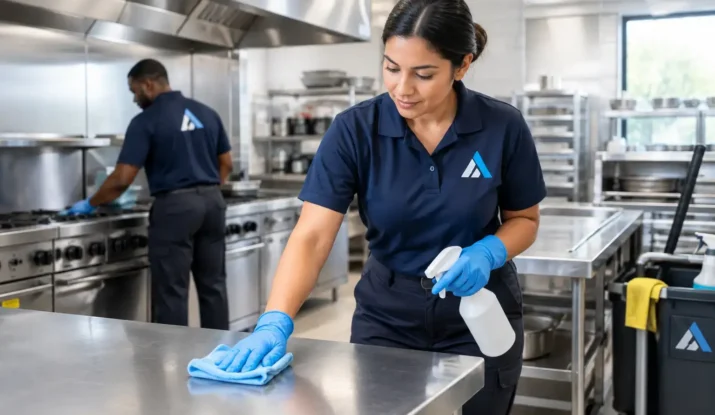
A commercial kitchen can look busy and productive while hidden grease, food debris, and moisture create risks behind the line. Knowing how to clean commercial kitchens means more than wiping visible surfaces at closing time. It requires a consistent system that protects food safety, supports staff, preserves expensive equipment, and gives inspectors and guests confidence in the operation.
For restaurants, schools, health care facilities, hospitality properties, and workplace cafeterias, the right cleaning process separates daily tasks from the deep cleaning work that cannot be rushed. The goal is not simply a kitchen that looks clean. It is a kitchen that is sanitary, safe, organized, and ready for service.
Start With a Kitchen Cleaning Plan
Commercial kitchens work best when cleaning responsibilities are assigned by area, shift, and frequency. If tasks are left to a general instruction such as “clean the kitchen,” high-touch surfaces may get attention while floor drains, hood filters, refrigeration gaskets, and hard-to-reach areas are missed.
Create written checklists for opening, during-service, closing, weekly, and monthly work. Assign each task to a role, then make a supervisor responsible for verifying completion. A signed checklist is useful, but verification matters more. Managers should periodically inspect the areas that collect grease, moisture, and food particles, especially under equipment and along wall edges.
A practical cleaning plan should account for the type of operation. A high-volume fryer station needs more frequent degreasing than a light-prep kitchen. A hospital or school kitchen may have more stringent sanitation and documentation requirements. The right schedule depends on production volume, menu, equipment, traffic, and local health-code requirements.
How to Clean Commercial Kitchens Step by Step
The safest cleaning sequence moves from cleaner areas to dirtier ones and from high surfaces to low surfaces. This reduces the chance of spreading debris or dirty water onto food-contact areas that have already been cleaned.
Clear, sort, and remove waste first
Begin after food has been properly stored, covered, labeled, or discarded. Remove dishes, utensils, food scraps, cardboard, and trash from work areas. Empty waste containers before they overflow, clean the exterior of the bins, and replace liners as needed.
Waste handling is also a pest-control issue. Food residue left in corners, beneath shelving, or in recycling areas can attract pests even when the visible kitchen appears orderly. Keep exterior waste areas clean and make sure dumpster lids remain closed.
Wash, rinse, sanitize, and air-dry food-contact surfaces
Food-contact surfaces need more than a quick spray-and-wipe. Use the correct four-step process: remove debris, wash with an approved detergent, rinse as required by the product instructions, then apply an approved sanitizer at the proper concentration and contact time. Let the surface air-dry unless the product label directs otherwise.
Prep tables, cutting boards, slicers, mixers, utensil handles, refrigeration handles, and beverage stations all require regular attention. Follow manufacturer instructions for disassembling equipment. Cleaning around a machine is not the same as cleaning the components that come into contact with food.
Avoid using the same towel or tool across raw-protein areas, ready-to-eat prep zones, restrooms, and general surfaces. Color-coded microfiber cloths and mops help teams prevent cross-contamination when they are used consistently and laundered correctly.
Degrease cooking equipment and surrounding surfaces
Grease buildup is one of the most persistent commercial kitchen challenges. Clean cooktops, grills, fryers, backsplashes, hood exteriors, and nearby walls with a degreaser suited to the surface and soil level. Let the product dwell for the label-recommended time before scrubbing. Applying a chemical and wiping it away immediately often leaves the grease behind.
Take care with electrical controls, pilot lights, and sensitive equipment components. Excess liquid can damage equipment or create a safety hazard. For heavily soiled areas, it may be safer and more effective to schedule professional deep cleaning rather than having staff use aggressive chemicals or excessive water.
Kitchen exhaust hoods, filters, ducts, and fans require specialized attention. Surface cleaning improves appearance, but grease inside an exhaust system can present a serious fire risk. These areas should be serviced on an appropriate professional schedule based on cooking volume and local requirements.
Clean floors, drains, and hard-to-reach areas
Floors should be swept or vacuumed to remove loose debris before wet cleaning. Apply the appropriate floor cleaner or degreaser, allow sufficient dwell time, scrub problem areas, and remove dirty solution rather than spreading it across the floor. Mop water should be changed often. A gray bucket of water does not clean a floor effectively.
Pay special attention to floor edges, corners, grout lines, mats, casters, and the space beneath movable equipment. These are common locations for grease, crumbs, and moisture buildup. Use wet-floor signs whenever cleaning is underway to reduce slip-and-fall risk.
Floor drains should be cleared of visible debris and cleaned according to the facility’s approved process. Drains can develop odors and harbor buildup when neglected. Never mix chemicals in drains or elsewhere in the kitchen, and do not pour incompatible products together. Chemical reactions can create dangerous fumes or damage plumbing.
Set the Right Cleaning Frequency
Daily cleaning supports safe operations, but it does not replace scheduled deep cleaning. A dependable program divides work by frequency so the kitchen stays manageable during busy service periods.
Daily tasks generally include sanitizing food-contact surfaces, cleaning cooking equipment exteriors, washing utensils and dish areas, removing trash, spot-cleaning spills, and cleaning floors. High-touch points such as cooler handles, door plates, faucets, switches, and POS-adjacent surfaces should also be cleaned regularly.
Weekly work may include cleaning shelving, polishing stainless steel, scrubbing floor edges, washing wall surfaces near cooking areas, cleaning small appliances, and inspecting gaskets and seals. Monthly or periodic work often includes moving equipment, detailing behind and beneath appliances, treating heavy grease buildup, servicing exhaust components, pressure washing appropriate exterior areas, and addressing tile, grout, or floor finish issues.
The schedule should change when conditions change. During holiday volume, catering events, staffing shortages, construction nearby, or a pest concern, kitchens may need extra service. A rigid schedule is useful, but responsive cleaning protects the operation when real conditions demand more attention.
Use Chemicals and Tools Safely
The product selected matters as much as the effort put into cleaning. Use food-safe cleaners and sanitizers where required, and follow each product label for dilution, contact time, personal protective equipment, and approved surfaces. More chemical does not always mean better cleaning. Overconcentrated solutions can leave residue, damage finishes, and create unnecessary exposure for employees.
Keep Safety Data Sheets accessible and train staff on chemical handling. Store chemicals away from food, ingredients, utensils, and single-service items. Clearly label secondary containers, never mix products, and ensure spray bottles are not mistaken for food-storage containers.
Microfiber cloths, nonabrasive scrub pads, deck brushes, squeegees, high-filtration vacuums, and properly maintained mops can improve results while reducing surface damage. Replace worn tools. A frayed mop head or heavily soiled cloth can redistribute contamination instead of removing it.
Do Not Overlook Restrooms, Receiving Areas, and Storage
Kitchen sanitation is affected by the spaces around the kitchen. Restrooms need separate tools and procedures from food-prep areas. Receiving zones, dry storage, walk-ins, employee break areas, and dishwashing stations should be included in the cleaning plan because clutter, spills, and waste in these locations can create safety and pest concerns.
Keep dry-storage shelves clean, elevated, and organized so staff can see spills and expired products. In walk-ins, clean shelving, fan guards, door handles, floors, and gaskets regularly. Standing water, damaged seals, and unexplained odors deserve prompt attention rather than being added to a future task list.
When Professional Kitchen Cleaning Makes Sense
In-house teams are essential for daily sanitation, but specialty cleaning is often the right choice for high-grease, labor-intensive, or equipment-sensitive work. Professional support can be particularly valuable for deep floor cleaning, hard-floor care, pressure washing, exhaust-related cleaning coordination, pest-control programs, waste removal, and post-construction cleanup.
For Chicagoland kitchen operators, ABF Facility Services can help coordinate recurring cleaning, sanitation support, supplies, floor care, and related facility needs through one accountable service relationship. A trained, insured, OSHA-compliant team can complete detailed work without pulling kitchen staff away from food preparation and service.
A clean commercial kitchen is built through routines people can realistically follow, not last-minute scrubbing before an inspection. Give every task an owner, use the right products for the surface, document recurring work, and address grease, moisture, and waste before they become a larger operational problem.