
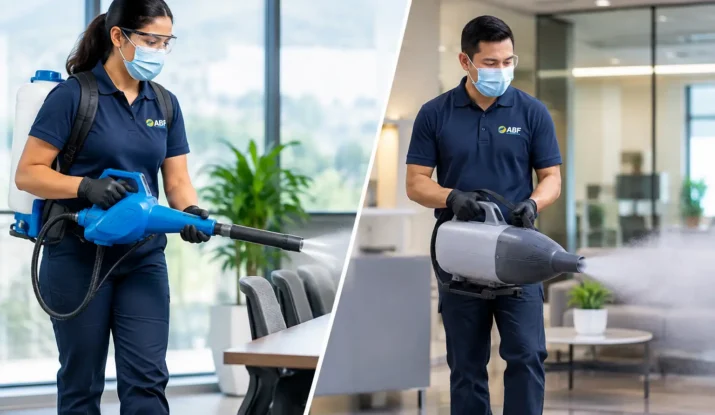
A disinfecting method can look impressive and still be the wrong choice for the room, the product, or the job at hand. When facility managers compare electrostatic spraying versus fogging, the real question is not which machine produces the most visible mist. It is which application method can deliver an EPA-registered disinfectant where it is needed, at the correct coverage and contact time, without creating unnecessary disruption or risk.
For offices, schools, health care settings, restaurants, warehouses, and multi-tenant properties, the best answer often depends on the space itself. Surface layout, ventilation, occupancy, the disinfectant label, and the level of cleaning completed beforehand all affect the result.
Electrostatic Spraying Versus Fogging: The Key Difference
Electrostatic spraying applies a disinfectant through a specialized sprayer that gives droplets an electrical charge. As the technician directs the spray at a grounded surface, the charged droplets are attracted to it. This can help the product coat front-facing surfaces and, in some circumstances, wrap around edges and hard-to-reach sides of objects.
Fogging, often called ULV fogging, uses equipment that breaks a liquid into very fine droplets suspended in the air. The mist settles onto exposed surfaces over time. It can cover large, open areas efficiently, but it is not a substitute for deliberate application to high-touch points or for thorough manual cleaning.
Both methods are delivery systems. Neither method makes an unapproved chemical effective, removes soil, or eliminates the need to follow the product label. A disinfectant must be approved for the intended use, mixed correctly when applicable, applied at the required rate, and left wet for its listed contact time.
Where Electrostatic Spraying Performs Well
Electrostatic spraying is often a practical option for spaces with many fixtures, furnishings, and touchpoints. Consider classrooms with desks and chairs, office workstations, fitness equipment, break rooms, waiting areas, locker rooms, and restrooms. The operator can work methodically through the area while using the spray pattern to coat targeted surfaces efficiently.
The method is especially helpful after a detailed cleaning process. Before disinfection, technicians should remove visible dirt, food residue, dust, and other organic material. Soil can block the disinfectant from contacting the surface properly and may reduce the effectiveness of the application.
Electrostatic equipment also gives the technician meaningful control. A trained professional can focus on door handles, railings, light switches, chair arms, counters, restroom partitions, shared equipment, and other areas where hands frequently make contact. That matters because many facilities do not need every square inch treated the same way. They need careful, consistent attention on the surfaces that create the greatest operational concern.
There are limits. Electrostatic spraying should not be treated as a magic coating process. Obstructions, poor technique, overly fast movement, and incorrect nozzle settings can leave gaps. Sensitive electronics, food-contact surfaces, paper products, and certain materials may require special procedures or a different method altogether. A professional team should assess the setting and protect or avoid items as directed by the product label and facility requirements.
When Fogging May Make Sense
Fogging can be useful when a facility has a large volume of relatively open space and needs broad application after hours. Warehouses, large common areas, vacant suites, and some industrial environments may be candidates, particularly when the disinfectant manufacturer allows fogging as an application method.
The advantage is reach across a wide area. Fine droplets can settle onto exposed surfaces without requiring a technician to stand directly in front of every item. In the right setting, that can support efficient treatment of a large footprint.
However, fogging requires careful planning. Because particles remain airborne before settling, the process can affect indoor air conditions, nearby materials, and reentry timing. Occupants may need to leave the area, HVAC considerations may apply, and the facility must remain vacant until the product has settled, the required contact time has passed, and ventilation or other label instructions are satisfied.
Fogging is also less precise than a directed spray. It may not adequately reach shadowed areas, undersides, or surfaces blocked by furniture and equipment. High-touch items such as elevator buttons, faucet handles, touchscreen controls, and door hardware still benefit from direct, hands-on cleaning and targeted disinfection.
Coverage Is Not the Same as Effectiveness
The most common mistake in commercial disinfection is confusing visible mist with verified results. A room that appears cloudy after fogging or freshly coated after electrostatic spraying is not automatically disinfected.
Effectiveness depends on a sequence of work: selecting the right product, removing soil, applying enough solution to wet the intended surface, maintaining the correct contact time, and allowing the area to dry or be wiped according to label directions. If a surface dries too quickly, the required dwell time may not be met. If a technician misses the surface entirely, no amount of mist in the air corrects that gap.
Facility managers should also separate routine cleaning from heightened disinfection. In many workplaces, daily removal of soil, trash, fingerprints, and restroom contamination does more to maintain a clean, welcoming environment than occasional whole-room treatment alone. A specialized application is most effective when it supports an established janitorial program rather than replacing one.
How to Choose the Right Method for Your Facility
Start with the operational goal. If the need is recurring attention to defined high-touch surfaces in an occupied office, school, or customer-facing environment, electrostatic spraying may offer the control and efficiency needed. If the goal is to treat a large, vacant, open area where the selected product specifically permits fogging, fogging may be considered as part of a larger plan.
Then evaluate the room. Dense furniture, shelving, equipment, and partitions favor a more targeted application. Open floor plans may be easier to fog, but large rooms still contain handles, controls, rails, counters, and other touchpoints that should not be overlooked.
The product label is equally important. Not every disinfectant can be applied through electrostatic equipment or fogging equipment. The label establishes permitted application methods, dilution instructions, surfaces, personal protective equipment, contact time, ventilation requirements, and reentry guidance. It is the operating instruction, not a suggestion.
Finally, consider disruption. A facility that operates around the clock may need a method that can be completed in sections with controlled access. A school, medical office, restaurant, or retail location may need service scheduled around staff, guests, food preparation, or patient care. The right approach protects people and operations as well as surfaces.
What a Professional Disinfection Plan Should Include
A dependable service plan should not begin and end with equipment. It should define which areas will be cleaned first, which surfaces will receive disinfection, the approved product being used, and how technicians will manage contact time and safe reentry. Clear documentation and communication are particularly valuable for property managers and operations leaders responsible for multiple occupants or shifts.
Trained, uniformed technicians should use appropriate personal protective equipment and follow OSHA-aware work practices. They should also understand when manual wiping is necessary, when equipment should not be used, and how to prevent cross-contamination between restrooms, break rooms, work areas, and other zones. Color-coded tools and microfiber systems support this level of control during the cleaning phase.
At ABF Facility Services, the objective is not to recommend a machine for every situation. It is to build a practical sanitation and disinfection program around the facility, its people, its schedule, and its standards. For Chicagoland businesses, that can mean targeted electrostatic application, carefully planned fogging where appropriate, detailed touchpoint disinfection, or a combination of methods backed by recurring janitorial service.
The best disinfection method is the one that fits the space, follows the label, and is completed with the same care your facility expects from every other service. Start with a walkthrough, identify the risks and traffic patterns, and choose the process that keeps your workplace clean, safe, and ready for the people who depend on it.