
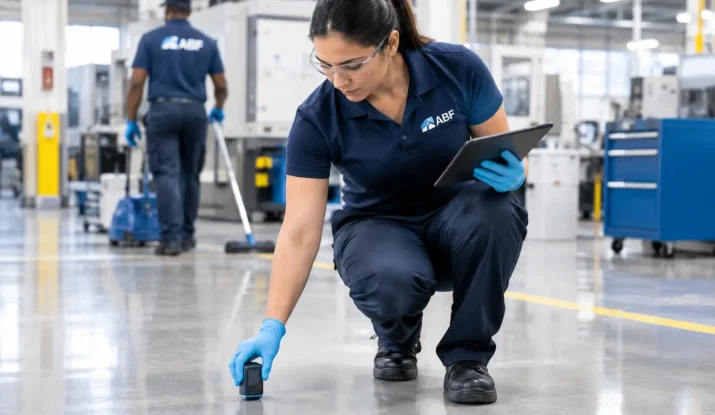
A production floor can look clean at 6:00 a.m. and still create problems by noon. Fine dust may be settling on equipment, oil residue may remain near workstations, waste may be backing up at loading areas, or a restroom may be out of soap before the next shift arrives. Strong manufacturing cleanup results are not based on a quick visual check alone. They are measured by whether the facility is safer, more orderly, ready for production, and consistently maintained from shift to shift.
For plant managers, operations leaders, and facility teams, the goal is not simply to make a building appear presentable. It is to reduce preventable hazards, protect equipment and finished goods, support employee well-being, and keep cleaning work from interrupting operations. That requires clear expectations and a practical way to verify performance.
What Manufacturing Cleanup Results Should Show
The most useful cleanup results connect directly to how the facility runs. A clean receiving area, for example, should allow materials to move without obstruction. A properly maintained production floor should have controlled dust, promptly addressed spills, clear walkways, and no unnecessary debris around machinery. In employee areas, results should include clean, stocked restrooms and break rooms that support a healthy, professional workplace.
Visual appearance still matters. Customers, inspectors, employees, and prospective hires form opinions quickly based on floors, entrances, restrooms, and common areas. But appearance is only one measure. A shiny floor is not a successful result if it is slippery, if drain areas are neglected, or if cleaning chemicals are stored improperly.
The right standard depends on the operation. A food-related facility, warehouse, light manufacturing plant, machine shop, and packaging operation all have different risks. The cleaning plan should reflect the materials being handled, traffic levels, shift schedules, regulatory obligations, and sensitive equipment in each area.
Safety is the first performance measure
Cleanup should reduce hazards rather than introduce new ones. During inspections, look for oil, grease, water, powder, loose packaging, metal shavings, and other materials that can create slip, trip, or fire risks. Pay particular attention to entrances, dock doors, aisles, stairwells, machine perimeters, and areas around waste containers.
Documenting response time for spills and urgent cleanup requests is also valuable. A cleanup crew may complete its scheduled tasks well, but a delayed response to a spill in a high-traffic aisle can still affect safety and production. Track when an issue was reported, when it was addressed, and whether the corrective action held up through the shift.
Safe results also depend on process. Uniformed, insured, OSHA-compliant teams should use appropriate personal protective equipment, clearly marked wet-floor procedures, and color-coded cleaning systems that reduce cross-contamination between restrooms, break rooms, and production-adjacent spaces.
Cleanliness should protect quality and equipment
Dust buildup, residue, and unmanaged debris can affect more than appearances. They can increase wear on equipment, obstruct ventilation, contaminate packaging areas, or make preventive maintenance more difficult. Facility teams should inspect ledges, overhead piping, vents, electrical panels, storage racks, equipment exteriors, and hard-to-reach corners – not just the open floor.
For facilities with controlled or sensitive areas, use inspection criteria that are specific to the work being performed. This may include dust observations, sanitation checklists, drain condition, residue checks, or testing methods approved by the facility’s quality team. ATP testing can be useful in certain sanitation programs, but it is not a universal substitute for a complete cleaning inspection. It measures organic residue, not every possible contaminant, so the method must fit the environment.
Set Standards Before You Score Results
A cleaning provider cannot reliably meet an expectation that has never been defined. Before evaluating results, identify each area, its required service frequency, the expected condition after service, and who verifies completion. A concise scope of work is more useful than vague instructions such as “keep the plant clean.”
For example, a daily standard for a production aisle might include debris-free floors, clear emergency access, emptied waste receptacles, no visible spill residue, and clean touchpoints at nearby doors. A weekly standard might include detailed floor care, high-dust removal, rack cleaning, and spot cleaning on walls or dock doors. Periodic services may include pressure washing, deep degreasing, carpet care in office areas, or removal of accumulated junk and obsolete materials.
Standards should also define what falls outside routine janitorial work. Some residue, chemical spills, machine cleaning, biohazards, or regulated waste may require specialized procedures or a different service provider. Clear boundaries protect both the facility and the cleaning crew.
Use a Balanced Scorecard, Not One Inspection
A single walkthrough can reveal an immediate problem, but it does not show whether performance is consistent. A better approach is to review several indicators over time. The most practical scorecard often includes the following measures:
- Inspection pass rates for production, warehouse, office, restroom, and exterior areas
- Number and type of cleaning-related complaints from employees, tenants, visitors, or supervisors
- Response time for spills, emergency requests, and replenishment needs
- Supply availability, including soap, paper products, gloves, liners, mats, towels, and other scheduled consumables
- Safety observations, such as blocked aisles, wet-floor incidents, or recurring debris in designated areas
- Completion records for recurring, weekly, and specialty services
The purpose of tracking these numbers is not to create paperwork for its own sake. It is to identify repeat failures. If a restroom consistently runs out of supplies, the issue may be the delivery schedule, storage access, product usage, or communication between shifts. If dust repeatedly returns around a machine, the facility may need a different cleaning frequency, better containment, or a maintenance review.
Separate recurring work from corrective work
Manufacturing sites often blur the line between scheduled cleaning and urgent correction. That makes results difficult to judge. When a crew spends much of its shift responding to spills, overflowing waste, or last-minute requests, routine tasks can suffer.
Track corrective work separately. This shows whether the facility has a recurring operational issue or whether the cleaning plan needs additional labor, revised timing, or targeted specialty service. It also makes vendor accountability fairer. A cleaning partner should be evaluated on scheduled performance and responsiveness, while the facility should recognize when changing production demands require a revised scope.
Inspect at the Right Times
Timing changes what you see. An inspection immediately after cleaning may confirm task completion, but an inspection near the end of a busy shift tests whether the result is durable. Both are useful.
Consider regular inspections after service, random checks during operating hours, and joint monthly walkthroughs with the cleaning provider. Include the people closest to the space: production supervisors, maintenance personnel, safety staff, and facility management. They will often notice issues that a general inspection misses, such as recurring debris near a line, odors in a waste area, or cleaning activity that conflicts with shift changes.
Photographs can help document conditions when used responsibly and consistently. They are particularly useful for floor-care results, pressure washing projects, trash and junk removal, dock areas, and before-and-after specialty cleaning. The goal is objective verification, not blame.
Turn Findings Into a Better Cleaning Plan
The best results come from a review process that leads to action. When an inspection finds a problem, identify the location, condition, likely cause, owner, and completion date. Then verify that the correction worked. Repeating the same note every month without changing the process is not quality control.
Sometimes the solution is simple: adjust a cleaning route, add a waste pickup, restock a supply closet more often, or schedule floor work after a different shift. Other times, the facility needs deeper changes, such as improved matting at entrances, a dedicated response plan for oil leaks, or a specialty cleaning service for high dust and industrial residue.
A single-provider relationship can make these adjustments easier because routine cleaning, consumable replenishment, floor care, waste removal, and related services can be coordinated through one accountable point of contact. ABF Facility Services builds cleaning plans around the conditions of each Chicagoland facility, using trained teams, microfiber tools, high-filtration vacuums, and equipment suited to the work at hand.
Reliable manufacturing cleanup results should give your team fewer surprises: clearer floors, stocked employee areas, faster responses, cleaner equipment surroundings, and documentation that shows the work was completed. When cleaning performance is measured against the way your facility actually operates, it becomes a practical part of safety, uptime, and everyday confidence.