
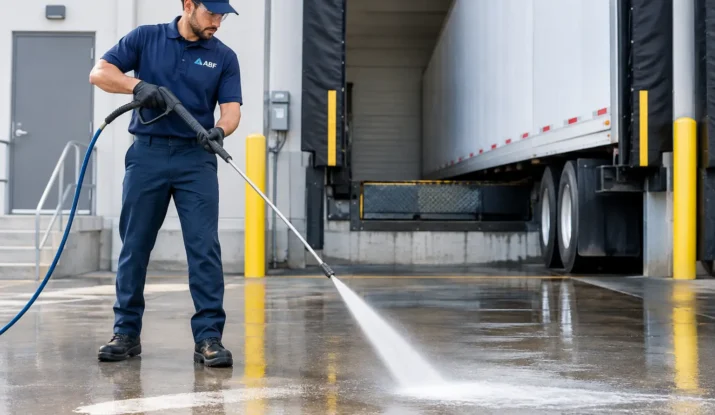
A loading dock can look clean from a distance while still holding the hazards that cause slips, odor complaints, pest activity, and drainage problems. The best loading dock washdowns do more than spray away visible dirt. They remove built-up grease, food residue, pallet debris, vehicle fluid stains, and grime in a controlled process that protects people, surfaces, and nearby storm or sanitary drains.
For Chicagoland facilities, dock conditions can change quickly. Snowmelt, road salt, wet cardboard, leaking refuse containers, and constant forklift traffic can turn a service area into a safety concern. A well-planned washdown program helps facility managers keep this high-traffic zone clean without interrupting shipping, receiving, or tenant operations.
What Makes a Loading Dock Washdown Effective?
The right approach depends on what is happening at the dock. A warehouse moving dry packaged goods has different cleaning needs than a restaurant receiving food deliveries, a healthcare property managing waste containers, or a manufacturing site with oily equipment. Frequency, water pressure, detergents, drainage controls, and timing should all be tailored to the actual conditions on-site.
An effective washdown begins with dry cleanup. Loose shrink wrap, cardboard fragments, broken pallet wood, dust, and trash should be removed before water is introduced. This keeps debris from being pushed into drains and allows crews to focus water and cleaning solutions where they are needed.
From there, trained technicians can apply the appropriate degreaser or detergent, allow it to dwell long enough to break down residue, agitate stubborn areas, and rinse systematically. High-pressure equipment can be useful, but more pressure is not always better. Excessive pressure can force contaminated water into cracks, damage aging concrete, spread grease across a larger area, or send runoff toward areas that should remain dry.
The final step is just as important: controlling and removing wastewater when required, clearing drain grates of accumulated debris, and leaving walking and vehicle paths as dry as practical. A washdown is successful when the dock is cleaner, safer, and ready to return to service, not when the water has simply moved the dirt somewhere else.
The Best Loading Dock Washdowns Address Real Dock Hazards
Loading docks collect a mix of contaminants that ordinary sweeping cannot solve. Grease and cooking oils can create a slick film near trash compactors and food-service receiving doors. Diesel residue, hydraulic fluid, and tire marks can build up around delivery lanes. Organic waste can leave persistent odors that affect employees, visitors, and adjacent tenants.
Washdowns are particularly valuable when they target the conditions creating risk. For example, a restaurant dock may need focused cleaning around grease containers, dumpsters, and receiving zones. A distribution center may need regular service around dock levelers, wheel paths, and staging areas. A multi-tenant commercial property may need periodic washdowns that improve appearance and reduce odor near shared waste areas.
Cleaning also supports pest prevention. Standing water, food residue, overflowing trash, and neglected drain areas can attract rodents and insects. Washdown service is not a substitute for a professional pest-control program, but it removes the conditions that can make pest pressure worse. When cleaning and pest management are coordinated through one accountable provider, facility teams can identify recurring trouble spots and respond before they become a larger issue.
Start With Drainage and Runoff Control
Water management is the detail that separates a professional dock washdown from an uncontrolled rinse. Before service begins, the crew should identify where water will travel, whether drains are clear, and whether the work area connects to storm drainage or another system. This assessment guides the cleaning method and helps avoid sending contaminated runoff where it does not belong.
Drain grates often catch leaves, labels, plastic wrap, sediment, and grease. If they are blocked, wash water can pool at the dock, creating a slip hazard and slowing operations. Cleaning crews should remove visible debris carefully and report drainage concerns that may require maintenance attention.
Facilities should also avoid scheduling washdowns immediately before heavy receiving periods or during freezing conditions. In the Chicago area, temperature and weather matter. Water left on concrete when temperatures drop can become an immediate hazard. A responsive service partner will plan around weather, dock schedules, and the facility’s operational requirements rather than treating every site the same.
Choose Frequency Based on Use, Not Guesswork
There is no universal washdown schedule. A lightly used office-building delivery area may need seasonal or quarterly deep cleaning. A busy food-service, retail, hospitality, industrial, or healthcare facility may benefit from monthly service or more frequent attention around waste-handling areas.
Facility managers can use visible conditions to determine whether their schedule is working. Recurring odors, slippery patches, grease stains that return quickly, pest activity, drain backups, or complaints from drivers and employees are clear signs that the dock needs more than occasional sweeping.
A practical program often combines routine porter or janitorial attention with scheduled pressure washing or washdown service. Daily or weekly removal of loose trash and spills prevents buildup. Periodic deep cleaning addresses the residue that has bonded to concrete, curbs, dock bumpers, doors, and refuse areas. This layered approach is usually more cost-effective than waiting until the dock requires emergency cleanup.
Protect Concrete, Doors, and Equipment During Service
Loading docks are working environments with many surfaces that need different treatment. Concrete can withstand substantial cleaning, but deteriorated joints, cracks, and damaged coatings require care. Dock doors, seals, electrical components, exterior signage, and nearby equipment should be protected from direct high-pressure spray.
The cleaning team should also identify sensitive areas before work starts. This may include receiving doors that cannot be blocked, electrical panels, exposed wiring, refrigeration equipment, or materials awaiting pickup. Clear communication with dock supervisors helps crews create a work zone that is safe without disrupting deliveries.
Color-coded tools and dedicated equipment can further reduce the chance of cross-contamination. This matters when a service provider also cleans interior spaces, food-service areas, restrooms, or healthcare environments. Using the correct tools in the correct areas is a straightforward but meaningful part of a professional sanitation process.
What to Expect From a Qualified Washdown Provider
The provider you choose should be prepared to discuss more than equipment. Ask how the team handles debris before washing, what cleaning products are appropriate for your site, how runoff is managed, and how the work will be scheduled around operations. The answers should be specific to your property, not a generic promise to make it look better.
Reliable service also includes trained, uniformed, insured professionals who understand workplace safety requirements. OSHA-conscious work practices, appropriate personal protective equipment, clear work-zone controls, and documented communication all matter at an active dock. For facilities working toward sustainability goals, ask whether the provider can use environmentally responsible products where appropriate, including Green Seal-certified options.
ABF Facility Services can build loading dock washdown service into a broader facility plan that includes recurring janitorial cleaning, pressure washing, trash and junk removal, pest control, and consumable supply support. Consolidating these services can reduce vendor coordination while giving facility managers one point of accountability for the conditions affecting their property.
A Cleaner Dock Supports Better Daily Operations
A clean loading dock sends a practical message to employees, delivery drivers, inspectors, tenants, and customers: this facility is maintained with care. More importantly, it reduces the everyday conditions that lead to slips, odors, drainage issues, and avoidable complaints.
If your dock has become a recurring source of grime or safety concerns, do not wait for a spill, inspection, or tenant complaint to force the issue. Request an estimate for a washdown plan built around your traffic patterns, drainage needs, weather conditions, and operating schedule. The right service should leave your dock ready for the next delivery, not create another problem for your team to manage.