
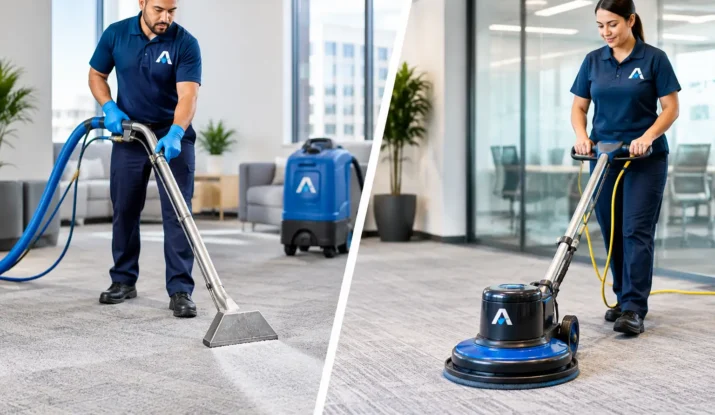
A carpet can look clean at 8 a.m. and still create problems by noon if it remains wet, resoils quickly, or carries odors from below the surface. For facility managers, the question of carpet extraction versus encapsulation is not about choosing one cleaning method forever. It is about using the right process for the soil level, traffic pattern, operating schedule, and condition of the carpet.
Both methods have a place in a well-managed commercial carpet-care program. Encapsulation is often the practical choice for frequent appearance cleaning and fast return to service. Hot water extraction provides the deeper restorative cleaning needed when embedded soil, spills, salts, and odors have built up. The strongest results usually come from a planned combination of both.
Carpet Extraction Versus Encapsulation: The Core Difference
Hot water extraction, sometimes called carpet extraction or steam cleaning, applies a cleaning solution and hot water into the carpet pile, agitates the fibers, and then recovers the moisture along with loosened soil. Professional equipment uses powerful vacuum recovery to remove as much water and contamination as possible. The goal is to flush deep soil from the carpet rather than simply improve its surface appearance.
Encapsulation is a low-moisture cleaning method. A technician applies a specialized solution that surrounds or crystallizes loose soil as the carpet dries. Mechanical agitation helps distribute the product and lift soil from the fibers. Once dry, the remaining residue and captured soil are removed through routine vacuuming.
The difference matters because commercial carpet does not become dirty in only one way. Entrance areas collect grit, road salt, moisture, and oils. Office walkways pick up fine dust and traffic lanes become matted. Break rooms, waiting areas, schools, health care facilities, and hospitality spaces may also face food spills, odors, and spot contamination. A method that works well in one situation may not be sufficient in another.
When Encapsulation Makes Sense
Encapsulation works especially well for routine maintenance in buildings that need carpets to stay presentable without extended downtime. It uses significantly less water than extraction, so carpet commonly dries much faster. In many conditions, that means areas can return to normal use within a few hours instead of remaining restricted for much of the day.
That faster dry time is valuable in active offices, retail spaces, schools, corridors, and multi-tenant properties. It can reduce the inconvenience of blocking off work areas, moving operations, or creating slip concerns around damp flooring. It is also a useful option for recurring service programs because it can help control the gradual buildup that causes traffic lanes to look dull.
Another advantage is the potential for less wicking. Wicking occurs when moisture brings soil from the carpet backing or lower fibers back to the surface as it dries. Because encapsulation is a low-moisture process, it may reduce that risk when used on moderately soiled carpet.
Still, encapsulation has limits. It is not a substitute for deep extraction when carpet is heavily impacted with dirt, sticky residue, oils, or accumulated winter salt. It is also not the best stand-alone answer for significant odor issues, water damage, or carpets affected by spills that have penetrated the backing. It improves maintenance conditions, but it does not provide the same flushing action as extraction.
When Carpet Extraction Is the Better Choice
Extraction is the right choice when soil has moved beyond the upper carpet fibers. It is particularly effective for high-traffic entryways, heavily used corridors, break rooms, conference rooms, and areas where carpet feels stiff, looks darkened, or continues to release soil after vacuuming.
In Chicago-area facilities, winter weather can make extraction especially valuable. Snow, slush, deicing materials, and street grime are carried indoors for months at a time. Even with quality floor mats and daily vacuuming, fine abrasive particles can settle deep into carpet. Removing that buildup helps protect the fibers from premature wear and improves the appearance of traffic lanes.
Extraction is also useful after an event, a major spill, a tenant turnover, or a period of deferred maintenance. It can remove a greater volume of suspended soil and cleaning solution than low-moisture methods. For facilities managing appearance standards, indoor cleanliness, and carpet-life expectations, that deeper reset can be necessary.
The trade-off is dry time. Proper extraction should not leave carpet soaked, but it does introduce more moisture than encapsulation. Drying time varies with carpet type, humidity, airflow, soil level, equipment performance, and how thoroughly the technician recovers water. A professional team plans extraction around occupancy, provides appropriate ventilation where needed, and avoids overwetting that can lead to odors, wicking, or operational disruption.
The Right Choice Depends on the Carpet and the Facility
There is no universal cleaning interval or one-method answer. A lightly soiled office with consistent vacuuming may benefit from periodic encapsulation between deeper extraction appointments. A busy medical waiting room or school corridor may need more frequent attention because of daily foot traffic and spill exposure. Industrial offices and facilities near loading areas may require deeper cleaning more often because fine dust and grit travel indoors.
Carpet construction also matters. Commercial loop carpet, carpet tiles, broadloom carpet, and patterned carpet can respond differently to moisture, agitation, and chemistry. Manufacturer recommendations should be considered before any service is scheduled. Using the wrong method or product can affect texture, color, warranties, or the performance of stain-resistant treatments.
A professional assessment should look beyond whether the carpet appears dirty. It should consider traffic patterns, visible spotting, odor, pile condition, prior cleaning history, maintenance records, and the building’s hours of operation. This allows the cleaning plan to protect both carpet appearance and the business activity taking place around it.
Why Vacuuming and Spot Response Still Matter
Neither extraction nor encapsulation can replace daily maintenance. High-filtration vacuuming removes dry soil before it is ground into the fibers, while entrance mats help capture moisture and grit before they reach carpeted areas. These basic controls reduce wear and make periodic cleaning more effective.
Fast spot response is equally important. Coffee, grease, food, ink, and tracked-in slush become more difficult to remove when they are allowed to dry or spread through repeated foot traffic. Staff should avoid using unapproved household products, which can leave sticky residues or set certain stains. Instead, use appropriate carpet-safe spot treatments and notify the cleaning provider when a spill requires specialty attention.
For facilities with multiple floor types, color-coded tools and clear cleaning procedures also help prevent cross-contamination. Restroom mops, entryway tools, and food-service cleaning equipment should never be used on carpeted office or public areas.
A Practical Commercial Carpet-Care Schedule
For many facilities, a balanced program is more effective than relying only on annual deep cleaning. Routine vacuuming and spot care handle daily conditions. Encapsulation can provide interim appearance cleaning in high-traffic areas, while scheduled extraction removes deeper soil before traffic lanes become permanently worn or discolored.
The schedule should change with the building. A retail location or property lobby may need frequent low-moisture maintenance and seasonal extraction. A quieter professional office may need less frequent service. Facilities with heavy winter traffic should consider a post-winter extraction plan to address accumulated salt and grit before it damages the carpet fibers.
ABF Facility Services evaluates carpet condition, building use, and access requirements to recommend a practical approach. Trained, uniformed, insured teams use professional equipment and proven cleaning processes designed to support clean, healthy, presentable commercial environments without unnecessary disruption.
The best next step is to walk the carpeted areas that generate the most complaints or receive the most traffic. If those zones look worn despite regular vacuuming, a tailored mix of encapsulation maintenance and restorative extraction can help protect the carpet, the facility’s appearance, and the experience of everyone who walks through the door.