
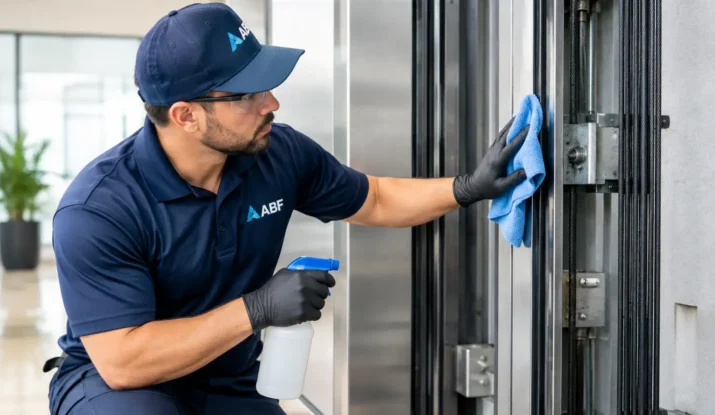
A dirty elevator entrance is more than a cosmetic issue. Grit in the door sill can affect door movement, create a poor first impression for tenants and visitors, and make an otherwise well-maintained lobby look neglected. Knowing how to clean elevator tracks correctly helps facility teams protect a high-traffic area without interfering with sensitive elevator equipment.
For most commercial properties, the accessible area at the elevator threshold is the door sill or floor track – the narrow channel beneath the elevator doors. This guide addresses cleaning that visible, accessible surface. It does not replace service performed by a qualified elevator technician.
Start With Safety and Clear Boundaries
Elevator tracks collect dust, salt, paper scraps, hair, sand, and other debris carried in on shoes, carts, and rolling equipment. In Chicago-area properties, winter de-icing residue and moisture can make buildup especially persistent. The goal is to remove soil from the sill while keeping liquids, tools, and cleaning materials out of the elevator door mechanism.
Before cleaning, keep the doors open only as long as needed and place a wet-floor sign near the work area if mopping or spot-cleaning nearby floors. Never block the doorway, force the doors apart, insert tools into gaps beyond the visible sill, or spray cleaner directly into the track.
Do not attempt to clean inside the elevator shaft, behind door panels, or around electrical components. If debris appears lodged deep in the track, doors drag or hesitate, unusual sounds occur, or the doors fail to close consistently, notify the building’s elevator service provider. Those are maintenance concerns, not routine janitorial tasks.
Supplies for Cleaning Elevator Door Tracks
The best approach uses controlled, low-moisture tools. A trained cleaning team should have a dedicated set of tools for detail work so soil from restrooms, kitchens, or exterior areas is never transferred to elevator entrances.
- A high-filtration vacuum with a narrow crevice attachment
- A soft detail brush or clean, dry paintbrush
- Color-coded microfiber cloths
- A small bucket of neutral cleaner diluted according to label directions
- A lightly damp microfiber mop or floor pad for the surrounding floor
- Wet-floor signs and disposable gloves when conditions require them
Avoid steel wool, abrasive pads, metal picks, and harsh degreasers. These can scratch stainless steel, damage painted surfaces, leave residue, or push debris farther into the door sill. Excess water is also a risk. Elevator tracks should be cleaned with a damp cloth, not flooded with solution.
How to Clean Elevator Tracks Step by Step
1. Inspect the sill before you begin
Look at the track and the surrounding flooring. Identify loose debris, sticky residue, salt buildup, gum, or dark edges where soil has collected against the threshold. Check whether the doors are opening and closing normally before cleaning. If the operation looks irregular, report it before proceeding.
This quick inspection helps determine the right level of cleaning. A daily vacuum may be enough for a busy office lobby, while a neglected track may need careful detail work and follow-up maintenance.
2. Remove dry debris first
Use the vacuum crevice tool to remove visible dirt from the accessible channels. Work slowly along the sill rather than making quick passes that leave debris behind. A soft brush can loosen packed dust while the vacuum captures it.
Keep the vacuum attachment at the surface. Do not force it into narrow openings or use excessive pressure around the door edges. The objective is to lift debris out, not disturb the components below the sill.
3. Detail the visible grooves with microfiber
Wrap a slightly damp microfiber cloth around a plastic detail tool or use a folded cloth to reach the accessible top grooves. Wipe in short, controlled motions and refold the cloth as it becomes soiled. For sticky spots, apply a small amount of neutral cleaner to the cloth first, never directly into the track.
If buildup remains, repeat the vacuum-and-wipe process rather than escalating to abrasive chemicals. Several light passes are safer and usually more effective than one aggressive attempt.
4. Clean the threshold and surrounding floor
After the track is detailed, wipe the metal threshold, door faces at hand level, and the floor immediately in front of the elevator. This matters because loose soil from surrounding carpet, tile, or hard flooring will quickly migrate back into the sill.
Use the appropriate floor-care method for the surface. For example, polished stone and luxury vinyl tile may need different cleaning solutions and pads. A neutral, manufacturer-compatible product protects the finish while removing the film that makes elevator entrances look dull.
5. Dry the area and check the result
Use a clean, dry microfiber cloth to remove any remaining moisture from the threshold. Make sure no fibers, paper towels, or cleaner residue remain in the visible channels. Once the floor is dry, remove signage and observe one normal door cycle from a safe distance.
The finished area should look clean and orderly, but appearance is not the only standard. There should be no standing moisture, slippery residue, or debris that could be tracked back into the sill.
Set the Right Cleaning Frequency
There is no single schedule for every building. Cleaning frequency depends on traffic, weather, floor type, building use, and how much debris enters through nearby doors. A medical office, retail property, school, hotel, industrial facility, or multi-tenant office building may each need a different routine.
For many commercial facilities, vacuuming elevator sills during daily janitorial service is appropriate. Detailed wiping may be needed several times each week in high-traffic locations. A more thorough inspection should be part of regular quality-control rounds, particularly after snow, rain, construction work, move-ins, events, or trash removal activity.
Properties with lobby mats should also maintain those mats consistently. Clean, properly positioned entrance mats reduce the sand, salt, and moisture that reach elevator tracks. This is a practical example of preventive cleaning: addressing soil at the entrance reduces labor and protects finishes throughout the building.
Common Mistakes That Create Bigger Problems
The most common mistake is treating an elevator sill like an ordinary floor crevice. Pouring water into the channel, spraying chemicals directly into it, or using a mop that is too wet can introduce moisture where it does not belong. Even a product marketed as all-purpose can leave a residue that attracts more dirt.
Another mistake is overlooking the area until doors begin to look dirty or tenants complain. By then, soil may be packed into the visible channels and the entrance may require more labor to restore. Consistent light maintenance is more efficient than periodic heavy cleaning.
Finally, janitorial staff should not try to correct mechanical symptoms. A clean track supports a professional presentation, but it does not solve door alignment, sensor, roller, or controller issues. Clear communication between the cleaning team, facility manager, and elevator contractor keeps responsibilities in the right place.
When Professional Facility Support Helps
Elevator entrances often reveal whether a property has a reliable cleaning program. They are high-visibility touchpoints used by employees, tenants, patients, customers, delivery teams, and visitors throughout the day. When floors, thresholds, doors, and nearby glass are cleaned as one area, the result is safer footing and a more polished arrival experience.
For properties that need recurring janitorial support, ABF Facility Services can build elevator entrance detail work into a broader cleaning plan that includes floor care, lobby cleaning, consumable supply, waste removal, and scheduled specialty services. Trained, uniformed teams use controlled cleaning methods, microfiber tools, and products selected for the surfaces being maintained.
A clean elevator track may be a small detail, but it is one people notice every time the doors open. Keeping it on a dependable schedule helps protect the equipment, supports a safer facility, and shows visitors that the rest of the building receives the same level of care.