
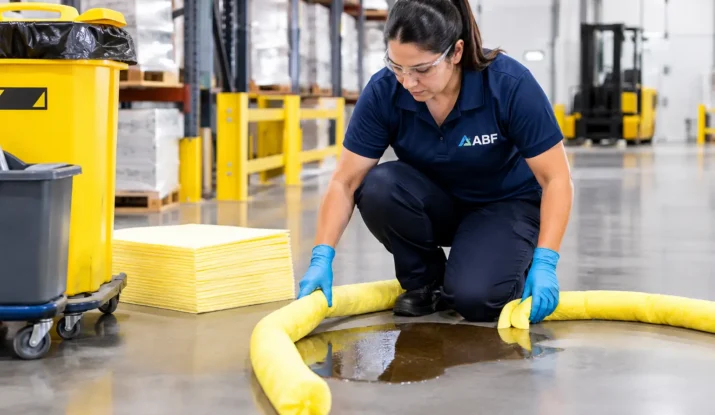
A leaking drum near a loading dock can become a much larger problem in minutes. Forklifts may track material across travel lanes, employees may slip, inventory can be damaged, and a minor issue can turn into a reportable incident. Clear warehouse spill procedures give employees a practical way to respond quickly without putting themselves, coworkers, or the facility at greater risk.
For warehouse and industrial facility managers, the goal is not simply to get the floor clean. The goal is to control the hazard, protect people and product, document what happened, and prevent the same condition from returning. A written plan, accessible supplies, and trained staff make that possible.
Start With Safety, Not Cleanup
The first decision after a spill is whether employees can safely handle it. That depends on what spilled, how much material is involved, where it is moving, and whether there are signs of immediate danger such as fumes, fire risk, strong odors, or a reaction with other materials.
Employees should stop work in the affected area, keep people and equipment away, and notify the designated supervisor or safety contact. If the substance is unknown, hazardous, flammable, corrosive, or producing vapors, staff should not attempt cleanup unless they are trained and authorized for that specific response. Isolate the area and follow the facility’s emergency response process.
For a small, known spill such as water, a non-hazardous beverage, or a familiar cleaning product used according to its label, trained personnel may be able to manage the cleanup with the proper personal protective equipment and spill supplies. The key distinction is simple: no one should guess what a substance is or take on a cleanup that exceeds their training.
Secure the Area Before Anyone Starts Work
A spill zone needs visible control. Place caution signs, cones, or barricades around the affected area, including nearby travel paths where liquid may have spread. Shut down forklifts or pallet jacks moving through the area until the surface is safe.
This step matters just as much for a small water spill as it does for an oil leak. Wet floors are a leading source of preventable workplace injuries, and tire traffic can spread residue well beyond the original location. In a busy warehouse, an employee may not see a slick patch until it is too late.
Identify the Material and Review Its Hazards
Once the area is controlled, the responsible employee or supervisor should identify the material. Review the product label, container markings, and Safety Data Sheet, often called an SDS. The SDS provides critical direction on exposure risks, required protective equipment, incompatibilities, containment methods, and disposal requirements.
Do not rely on appearance alone. Clear liquids can be water, solvents, cleaning chemicals, or other materials with very different handling requirements. Likewise, a damaged container may hold a product that reacts badly with common absorbents or should never be washed into a drain.
A facility should keep current SDS information readily available to employees on every shift. Digital access is useful, but it should be dependable during a power outage or network disruption. Managers also need to make sure employees know who has authority to determine whether a spill can be handled internally or requires outside emergency support.
Use the Right Spill Kit for the Material
A spill kit is only useful when it matches the materials used in the building. General-purpose absorbents may work for water-based liquids, oils, and many non-hazardous fluids, but chemical spills can require specialized neutralizers, protective gear, or disposal containers.
Place spill kits where incidents are most likely to occur: receiving docks, battery charging areas, chemical storage rooms, maintenance spaces, production lines, waste handling areas, and near high-traffic warehouse aisles. Kits should be clearly marked and inspected on a regular schedule. A kit with missing pads, torn gloves, or an empty disposal bag creates delay at the worst possible moment.
For many facilities, color-coding is helpful. Separate kits and labels can reduce confusion between universal absorbents, oil-only materials, and chemical-response products. This approach works best when the color system is included in employee training and posted near storage areas.
Personal Protective Equipment Must Fit the Risk
Gloves are not a one-size-fits-all control. The right glove material depends on the substance, and some spills may require safety glasses, face protection, protective footwear, aprons, or respiratory protection. Employees should never enter a spill area without the protective equipment identified by the SDS and the facility’s safety procedures.
There is a practical trade-off here. Stocking excessive equipment can create confusion and poor maintenance, while stocking too little can leave workers unprotected. A site-specific assessment helps determine what supplies are appropriate for the products and processes in each area.
Contain, Absorb, and Clean Methodically
When trained personnel are authorized to respond, they should first prevent the spill from spreading. Use absorbent socks, pads, or barriers to protect drains, doorways, loading areas, and travel lanes. Containment should generally begin at the outside edge and move inward so the material is not pushed across a wider area.
After the material is contained, apply the correct absorbent and allow it to work as directed. Collect used materials with compatible tools and place them in labeled containers or bags for proper disposal. Do not sweep unknown powders into the air, mix cleaning chemicals, or use a wet vacuum on a spill unless the equipment and procedure are approved for that material.
The final cleaning step should address the residue left behind. A floor can look dry while still being slick, stained, or contaminated. Use the proper floor-cleaning method for the surface and product involved, then inspect the area before removing barriers. In facilities with polished concrete, coated floors, or specialty surfaces, the wrong cleaner can damage the finish or reduce slip resistance.
Manage Waste Correctly
Used absorbents, damaged containers, contaminated gloves, and cleanup tools may need special handling. Disposal requirements depend on the material, local regulations, and the facility’s waste program. Treating all cleanup waste as ordinary trash can create compliance issues and expose employees or waste handlers to unnecessary risk.
The supervisor should confirm that waste is labeled, secured, and stored in the correct designated area until disposal. If a spill reaches a drain, soil, public area, or other sensitive location, additional reporting or response actions may be required. This is another reason detailed procedures should name the internal contacts, emergency numbers, and escalation steps employees must follow.
Document the Incident While Details Are Fresh
A short incident report is valuable even when a spill is resolved quickly. Record the date, time, location, material involved, estimated quantity, source of the spill, response actions, injuries or exposures, waste-disposal method, and any damage to inventory or equipment. Photos can help document conditions when appropriate.
Documentation is not about assigning blame. It helps managers identify patterns. A recurring oil leak beneath the same forklift, poorly stored chemicals in receiving, or repeated spills around a battery station points to a maintenance, storage, or training issue that needs correction.
Prevent the Next Spill Through Routine Facility Care
The most effective warehouse spill procedures include prevention, not just response. Inspect storage racks, drums, valves, hoses, charging stations, floor drains, and waste areas routinely. Keep containers closed, labeled, and protected from forklift contact. Use secondary containment where appropriate, and repair damaged flooring that makes thorough cleaning difficult.
Housekeeping also has a direct effect on spill safety. Clear aisles make leaks easier to spot. Clean, organized storage reduces the chance that incompatible materials are placed together. Regular industrial cleaning removes oil, dust, packaging debris, and residue before they become a slip, fire, or contamination concern.
ABF Facility Services supports Chicagoland warehouses and industrial facilities with dependable cleaning, sanitation, floor care, waste removal, and supply solutions tailored to the conditions on site. A consistent service plan can help keep spill-prone areas cleaner, stocked, and ready for daily operations.
Train for Real Conditions, Not Just a Checklist
Procedures work when employees understand how to apply them during a busy shift. Train new hires before they work around chemicals or material-handling areas, then refresh that training regularly. Use realistic scenarios, such as a leaking pallet in receiving or a fluid trail from a forklift, so employees can practice who to call, how to isolate the area, and when not to intervene.
Different departments may need different instructions. A maintenance technician, warehouse associate, office employee, and contracted cleaner do not all have the same responsibilities or access to equipment. Define those roles clearly, then review the plan after any incident or operational change.
A clean, well-supplied facility makes safe response easier, but it does not replace preparation. When employees know where the spill kits are, understand the limits of their training, and trust that management will respond quickly, a stressful incident becomes a controlled task instead of an avoidable disruption.