
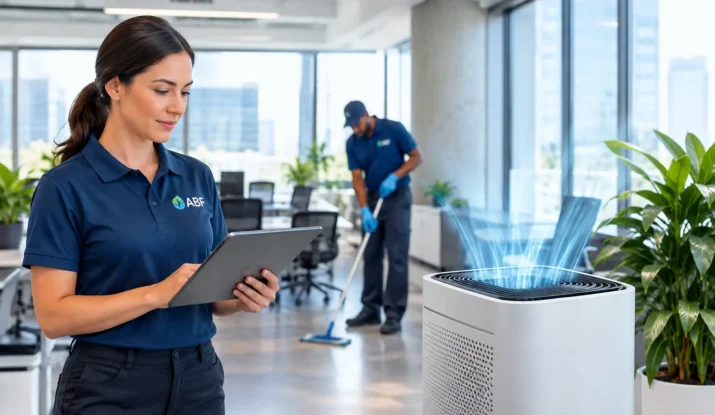
A stale conference room at 2:00 p.m., recurring dust on reception counters, musty odors after a rainy week, and employee complaints about dry eyes are not separate facility issues. They are often signs that workplace indoor air trends are becoming part of daily operations. For property and facility managers, indoor air quality is no longer a background concern handled only when someone reports a problem. It affects comfort, cleanliness, productivity, tenant perception, and the way a facility plans cleaning and maintenance.
The practical challenge is that air quality is influenced by many systems at once. HVAC performance, occupancy, outdoor conditions, cleaning methods, flooring, building materials, restroom maintenance, and even loading-dock activity can all affect what occupants smell, see, or breathe. A dependable response starts with understanding where cleaning can help, where mechanical maintenance is necessary, and how to keep the whole facility working toward the same standard.
Why Workplace Indoor Air Trends Matter to Facility Managers
The strongest trend is a shift from reactive complaints to visible, preventive facility care. Employees, tenants, customers, and visitors have become more aware of air freshness, dust, odors, and the condition of shared spaces. They may not use technical terms such as particulate matter or volatile organic compounds, but they notice when a lobby feels stuffy, a restroom smells neglected, or a workspace has dust accumulating around vents and equipment.
For offices, schools, health care settings, restaurants, retail spaces, and industrial facilities, perception matters because it shapes trust. A clean-looking workplace can lose credibility quickly if odors linger or dust returns immediately after routine service. Conversely, a facility that feels clean, fresh, and well maintained supports employee confidence and gives visitors a better first impression.
Air quality also has an operational side. Dust and debris can settle on floors, high ledges, workstation surfaces, and supply vents. Moisture can contribute to odors and create conditions that require prompt attention. Poorly managed waste or restroom consumables can create odor sources that circulate beyond their point of origin. These conditions do not always mean the HVAC system has failed, but they do require coordinated investigation rather than surface-level fixes.
The Indoor Air Factors Showing Up in More Facilities
Higher expectations for filtration and dust control
Facilities are paying closer attention to how cleaning equipment handles fine dust. Traditional sweeping or low-quality vacuuming can move particles from one surface into the air before they settle elsewhere. High-filtration vacuums, microfiber dusting tools, and properly maintained equipment help capture debris instead of redistributing it.
This is particularly relevant in high-traffic offices, schools, health care environments, and industrial spaces. Entryways bring in outdoor soil, salt, pollen, and moisture. Warehouses may contend with packaging debris, vehicle traffic, and production-related dust. The right cleaning frequency and equipment should reflect the actual conditions of the space, not a generic schedule.
More attention to odors as a maintenance signal
Odors are increasingly treated as a facility diagnostic issue, not simply something to mask with fragrance. Air fresheners may temporarily cover a smell, but they do not address its source. Restroom drains, trash rooms, break areas, damp carpeting, waste containers, food residue, and pest activity can all contribute to persistent odors.
A better approach is source control: remove waste on schedule, clean and disinfect high-use areas, maintain restroom fixtures, address spills promptly, and investigate recurring odor zones. If an odor is tied to ventilation, plumbing, or moisture intrusion, cleaning teams should communicate the finding quickly so the responsible maintenance provider can take the next step.
Low-chemical and fragrance-conscious cleaning
Many organizations are reducing heavily fragranced products and selecting cleaning solutions with a lower environmental impact. This is not a case for using weaker products or skipping disinfection where it is needed. It is a case for matching the product to the task, following label instructions, controlling dilution, and avoiding unnecessary chemical residue in occupied areas.
Green Seal-certified products can be a useful part of a facility program when they are chosen for the surface and soil level involved. A school may prioritize low-odor daily cleaning in classrooms, while a food-service area may require a different product and sanitation protocol. The trade-off is straightforward: product selection must support both cleaning performance and occupant comfort.
Moisture awareness and faster response
Water is one of the clearest warning signs in indoor environments. Wet entry mats, recurring restroom leaks, damp carpet, condensation near windows, and water intrusion after severe weather all need attention before they become larger problems. Chicago-area facilities see this firsthand through snow, rain, road salt, and seasonal temperature swings.
Cleaning teams can help by removing standing water, placing and servicing floor mats, cleaning affected surfaces, and reporting visible concerns immediately. However, cleaning alone cannot correct a roof leak, pipe failure, drainage issue, or HVAC condensation problem. Fast documentation and coordination between cleaning, building engineering, and property management are essential.
How Cleaning Programs Support Better Indoor Air
A commercial cleaning program has a direct role in reducing the dirt, dust, and odor sources that affect how a workplace feels. The best results come from a detailed scope that accounts for traffic patterns and building use. A lobby with constant visitor traffic needs a different plan than a back-office suite, and an industrial facility needs different methods than a medical waiting room.
High-touch disinfection remains valuable in shared environments, but it should not overshadow routine soil removal. Dusting horizontal surfaces, vacuuming upholstered seating, maintaining carpets, cleaning floor edges, and servicing entrances all contribute to cleaner conditions. Neglected hard-to-reach areas – such as vents, baseboards, blinds, high ledges, and behind furniture – can gradually undermine the appearance of an otherwise clean space.
Floor care is especially connected to indoor conditions. Carpet can hold dry soil, allergens, and odors when it is not vacuumed thoroughly or cleaned on an appropriate cycle. Hard floors can collect tracked-in debris at corners and edges, while worn finishes may make routine cleaning less effective. Periodic carpet extraction, hard-floor scrubbing, stripping and waxing when appropriate, and entry-mat service can protect flooring while reducing the amount of soil that moves through the building.
Color-coded cleaning systems also help prevent cross-contamination between restrooms, break rooms, offices, and other areas. Combined with clean microfiber tools and trained personnel, this process supports consistent results without spreading soil from one part of the facility to another.
What Cleaning Cannot Solve on Its Own
Indoor air quality is a shared responsibility. A janitorial provider can identify buildup, odors, visible moisture, and recurring dust patterns, but it cannot replace HVAC inspection, ventilation balancing, filter replacement, mold assessment, plumbing repairs, or building-envelope maintenance.
Facility managers should be cautious about quick fixes. More frequent fragrance use does not resolve a drain issue. Increasing disinfectant use does not improve ventilation. A new air purifier may help in a specific room, but it does not automatically correct a system-wide airflow problem. The right answer depends on the building, the complaint, the source, occupancy levels, and the condition of mechanical systems.
When concerns persist, document where and when they occur. Note whether the issue is seasonal, limited to a room, linked to weather, strongest at certain times of day, or associated with a specific activity. This information helps cleaning and maintenance partners respond with facts rather than assumptions.
A Practical Response Plan for Facility Leaders
Start with a walkthrough that looks beyond visible dirt. Review entryways, restrooms, break rooms, trash areas, carpeted zones, supply vents, mechanical-adjacent spaces, and areas where occupants have reported discomfort. Look for dust accumulation, water stains, damaged mats, overloaded trash bins, recurring odors, and cleaning gaps.
Next, align the cleaning scope with what the building actually needs. That may mean increasing entryway attention during winter weather, scheduling carpet care before odors become embedded, adding high-dusting in a warehouse, or adjusting restroom service around peak occupancy. Reliable service is not simply arriving on schedule. It is adapting the work to conditions while maintaining clear accountability.
Finally, make reporting part of the routine. Uniformed, trained cleaning teams are often the first people to see an overflowing drain, a ceiling stain, pest evidence, a damaged floor finish, or unusual dust around a vent. A responsive provider should communicate these observations promptly and document completed work so managers can make informed decisions.
For Chicagoland facilities, ABF Facility Services can support this approach through integrated janitorial care, floor and carpet maintenance, sanitation, waste removal, consumable replenishment, and related facility services. One accountable provider can reduce the administrative burden of coordinating routine cleaning details while helping managers keep attention on the larger building issues that require action.
Clean air is not created by one product, one machine, or one overnight service. It is supported by consistent cleaning, well-maintained building systems, prompt reporting, and a facility plan that treats small warning signs before they become employee, tenant, or customer complaints.