
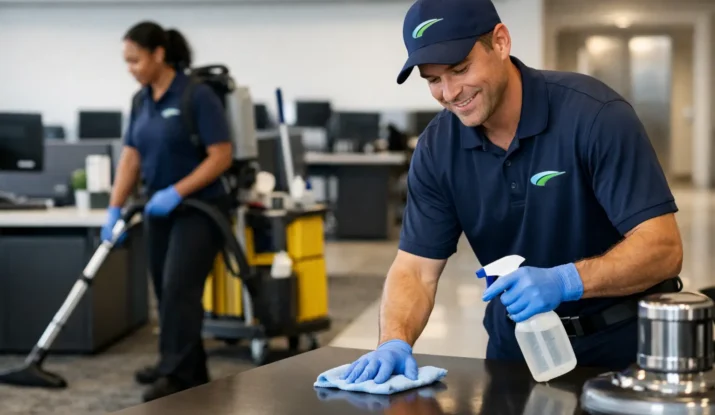
A facility can look acceptable at 8 a.m. and still create problems by noon. Restrooms run short on paper products, entry floors show salt and moisture, trash builds up in break areas, and high-touch surfaces receive inconsistent attention. Effective Crestwood cleaning is not simply about making a space look better after hours. It is an operational service that helps businesses protect their property, support employee health, and give tenants, customers, and visitors confidence when they walk through the door.
For offices, medical facilities, retail locations, schools, restaurants, warehouses, and multi-tenant properties, the right cleaning plan should reflect how the building is actually used. A lightly occupied office has different needs than a busy customer-facing lobby or an industrial floor exposed to dust, debris, and forklift traffic. The goal is consistent execution, not a one-size-fits-all checklist.
What Crestwood Cleaning Should Cover
A dependable commercial cleaning program starts with recurring janitorial service, but it should not end there. Daily or scheduled cleaning typically addresses restrooms, break rooms, common areas, trash removal, vacuuming, dusting, and touchpoint disinfection. The frequency depends on foot traffic, operating hours, occupancy, and the expectations of the people using the facility.
Restrooms deserve especially close attention. They are one of the clearest indicators of whether a property is being maintained well. A properly managed restroom program includes cleaning and disinfection, odor control, waste removal, and regular replenishment of soap, paper towels, toilet tissue, liners, and hand sanitizer. Cleaning a restroom without monitoring supplies leaves the job incomplete.
Entryways and floors are another priority in Crestwood facilities, particularly during Illinois winters. Moisture, salt, and grit can quickly damage hard-floor finishes, stain carpets, and create slip hazards. Routine vacuuming and mopping help, but periodic machine scrubbing, carpet extraction, stripping, waxing, or burnishing may be needed to preserve the appearance and life of the flooring.
A full facility plan may also include pressure washing, window-area cleaning, post-construction cleanup, sanitization services, pest-control coordination, and trash or junk removal. Not every property needs every service on a recurring basis. The value comes from having one accountable provider that can schedule and manage the services when conditions call for them.
Why Consistency Matters More Than Occasional Deep Cleaning
A specialty deep clean can correct a visible problem, but it cannot replace reliable day-to-day maintenance. When routine cleaning is missed or rushed, small issues become larger ones: odors settle in, floors lose their finish, dust accumulates on surfaces and vents, and employees begin to notice that supplies are not available when needed.
Consistency also matters for compliance-minded environments. Health care settings, food-service operations, schools, and industrial facilities often have sanitation procedures that require more than an informal approach. Trained crews should understand appropriate cleaning sequences, chemical labeling, personal protective equipment, and the difference between cleaning, sanitizing, and disinfecting.
Color-coded cleaning systems can reduce the risk of cross-contamination by assigning tools to specific areas, such as restrooms versus general office spaces. Microfiber cloths and high-filtration vacuums can improve dust capture compared with worn or poorly maintained equipment. These details may not be obvious to a visitor, but they are central to a cleaner, healthier workplace.
Build a Cleaning Schedule Around Your Building
The best cleaning schedule follows the activity inside the property. A professional office may need nightly service for common areas and restrooms, with detailed floor care scheduled quarterly. A retail store may need more frequent attention at entrances, fitting rooms, checkout areas, and public restrooms. An industrial operation may require cleaning that accounts for production schedules, safety rules, dust control, and debris removal.
Start by identifying the areas that receive the most use and the issues that generate the most complaints. For many facilities, those are entryways, restrooms, break rooms, elevators, lobbies, and trash collection points. Then determine when service can be performed with minimal disruption. After-hours cleaning is often practical for offices, while daytime porter service may be more appropriate for buildings with continuous public traffic.
It also helps to distinguish between routine, periodic, and as-needed work. Routine work includes the recurring tasks that keep conditions stable. Periodic work covers carpet extraction, detailed hard-floor care, high dusting, and pressure washing. As-needed work addresses unexpected needs such as move-outs, event cleanup, overflow waste, pest concerns, or an urgent sanitation request.
A clear scope of work prevents the common problem of assuming a task is included when it is not. It also gives facility managers a practical way to evaluate service quality. If the agreed service includes restocking dispensers, trash removal, floor care, and touchpoint cleaning, those items should be consistently visible in the completed work.
One Provider Can Reduce Facility Headaches
Managing multiple vendors can create avoidable gaps. One company may clean the restroom but not supply the paper products. Another may provide floor mats but not maintain the floors beneath them. A third may handle waste removal, leaving the facility manager to coordinate schedules, invoices, access procedures, and follow-up calls.
A single-provider approach can simplify that work. When janitorial cleaning, consumable replenishment, floor care, sanitation, pest programs, rental mats, reusable towels, mops, gloves, and restaurant linens are managed through one relationship, there is clearer accountability. It can also make it easier to respond quickly when a building’s needs change.
That does not mean every service must be bundled. A small office may only need recurring cleaning and restroom supplies. A larger commercial property may benefit from a more integrated program with regular inspections, specialty floor care, seasonal exterior cleaning, and scheduled inventory replenishment. The right arrangement depends on the building, budget, and operational priorities.
Questions to Ask Before Choosing a Cleaning Partner
Price matters, but the lowest proposal can become expensive if work is inconsistent, crews do not show up, or cleaning deficiencies lead to tenant complaints and early replacement of flooring. A more useful evaluation considers how the provider will perform after the contract begins.
Ask whether team members are trained, uniformed, insured, and prepared to follow OSHA-conscious work practices. Confirm how service concerns are reported and resolved, who oversees quality, and whether the provider can adapt when your hours, occupancy, or facility requirements change. For properties that prioritize environmental practices, ask about Green Seal-certified products and the methods used to control chemical use and waste.
Equipment is worth discussing, too. Commercial-grade vacuums, auto scrubbers, extractors, pressure-washing equipment, and floor machines support a different level of work than basic tools alone. The equipment should fit the site, however. Heavy machinery is useful for large hard-floor areas, while a smaller medical office may need quieter, more detailed service performed around staff and patients.
Finally, ask how supplies are tracked. A cleaning crew cannot keep a restroom fully functional if dispensers are empty and replacement products arrive late. A managed supply program should account for usage patterns, storage limits, and changes in occupancy so the facility stays stocked without excessive overordering.
A Practical Standard for Cleaner Facilities
Commercial cleaning should be measurable in the daily condition of the building. Floors should be cared for rather than merely covered up. Restrooms should be clean, odor-controlled, and stocked. Waste should be removed before it becomes a complaint. High-touch areas should receive attention appropriate to the facility’s traffic and sanitation needs.
ABF Facility Services supports Crestwood businesses with customized commercial cleaning, maintenance, sanitation, specialty floor care, and supply solutions managed through one responsive relationship. Trained, uniformed teams use professional equipment, microfiber systems, and sustainable product options to help facilities stay presentable and ready for work.
When reviewing your current service, walk the property as a visitor would. Check the entrance, restrooms, floors, break areas, and supply levels at different times of day. The gaps you see are often the clearest starting point for a cleaning plan that works harder for your facility.