
A facility can look clean at 8 a.m. and still create unnecessary waste, leave behind strong chemical odors, or use more water and supplies than the job requires. Sustainable cleaning addresses those practical gaps. For commercial properties, it is not about choosing a label or making superficial claims. It is about maintaining a consistently clean, healthy, and presentable workplace while making smarter decisions about products, equipment, labor, inventory, and disposal.
For facility managers, the goal is straightforward: protect people, property, and daily operations without compromising cleaning results. A well-managed program should support sanitation standards, indoor air quality, asset life, and responsible resource use at the same time.
What Sustainable Cleaning Means in a Commercial Facility
Sustainable cleaning is a structured approach to cleaning that reduces environmental impact while delivering dependable hygiene and appearance standards. It considers the full process, from the chemicals selected and how they are diluted to the tools used, the amount of disposable material consumed, and the way supplies are replenished.
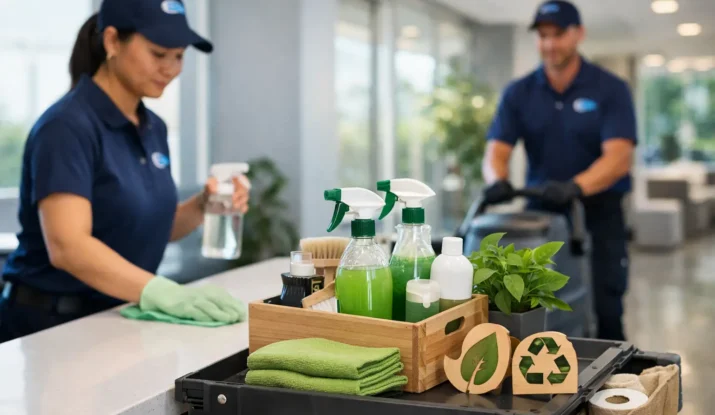
In an office, school, medical setting, restaurant, retail space, or industrial facility, that often means using appropriate Green Seal-certified products where suitable, microfiber tools, high-filtration vacuums, reusable mop systems, and color-coded cleaning procedures. It also means training teams to use the correct amount of product rather than assuming more chemical creates a cleaner surface.
The distinction matters because a product alone does not make a cleaning program sustainable. Even a responsibly formulated cleaner can be wasted through poor dilution, unnecessary repeat applications, or inconsistent staff procedures. On the other hand, a trained team using the right product, equipment, and process can improve cleaning quality while reducing avoidable consumption.
Why Sustainable Cleaning Matters to Facility Operations
The most immediate benefit is often a cleaner, more comfortable environment for employees, visitors, tenants, and customers. Strong fragrances and harsh chemical residue can be distracting in offices and public spaces. Better product selection, proper ventilation, and controlled application can help reduce those concerns while maintaining the cleaning performance the facility requires.
Sustainable practices also protect the surfaces that cost the most to replace. Floors, carpet, restroom fixtures, countertops, entrance mats, and high-touch surfaces all respond better to cleaning methods designed for their material and condition. Using the wrong degreaser on a finished floor or over-wetting carpet can create damage that no amount of routine janitorial service can quickly correct.
There is also an administrative benefit. When cleaning services, restroom consumables, floor mats, gloves, reusable towels, and related supplies are managed through a coordinated program, facility teams spend less time chasing inventory shortages or contacting separate vendors. Reliable replenishment helps prevent empty dispensers, missing hand soap, and last-minute supply orders that disrupt the workday.
For Chicago-area properties managing changing weather, heavy foot traffic, salt residue, and frequent entryway maintenance, sustainable operations can be especially practical. Reusable mat programs, targeted floor care, and efficient cleaning schedules help control soil before it travels deeper into the building.
The Practices That Make the Greatest Difference
Use products matched to the task
A sustainable program does not mean using one all-purpose product for every surface. Restrooms, food-service areas, break rooms, hard floors, carpet, and industrial spaces have different soils and sanitation needs. The most responsible approach is to select products that are effective for the task and apply them according to manufacturer directions.
Disinfection is one area where balance is essential. Facilities with health, food safety, or high-contact requirements may need EPA-registered disinfectants and defined dwell times. In those situations, the priority is effective infection-control procedure. Sustainable cleaning supports that work by avoiding unnecessary broad use of disinfectants where routine cleaning is sufficient and by helping teams apply required products correctly when disinfection is needed.
Reduce disposable material without reducing hygiene
Paper towels, wipes, mop heads, gloves, liners, and restroom products can create substantial recurring waste. Not every disposable item should be eliminated, particularly where hygiene protocols require single-use materials. However, many facilities can reduce consumption through durable microfiber cloths and mops, controlled paper dispensing, reusable floor-care tools, and properly sized trash liners.
Microfiber is especially useful because its fibers capture dust, soil, and moisture effectively with less product and water than many traditional materials. When handled through a proper laundering process and replaced when worn, microfiber tools can provide consistent results across desks, restrooms, touchpoints, and hard surfaces.
Improve indoor air quality through equipment and technique
Cleaning affects more than what people see. Dust, fine particles, allergens, and odors can influence how a facility feels to occupants. High-filtration vacuums help capture fine debris rather than pushing it back into the air. Low-odor products, careful chemical storage, and clean equipment also support a more comfortable indoor environment.
Technique matters just as much as equipment. Dusting before vacuuming, maintaining vacuum filters, allowing floors to dry fully, and avoiding over-saturation on carpet are small details with meaningful operational value. They reduce rework, help prevent slips, and preserve the condition of finishes and flooring.
Control dilution, water use, and inventory
Overusing chemical concentrates is costly and can leave residue on surfaces. Under-diluting can also reduce cleaning performance. Closed-loop dilution systems, clearly labeled bottles, and trained personnel help ensure teams use the right amount each time.
Water use deserves the same attention. Pressure washing, restroom cleaning, floor scrubbing, and carpet extraction all require water, but more water is not automatically better. Modern equipment, scheduled maintenance, and task-specific methods can reduce waste while still removing soil effectively. A carpet extraction program, for example, should be based on traffic levels, staining, and drying conditions rather than a one-size-fits-all schedule.
Sustainable Cleaning Requires Consistent Training
The strongest products and equipment cannot compensate for inconsistent execution. Cleaning professionals need clear procedures for chemical handling, safety data, cross-contamination prevention, equipment use, waste sorting, and incident reporting. OSHA-compliant practices are part of responsible cleaning because sustainability includes protecting the people performing the work.
Color-coded cleaning systems are a practical example. Assigning specific colors to restrooms, general surfaces, food-service areas, or other zones helps prevent a cloth or mop from moving from a high-risk area to a lower-risk one. This approach supports sanitation while extending the useful life of reusable tools through organized handling and laundering.
Uniformed, insured teams with defined quality checks also give facility managers a clearer line of accountability. If a restroom needs attention, a floor finish is wearing unevenly, or supplies are running low, the provider should identify the issue early and respond with a workable solution.
How to Build a Practical Sustainable Cleaning Plan
Start with the facility’s real conditions, not a generic checklist. Review occupancy, hours of operation, foot traffic, floor types, restroom use, food-service activity, waste volume, and any industry-specific sanitation requirements. A medical office, warehouse, restaurant, and corporate office may all value sustainability, but their cleaning plans should not look identical.
Next, establish measurable priorities. That could include reducing paper-product overuse, improving restroom supply availability, decreasing chemical consumption, extending carpet life, or improving the appearance of entrance areas. The best measures are operational: fewer supply emergencies, fewer tenant complaints, better floor condition, reduced rework, and reliable completion of scheduled service.
Finally, review the program regularly. Seasonal conditions, staffing changes, special events, construction activity, and shifts in occupancy can all change cleaning needs. A provider that communicates clearly and adjusts service before small issues become visible problems is more valuable than one that simply follows an outdated scope of work.
ABF Facility Services helps Chicagoland facilities coordinate janitorial cleaning, specialty floor care, sanitation, maintenance support, and recurring supply needs through one accountable relationship. The right program is not defined by a single product claim. It is defined by trained people, appropriate tools, responsible processes, and cleaning results your employees, customers, and tenants can see every day.
A cleaner facility should never require you to choose between performance and responsibility. With the right plan, sustainable cleaning becomes part of dependable day-to-day operations, not another task for your team to manage.