
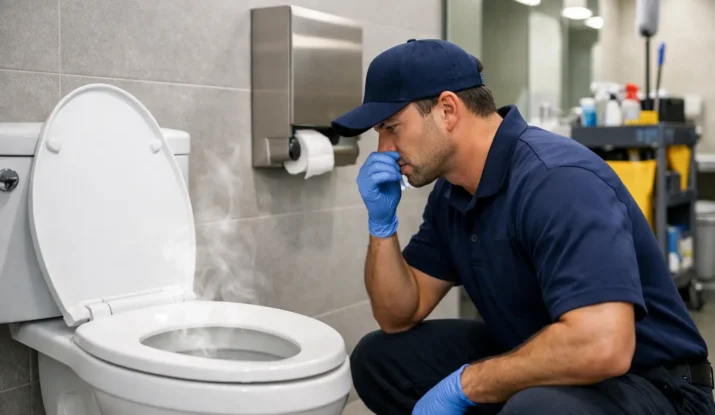
A restroom can look freshly cleaned and still generate complaints by midafternoon. Recurring restroom odors are rarely solved with stronger air freshener alone. In commercial facilities, they usually point to a specific source: a dry drain, a failing toilet seal, trapped organic residue, poor airflow, or a cleaning process that is masking rather than removing the problem.
For facility managers, office managers, property owners, and operations teams, the goal is not simply to make the restroom smell better for an hour. It is to identify the source, correct it safely, and maintain conditions that keep employees, visitors, tenants, and customers comfortable. A persistent odor can affect first impressions quickly, especially in healthcare settings, restaurants, schools, offices, retail properties, and high-traffic public facilities.
Why recurring restroom odors need a source-based response
Restroom odors often travel. Air pressure can pull sewer gas from a floor drain, plumbing chase, or unused fixture into occupied areas. Moisture beneath a toilet base can feed odor-producing bacteria even when the visible floor appears clean. A clogged or underperforming exhaust system can allow normal restroom humidity and odors to linger much longer than they should.
That is why fragrance-based fixes have limited value. Deodorizers can be useful after cleaning, but they should support odor control, not substitute for it. If staff members are repeatedly spraying a restroom without addressing the source, the result can be a heavier scent layered over the original odor – and more complaints.
A dependable response starts with observation. Is the smell strongest near a floor drain, toilet, urinal, sink, trash receptacle, or supply closet? Does it appear first thing in the morning, after weekends, during warm weather, or only after heavy restroom use? These details help separate a cleaning issue from a plumbing, ventilation, or maintenance issue.
Common causes of recurring restroom odors
Dry floor drains and unused fixtures
Most commercial floor drains, sinks, and toilets rely on a P-trap, a curved section of pipe that holds water and blocks sewer gas from entering the room. When a restroom, utility room, shower area, or mop sink is used infrequently, the water in that trap can evaporate. The odor may be strongest after a holiday closure, a quiet weekend, or a seasonal slowdown.
Pouring water into the drain may restore the trap temporarily, but recurring evaporation needs a maintenance schedule. In some facilities, a trap primer or an approved trap-seal device may be appropriate. A qualified plumbing professional should evaluate drains that repeatedly lose their seal or show signs of backup.
Urinal buildup and splash zones
Urinals can develop persistent odors when mineral deposits and uric scale accumulate below the visible surface. The bowl may appear clean while buildup remains in the drain line, around the flush rim, or beneath the fixture. Urine residue can also collect on grout, wall bases, partitions, floor edges, and the underside of fixtures.
This is where routine wipe-downs are not enough. Targeted cleaning with the right restroom-safe product, adequate dwell time, and agitation is needed to break down deposits. Product selection matters. An acidic cleaner may help with mineral scale, while an enzyme-based treatment may be better suited to organic odor sources. The wrong chemical can damage surfaces, create safety concerns, or fail to address the actual buildup.
Toilet seals, leaks, and hidden moisture
A failed wax ring or toilet seal can allow sewer gas to escape around the toilet base. It may also permit small leaks that seep under flooring, behind baseboards, or into subfloor materials. Signs can include odor that intensifies close to the toilet, staining around the base, loose fixtures, soft flooring, or recurring discoloration of grout and caulk.
Cleaning teams can sanitize the surrounding surfaces, but a plumbing repair is required when the seal is compromised. Once the repair is complete, affected flooring and adjacent surfaces may need detailed cleaning and odor treatment. If moisture has been present for an extended period, the facility should assess whether materials need repair or replacement.
Trash, sanitary waste, and disposal habits
A restroom trash receptacle can become the source when liners are not changed often enough, waste is left overnight, or feminine hygiene receptacles are not serviced on schedule. In busy restrooms, paper towels saturated with moisture can contribute to odor and attract pests.
The fix is operational as much as chemical. Match collection frequency to restroom traffic, use correctly sized liners, clean the inside and exterior of receptacles, and make sure sanitary-waste service aligns with actual usage. A restroom that receives more visitors than expected may need a daytime porter schedule rather than once-daily attention.
Ventilation and negative air pressure
Exhaust fans remove humid air, airborne contaminants, and routine restroom odors. When fans are blocked, underpowered, disconnected, or not running long enough, odors stay in the room. In some buildings, pressure imbalances can draw odors from drains or wall cavities into the restroom and nearby spaces.
A cleaning program cannot repair a ventilation issue, but it can document patterns that make diagnosis easier. If odors spike when fans are off, doors are closed, or HVAC settings change, involve the building engineer or HVAC contractor. This is especially relevant in older commercial properties and facilities that have been remodeled without corresponding ventilation upgrades.
A practical inspection process for facility teams
Start with the simplest checks and move toward building-system issues. Confirm that waste has been removed, dispensers are not leaking, and toilet or urinal surfaces have been cleaned beyond the obvious contact points. Inspect floor edges, wall bases, partitions, drains, and the exterior of waste receptacles. These areas often hold the residue that a quick visual inspection misses.
Next, check for dry drains and inactive fixtures. Add water to infrequently used floor drains and observe whether the odor changes. Look for loose toilets, leaking valves, slow drains, standing water, damaged caulk, and gaps around penetrations. Do not rely on bleach as a cure-all. It disinfects certain surfaces when used correctly, but it does not resolve dry traps, damaged seals, scale buildup, or ventilation failures.
Document findings by restroom, date, time, odor location, and any changes in occupancy or weather. This creates a useful record for janitorial staff, maintenance personnel, and outside service providers. It also prevents the common cycle of treating each complaint as an isolated event.
How a stronger cleaning program prevents odor return
A recurring service plan should reflect how the restroom is actually used. An executive office restroom may need a different schedule than a school hallway restroom, a manufacturing locker room, or a restaurant restroom open to the public. Traffic volume, fixture type, shift schedules, floor material, and waste levels should guide the scope of service.
High-touch disinfecting remains important, but odor prevention requires detailed work in less visible areas. That includes cleaning under rims, around fixture bases, behind toilets where accessible, along grout lines, inside receptacles, and at floor drains. Color-coded cleaning systems help reduce cross-contamination between restroom surfaces and other areas. Microfiber tools also improve soil removal when they are changed, laundered, and used correctly.
Restroom supplies play a role as well. Reliable stock levels of soap, paper products, liners, feminine hygiene supplies, and hand sanitizer support better habits and reduce overflow, litter, and waste buildup. A single accountable provider for cleaning, consumables, and scheduled specialty work can make it easier to spot patterns and respond before complaints become routine.
When to involve plumbing, HVAC, or specialty cleaning support
Some odors should be escalated promptly. A strong sewer-gas smell, sewage backup, visible wastewater, repeated drain clogs, water around fixtures, or odors spreading beyond the restroom warrant immediate attention from building maintenance or a qualified trade professional. Keep affected areas ventilated when possible and follow site safety procedures. Do not combine cleaning chemicals in an attempt to overpower the odor.
For persistent surface odors after repairs, specialty deep cleaning may be needed to address contaminated grout, flooring, partitions, or hard-to-reach fixture areas. ABF Facility Services can coordinate recurring commercial restroom cleaning, consumable replenishment, and targeted cleaning support so Chicagoland facilities have a more consistent way to maintain clean, stocked, and presentable restrooms.
A restroom should not become a source of tenant calls or customer discomfort. Treat the next odor complaint as useful information: trace where it is strongest, correct the contributing condition, and build the solution into the routine instead of waiting for the smell to return.