
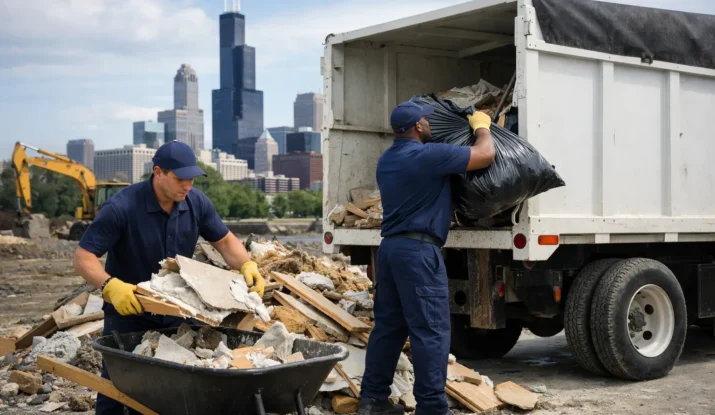
A blocked loading dock, overflowing debris pile, or dusty renovation corridor can slow an entire project. Construction debris removal services Chicago businesses depend on should do more than haul material away. They should help keep active work areas accessible, safer for crews and visitors, and ready for the next phase of work.
For commercial property managers, contractors, building owners, and operations teams, debris removal is often a scheduling issue before it becomes a cleanliness issue. Material accumulates quickly after demolition, tenant build-outs, flooring replacement, fixture upgrades, and property repairs. A dependable removal plan prevents debris from becoming an obstacle to productivity, safety, tenant satisfaction, or final inspection preparation.
When Construction Debris Needs Professional Removal
Construction and renovation debris is rarely limited to one clean pile. A project may produce drywall scraps, broken tile, lumber, pallets, old carpeting, packaging, metal pieces, damaged fixtures, and general job-site waste at the same time. Left unmanaged, these materials can crowd staging areas, restrict access to exits, create trip hazards, and make a property appear poorly maintained.
Professional removal is particularly valuable when a project is taking place inside an occupied building. Office tenants may still be working nearby. Retail customers may be entering through the same common areas. Medical, school, hospitality, and industrial facilities may have strict expectations around pedestrian access, dust control, sanitation, and operational continuity.
The right service schedule depends on the project. A small office refresh may need a single post-project pickup. A multi-day demolition or phased tenant improvement may require recurring removal to keep debris from overtaking the work area. In either case, prompt coordination helps prevent the common problem of treating waste removal as an afterthought when the job site is already congested.
Construction Debris Removal Services in Chicago for Active Sites
Chicago-area construction work brings practical challenges that affect removal planning. Dense building footprints, limited alley access, shared loading docks, tight delivery windows, parking restrictions, and changing weather all influence how and when debris can be moved. A removal team should understand that timing matters as much as labor.
Before work begins, facility leaders should identify where debris will be staged, which routes crews can use, what hours are acceptable, and whether elevators, hallways, or common areas require protection. These details reduce disruptions and help protect finished surfaces from scratches, dust, and accidental damage during removal.
For occupied properties, clean movement through the building is essential. Crews should use appropriate containment methods and remove debris in a controlled manner rather than dragging waste through public-facing areas. Uniformed, insured professionals who follow site rules and OSHA-conscious work practices provide greater confidence when removal activity overlaps with employees, residents, patients, students, or customers.
Common Debris From Commercial Projects
Commercial debris varies by scope, but removal plans often involve mixed loads from interior renovations, maintenance work, and exterior repairs. This can include discarded furnishings, carpet and padding, ceiling tiles, drywall, wood, doors, cabinetry, shelving, packaging, broken concrete, metal, pallets, and non-hazardous general waste.
Some materials require separate planning. Paints, solvents, chemicals, batteries, fluorescent lamps, electronics, asbestos-containing materials, and other regulated waste should never be treated as ordinary construction debris. Property managers and contractors should disclose these materials early so the correct handling process can be arranged. A professional provider can help clarify what belongs in a standard removal scope and what requires specialized disposal coordination.
A Safer, More Organized Job Site
Debris removal supports safety in ways that are easy to overlook until a problem occurs. Loose materials in walkways increase slip, trip, and fall risk. Unstable stacks can shift or collapse. Nails, glass, sharp metal, and broken tile create hazards for workers, maintenance teams, and anyone entering the space after hours.
Regular removal also supports fire safety and access. Debris should not narrow hallways, block stairwells, interfere with emergency exits, or accumulate near electrical equipment. On industrial sites, clutter can affect forklift paths, dock traffic, and material handling areas. In retail and hospitality settings, even a small amount of visible renovation waste can undermine the customer experience.
Clean, open work zones also help contractors work more efficiently. Crews spend less time moving around piles of discarded materials, searching for usable supplies, or relocating waste before the next trade can begin. That is one reason scheduled pickup is often more cost-effective than waiting for one large, disruptive cleanup at the end of a project.
What to Look for in a Debris Removal Partner
The lowest quoted price is not always the lowest operational cost. A missed pickup, unclear arrival window, damaged common-area flooring, or debris left behind can create avoidable work for a property manager. The best provider is one that communicates clearly, arrives prepared, and respects the conditions of the site.
Look for a team that can assess the project scope, recommend a realistic service frequency, and work around building operations. They should be prepared to discuss access limitations, debris volume, loading requirements, site-specific safety rules, and disposal expectations before removal day.
It is also wise to choose a provider that can support more than the haul-away itself. After construction activity ends, many facilities need detailed dust removal, floor care, pressure washing, restroom replenishment, sanitization, junk removal, or recurring janitorial service to return the property to a professional condition. Working with one accountable provider can reduce administrative burden and prevent gaps between project cleanup and ongoing facility care.
ABF Facility Services provides this practical advantage for commercial and industrial clients throughout Chicago and surrounding suburbs. Its trained, uniformed, insured teams can coordinate removal work alongside post-construction cleaning, ongoing janitorial service, floor care, and facility supply needs. That single-provider approach gives decision-makers a clearer point of accountability when timelines are tight.
Plan Removal Before the Project Starts
The most effective debris removal plan begins during project planning, not after the final trade leaves. Include removal expectations in the scope of work and confirm who is responsible for each material stream. This is especially important when multiple contractors, vendors, or tenants are involved.
Start by estimating the likely debris volume and identifying major material types. Then consider the building’s access points, elevator availability, loading dock hours, dumpster placement rules, and any property management requirements. If work will occur near occupied areas, establish a route that minimizes disruption and protects floors, walls, and entrances.
Communication should remain active as the project changes. Demolition can uncover more material than expected. A delayed delivery may reduce available staging space. Weather can affect exterior work and hauling access. A responsive removal partner can adjust pickup timing when conditions change instead of leaving the site to absorb the delay.
Post-Construction Cleanup Is a Separate Need
Debris removal and post-construction cleaning are related, but they are not identical services. Hauling away large materials clears the area, while detailed cleaning addresses fine dust, adhesive residue, smudges, window tracks, baseboards, fixtures, flooring, and surfaces touched throughout the project.
This distinction matters because construction dust can travel well beyond the immediate work zone. High-filtration vacuums, microfiber tools, appropriate floor-care equipment, and a color-coded cleaning approach help remove dust and soil without spreading it to other areas. For businesses preparing to reopen, welcome tenants, or complete a final walkthrough, that finishing work is what makes the space look ready rather than merely empty.
Keep the Final Days of a Project Under Control
The last days of a construction or renovation project are often the busiest. Contractors are finishing punch-list items, deliveries are still arriving, and building stakeholders are preparing for occupancy or inspection. A debris pile should not be the detail that delays turnover or creates a poor first impression.
Schedule removal with enough flexibility to account for the project’s real finish date, not just its original target. Confirm access and staging instructions with the site contact, separate any materials requiring special handling, and plan post-construction cleaning as the final step. A clean, clear property gives every project a stronger handoff and helps the people responsible for the building move forward with confidence.