
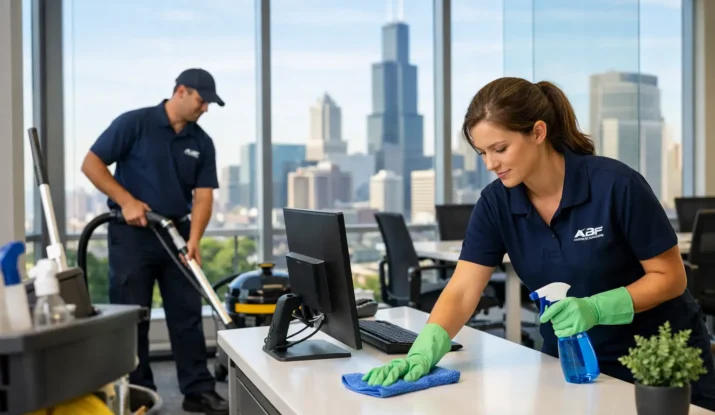
A spill in the lobby, empty soap dispensers, dusty workstations, and overflowing trash bins do more than make an office look neglected. They create friction for employees, visitors, tenants, and the people responsible for the building. When you search for office cleaning near me, the real goal is not simply finding a crew that can mop floors. It is finding a facility-services partner that shows up consistently, understands how your workplace operates, and helps prevent small cleanliness issues from becoming larger complaints.
For Chicago-area offices, the need is especially practical. Winter salt can damage hard floors, wet weather tracks debris into entryways, and high-traffic common areas can lose their professional appearance quickly. A cleaning plan needs to account for those conditions while fitting your building schedule, security procedures, and budget.
What Office Cleaning Near Me Should Actually Deliver
The closest provider is not always the best fit. A dependable office cleaning company should be able to explain what will be cleaned, how often it will be cleaned, who is accountable for the work, and what happens when your needs change. Vague promises of a “clean office” leave too much room for inconsistent results.
A well-built recurring service plan typically covers daily or scheduled cleaning of restrooms, break rooms, touchpoints, work areas, reception areas, and trash receptacles. It may also include vacuuming, dusting, spot-cleaning glass, floor care, and replenishment of restroom consumables. The right scope depends on the size of the facility, foot traffic, operating hours, and the type of work taking place inside.
For example, a professional office with mostly desk-based staff may need detailed nightly cleaning and weekly floor attention. A medical office, school, restaurant office, or customer-facing retail operation may need more frequent restroom sanitation, disinfection of high-touch surfaces, and daytime porter support. Industrial administrative areas often have a different challenge: dust and debris from operations can migrate into office spaces, requiring a plan that connects office cleaning with broader facility cleaning.
The best providers do not force every location into the same checklist. They inspect the property, identify high-use areas, ask about traffic patterns and sensitive spaces, then build a schedule around what the facility actually needs.
Start With the Problems You Need Solved
Before requesting estimates, define the issues that are costing your team time or affecting the condition of the property. This gives cleaning providers a clearer starting point and makes it easier to compare proposals fairly.
Common concerns include unreliable crews, restrooms that run out of paper products, carpet stains that keep returning, neglected hard floors, dust on vents and ledges, tenant complaints, odors, or trash accumulation around loading and exterior areas. Some buildings also need periodic pest-control support, pressure washing, junk removal, or seasonal deep cleaning. Treating each issue as a separate vendor relationship can create more work for the facility manager and make accountability harder to track.
A single-provider approach can simplify those responsibilities. Rather than coordinating one company for janitorial work, another for floor care, another for consumables, and another for occasional removal projects, a facility can work through one accountable point of contact. That approach is not automatically the least expensive option on paper, but it can reduce administrative time, missed handoffs, and service gaps that become visible to occupants.
Look Beyond the Basic Cleaning Checklist
A basic checklist matters, but the methods behind it matter just as much. Ask how the provider protects health, surfaces, and the work environment. Trained, uniformed, insured professionals should follow documented procedures, especially in shared spaces, restrooms, kitchens, health care settings, and high-traffic entryways.
Color-coded cleaning systems help prevent cross-contamination by separating tools used in restrooms from those used in office and break-room areas. Microfiber cloths capture dust more effectively than many traditional materials, while high-filtration vacuums can help reduce airborne dust and allergens. These details may seem minor until employees begin noticing cleaner air, fewer visible streaks, and more consistent results from room to room.
Product selection deserves attention as well. Green Seal-certified products and other sustainable options can support environmental goals without sacrificing cleaning performance. Still, sustainability claims should be paired with practical information. Ask which products are used, how they are stored, and whether the team can accommodate fragrance sensitivities, health care requirements, or facility-specific policies.
OSHA compliance is another useful indicator of operational discipline. Cleaning teams work around wet floors, equipment, waste, chemicals, and occupied spaces. A provider that trains employees on safety procedures and carries appropriate insurance helps reduce risk for the client as well as the cleaning staff.
Floors Need a Separate Plan
Flooring is one of the largest visual assets in any office, and one of the easiest areas to underestimate. Daily vacuuming and mopping are necessary, but they are not the same as periodic carpet extraction, hard-floor scrubbing, stripping, waxing, or burnishing.
Chicago winters are particularly hard on entryway and lobby floors. Salt, slush, and grit can dull finishes and scratch surfaces if they are not removed promptly. In warmer months, rain and construction dust can create a different set of problems. Entry mats, scheduled floor maintenance, and fast response to spills help protect the flooring investment while keeping the property safer for visitors and employees.
Ask a prospective provider to distinguish between routine floor cleaning and restorative floor care. If those services are bundled without detail, you may not know what is included until the floors begin showing wear.
Stocked Restrooms Are Part of Service Quality
Restroom cleanliness is immediately noticeable, but so is an empty dispenser. When paper towels, toilet tissue, hand soap, gloves, or other essentials run out, office managers often end up making emergency supply runs or fielding complaints that should have been avoided.
A reliable program connects cleaning with consumable replenishment. It tracks what each location uses, keeps appropriate products on hand, and adjusts delivery levels when occupancy changes. This is especially valuable for multi-tenant properties, busy offices, schools, hospitality settings, and facilities with fluctuating staffing levels.
The same logic applies to floor mats, reusable towels and mops, restaurant linens, and aprons where relevant. These items are operational necessities, not afterthoughts. Bringing them under the same facility-services relationship can make invoices, scheduling, and accountability easier to manage.
Questions That Reveal Whether a Provider Is Dependable
An estimate should be more than a price and a generic service description. It should show that the provider has considered your site conditions. During the walkthrough or proposal discussion, ask who supervises the account, how service quality is checked, and how requests are handled outside the normal schedule.
It is also reasonable to ask about staffing continuity. Frequent crew turnover can lead to missed details because every new person must learn the building, access procedures, and expectations. A provider should have a clear process for training staff, securing the facility, communicating with management, and addressing concerns promptly.
Four questions are especially useful when comparing office cleaning proposals:
- What tasks are completed at each visit, and which services are scheduled weekly, monthly, or quarterly?
- How are quality inspections documented and communicated to the facility contact?
- What is the process for urgent requests such as spills, sanitation needs, removal work, or unexpected events?
- Can janitorial service, specialty floor care, supply replenishment, and related facility needs be coordinated through one provider?
Price still matters, but the lowest bid can become expensive if the scope is too thin, staff are not properly trained, or recurring problems require repeated follow-up. A clear scope and a responsive service structure are usually better indicators of value than a single monthly number.
Build a Schedule Around Your Building, Not a Template
Cleaning frequency should reflect use, not assumptions. A small office with limited visitors may only require service a few nights per week. A larger workplace with shared kitchens, conference rooms, heavy restroom traffic, and daily client visits may need nightly cleaning plus periodic daytime attention. Some facilities benefit from a porter who can address spills, restock restrooms, maintain lobbies, and handle visible issues before they disrupt the day.
Timing matters too. After-hours cleaning minimizes disruption for many offices, while daytime service may be necessary for buildings that need constant upkeep. The right choice depends on security, occupancy, noise tolerance, and the expectations of employees and guests.
ABF Facility Services builds customized programs for commercial properties in Chicago and surrounding suburbs, combining recurring janitorial work with floor care, sanitation, supplies, maintenance cleaning, and specialty services when needed. That flexibility helps facilities avoid the common problem of trying to make one standard cleaning package fit every space.
A cleaner workplace is easier to manage when expectations are specific, supplies are replenished before they run out, and someone takes ownership when conditions change. Request an estimate that reflects your actual facility, then use the conversation to set a standard your employees, tenants, and visitors can see every day.